 뒤로
뒤로The Chemical Level of Organization: Study Notes for Anatomy & Physiology
스터디 가이드 - 스마트 노트
 자료에 맞춘 맞춤형 노트, 핵심 정의, 예시, 맥락을 확장해 제공합니다.
The Chemical Level of Organization
Introduction to Chemistry in Anatomy & Physiology
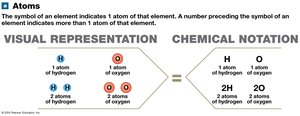
Chemistry forms the foundation for understanding physiological processes, as it explains the structure and behavior of matter in the human body. Matter is anything that occupies space and has mass, and its smallest stable unit is the atom.
Chemistry: The science of matter's structure and interactions.
Matter: Composed of atoms, which are made of subatomic particles.
Atoms and Atomic Structure
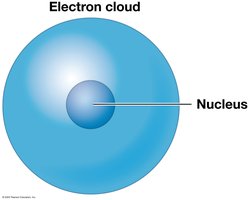
Atoms are the basic units of matter, consisting of protons, neutrons, and electrons. The arrangement of these particles determines atomic properties and reactivity.
Protons: Positively charged, found in the nucleus.
Neutrons: Neutral, found in the nucleus.
Electrons: Negatively charged, orbit the nucleus in electron clouds.
Atomic number: Number of protons, unique to each element.
Electron shell: Represents energy levels where electrons reside.
Isotopes and Atomic Mass
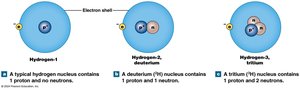
Isotopes are atoms of the same element with different numbers of neutrons, affecting their mass and stability.
Mass number: Sum of protons and neutrons.
Radioisotopes: Unstable isotopes used in diagnostics.
Half-life: Time for half of a radioisotope to decay.
Electron Shells and Energy Levels
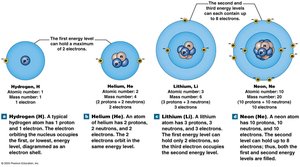
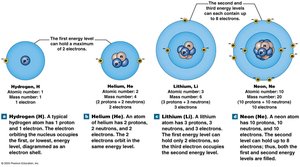
The arrangement of electrons in shells determines chemical properties and reactivity.
First shell: Up to 2 electrons.
Second shell: Up to 8 electrons.
Valence shell: Outermost shell; if not full, atom is reactive.
Molecules and Compounds
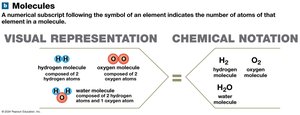
Atoms combine to form molecules and compounds through chemical bonds.
Molecule: Two or more atoms joined by shared electrons.
Compound: Molecule with atoms of different elements.
Chemical bonds: Hold atoms together after reactions.
Types of Chemical Bonds
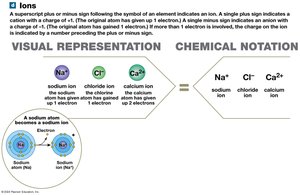
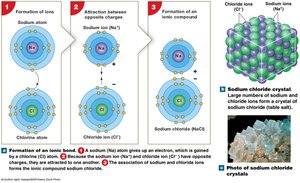
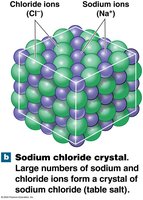
Ionic bonds: Attraction between positive (cation) and negative (anion) ions.
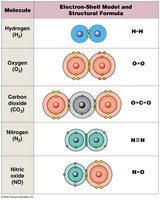
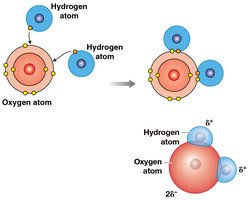
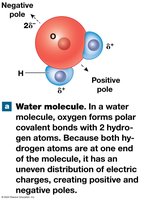
Covalent bonds: Atoms share electrons; can be single, double, or triple bonds.
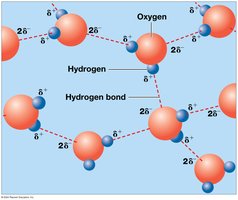
Hydrogen bonds: Weak attractions between partial charges in polar molecules.
Chemical Reactions
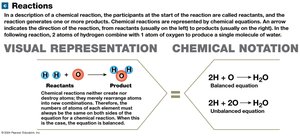
Chemical reactions involve the formation or breaking of bonds, resulting in new substances.
Reactants: Substances entering a reaction.
Products: Substances formed by a reaction.
Metabolism: All chemical reactions in the body.
Types of Chemical Reactions
Decomposition (catabolism): Breaks molecules into smaller fragments; releases energy.
Synthesis (anabolism): Assembles larger molecules; requires energy.
Exchange: Rearranges components into new products.
Reversible: Can proceed in both directions, seeking equilibrium.
Enzymes and Metabolism
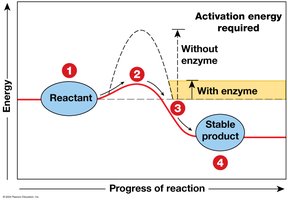
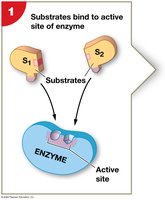
Enzymes are biological catalysts that lower activation energy, speeding up reactions without being consumed.
Activation energy: Minimum energy required to start a reaction.
Enzyme specificity: Each enzyme catalyzes a specific reaction.
Inorganic and Organic Compounds
Inorganic compounds: Do not contain carbon-hydrogen bonds (e.g., water, salts).
Organic compounds: Contain carbon-hydrogen bonds (e.g., carbohydrates, proteins, lipids, nucleic acids).
Properties of Water
Water is essential for life due to its unique chemical properties.
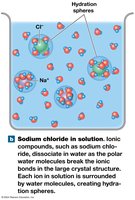
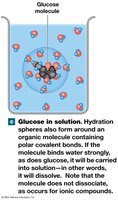
Universal solvent: Dissolves many substances.
Reactivity: Participates in chemical reactions.
High heat capacity: Absorbs and retains heat.
Lubrication: Reduces friction in tissues.
Electrolytes and Body Fluids
Electrolytes: Inorganic substances whose ions conduct electricity.
Imbalances can disrupt physiological functions.
Hydrophilic and Hydrophobic Compounds
Hydrophilic: Readily interact with water (ions, polar molecules).
Hydrophobic: Do not interact with water (nonpolar molecules, fats).
Colloids and Suspensions
Colloid: Solution with large molecules (e.g., blood plasma).
Suspension: Contains large particles that settle out (e.g., whole blood).
pH and Homeostasis
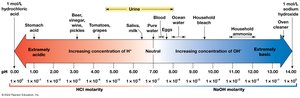
pH measures hydrogen ion concentration and is vital for maintaining homeostasis.
pH: Negative logarithm of hydrogen ion concentration.
Neutral pH: 7.0 (pure water).
Acidic: pH < 7; Basic (alkaline): pH > 7.
Human blood pH: 7.35–7.45.
Acids, Bases, Salts, and Buffers
Acid: Proton donor; increases hydrogen ion concentration.
Base: Proton acceptor; decreases hydrogen ion concentration.
Salt: Ionic compound dissociating into ions other than H+ or OH-.
Buffer: Stabilizes pH by neutralizing acids or bases.
Monomers, Polymers, and Functional Groups
Biological macromolecules are formed from monomers joined into polymers. Functional groups influence their properties.
Monomer: Single subunit (e.g., amino acid, glucose).
Polymer: Chain of monomers (e.g., protein, polysaccharide).
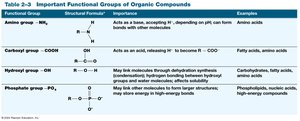
Functional groups: Specific groupings of atoms affecting molecule behavior.
Functional Group | Structural Formula | Importance | Examples |
|---|---|---|---|
Amino group | NH2 | Acts as a base, forms bonds | Amino acids |
Carboxyl group | COOH | Acts as an acid, releases H+ | Fatty acids, amino acids |
Hydroxyl group | OH | Participates in dehydration synthesis | Carbohydrates, fatty acids |
Phosphate group | PO4 | Links molecules, stores energy | Nucleic acids, high-energy compounds |
Carbohydrates
Carbohydrates are the primary energy source for cells and are classified by their complexity.
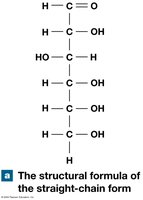
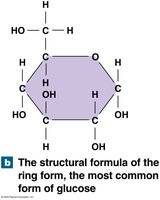
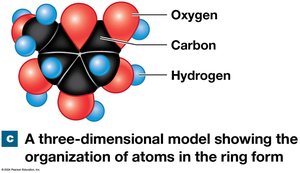
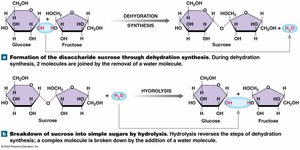
Monosaccharides: Simple sugars (e.g., glucose, fructose).
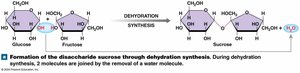
Disaccharides: Two monosaccharides joined (e.g., sucrose).
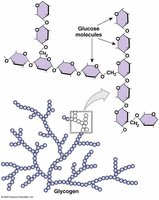
Polysaccharides: Long chains of monosaccharides (e.g., glycogen, starch, cellulose).
Lipids
Lipids are hydrophobic molecules important for energy storage, cell structure, and signaling.
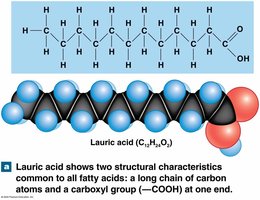
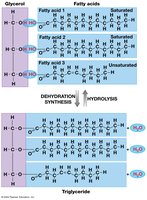
Fatty acids: Long hydrocarbon chains with a carboxyl group.
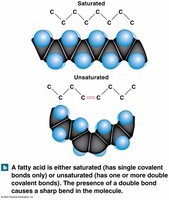
Saturated: No double bonds; Unsaturated: One or more double bonds.
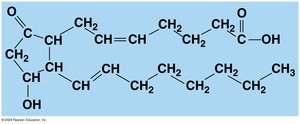
Eicosanoids: Derived from arachidonic acid; include prostaglandins and leukotrienes.
Glycerides: Fatty acids attached to glycerol (mono-, di-, triglycerides).
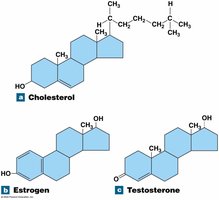
Steroids: Four-ring structure (e.g., cholesterol, hormones).
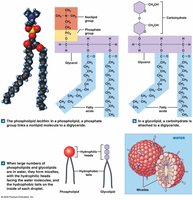
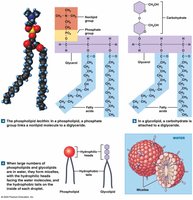
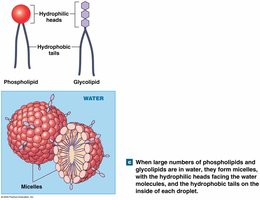
Phospholipids & glycolipids: Structural lipids with hydrophilic heads and hydrophobic tails; form micelles in water.
Proteins
Proteins are the most abundant organic molecules, essential for structure, function, and regulation.
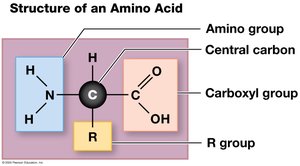
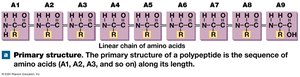
Amino acids: Monomers; 20 types with unique R groups.
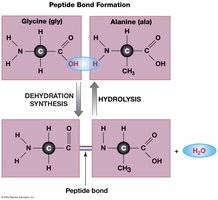
Peptide bond: Links amino acids via dehydration synthesis.
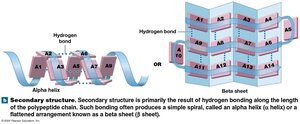
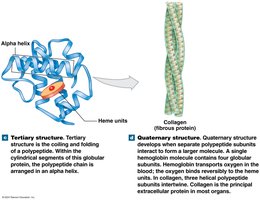
Structural levels: Primary (sequence), secondary (alpha helix/beta sheet), tertiary (3D folding), quaternary (multiple polypeptides).
Fibrous proteins: Structural, insoluble; Globular proteins: Functional, soluble.
Enzymes: Catalyze reactions; have specificity, saturation limits, and regulation.
Cofactors: Required for enzyme activity (ions, vitamins).
Denaturation: Loss of structure and function due to environmental changes.
Glycoproteins & proteoglycans: Proteins with carbohydrate groups; important for cell binding and viscosity.
Nucleic Acids
Nucleic acids store and transmit genetic information and are essential for protein synthesis.
Nucleotides: Monomers; consist of a pentose sugar, phosphate group, and nitrogenous base.
DNA: Double-stranded; bases A, T, C, G; forms a double helix.
RNA: Single-stranded; bases A, U, C, G; types include mRNA, tRNA, rRNA.
High-Energy Compounds
High-energy compounds, such as ATP, store and release energy for cellular processes.
Phosphorylation: Addition of a phosphate group to a molecule.
ATP (adenosine triphosphate): Main energy carrier; breakdown releases energy.
ADP (adenosine diphosphate): Formed when ATP loses a phosphate.
Summary Table: Classes of Inorganic and Organic Compounds
Class | Examples | Functions |
|---|---|---|
Inorganic | Water, salts, acids, bases | Solvent, electrolyte balance, pH regulation |
Organic | Carbohydrates, lipids, proteins, nucleic acids | Energy, structure, regulation, genetic information |
Key Equations
pH calculation:
Dehydration synthesis:
Hydrolysis:
Conclusion
Understanding the chemical level of organization is essential for comprehending physiological processes, as it underpins the structure and function of cells, tissues, and organs. Mastery of these concepts provides a foundation for advanced study in anatomy and physiology.
