 뒤로
뒤로The Endocrine System: Structure, Function, and Homeostatic Regulation
스터디 가이드 - 스마트 노트
 자료에 맞춘 맞춤형 노트, 핵심 정의, 예시, 맥락을 확장해 제공합니다.
The Endocrine System
Overview of the Endocrine System
The endocrine system is one of the two major control systems of the body, working alongside the nervous system to regulate physiological processes and maintain homeostasis. It consists of glands that secrete hormones directly into the bloodstream, influencing the function of distant target organs.
Hormones: Chemical messengers that regulate metabolism, growth, reproduction, and other vital functions.
Glands: Specialized organs that produce and release hormones.
Homeostasis: The maintenance of stable internal conditions despite external changes.
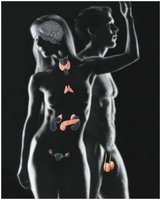
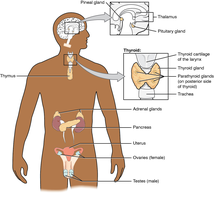
Major Endocrine Glands
The major endocrine glands are distributed throughout the body and include:
Hypothalamus
Pituitary gland
Pineal gland
Thyroid gland
Parathyroid glands
Thymus
Adrenal glands
Pancreas
Ovaries (female) / Testes (male)
Homeostasis and Feedback Mechanisms
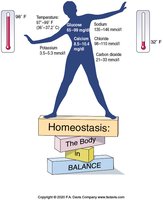
Homeostasis
Homeostasis refers to the body's ability to maintain a stable internal environment. Most physiological variables, such as temperature, blood pressure, and glucose levels, are regulated within narrow limits.
Imbalance: Disruption of homeostasis can lead to disease (e.g., hypo/hyperglycemia, hypo/hypertension).
Negative Feedback Loops
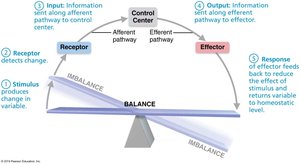
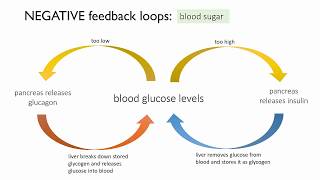
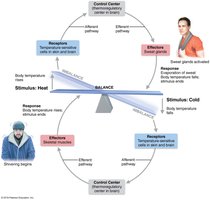
Negative feedback loops are the primary mechanism for maintaining homeostasis. In these loops, a change in a physiological variable triggers a response that counteracts the initial change, returning the variable to its set point.
Example: Regulation of blood glucose by insulin and glucagon.
Example: Regulation of body temperature.
Positive Feedback Loops
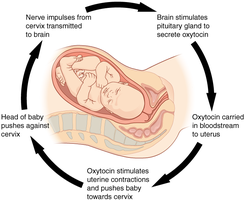
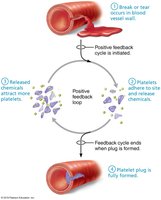
Positive feedback loops amplify changes rather than reversing them. These are less common but are essential in certain physiological processes, such as childbirth and blood clotting. The response enhances the original stimulus until a climactic event occurs, after which homeostasis is restored.
Example: Oxytocin release during labor increases uterine contractions.
Example: Platelet aggregation during blood clotting.
Control Systems: Nervous vs. Endocrine
Comparison of Nervous and Endocrine Systems
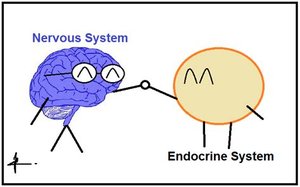
The nervous and endocrine systems are the body's main control systems, but they differ in their mechanisms and effects.
Nervous System | Endocrine System |
|---|---|
Initiates responses rapidly | Initiates responses slowly |
Short-duration responses | Long-duration responses |
Acts via action potentials and neurotransmitters | Acts via hormones released into the blood |
Acts at specific locations determined by axon pathways | Acts at diffuse locations—targets can be anywhere blood reaches |
Neurotransmitters act over very short distances | Hormones act over long distances |
The Hypothalamus: The Bridge Between Systems
The hypothalamus is a critical structure that links the nervous and endocrine systems. It receives neural input and produces hormones that regulate the pituitary gland, thus controlling many endocrine functions.
Neural control: Posterior pituitary (neurohypophysis)
Hormonal control: Anterior pituitary (adenohypophysis)
Types of Glands and Chemical Signaling
Endocrine vs. Exocrine Glands
There are two main types of glands in the body:
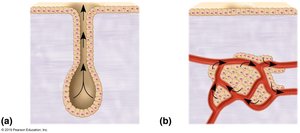
Endocrine glands: Ductless glands that secrete hormones directly into the bloodstream (e.g., thyroid, pituitary).
Exocrine glands: Glands that secrete substances through ducts to an epithelial surface (e.g., sweat, salivary glands).
Types of Chemical Signaling
Chemical signaling in the body can occur through several mechanisms:
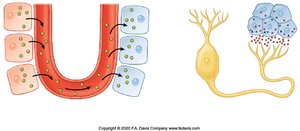
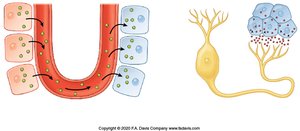
Neurotransmitters: Released by neurons across synapses (nervous system).
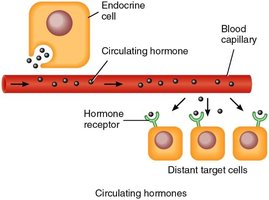
Hormones: Released by endocrine glands into the bloodstream to reach distant target cells.
Paracrine signals: Affect nearby cells.
Autocrine signals: Affect the same cell that secreted the signal.
Hormones: Structure, Function, and Regulation
Hormone Action and Target Cells
Hormones travel through the bloodstream and affect only target cells that have specific receptors for that hormone. The number of receptors can be regulated by the cell (up-regulation or down-regulation) in response to hormone levels.
Up-regulation: Increase in receptor number due to low hormone levels.
Down-regulation: Decrease in receptor number due to high hormone levels.
Stimuli for Hormone Release
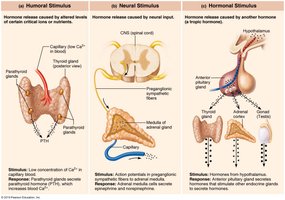
Hormone secretion is regulated by three main types of stimuli:
Humoral: Changes in blood levels of ions or nutrients (e.g., calcium, glucose).
Neural: Nerve fibers stimulate hormone release (e.g., adrenal medulla).
Hormonal: Hormones stimulate other endocrine glands to release hormones (e.g., pituitary hormones).
Chemical Structure of Hormones
The chemical structure of a hormone determines its mechanism of action:
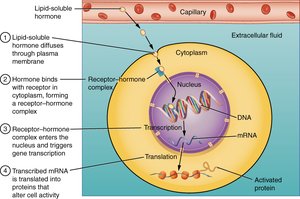
Lipid-soluble hormones: (e.g., steroid hormones) can cross cell membranes and bind to intracellular receptors, directly affecting gene expression.
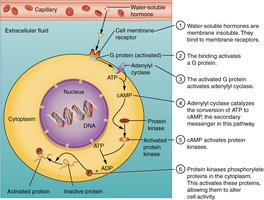
Water-soluble hormones: (e.g., peptide hormones) bind to cell surface receptors and use second messenger systems to exert their effects.
Hormone Effects on Target Cells
Hormones can alter target cell activity in several ways:
Change membrane permeability or membrane potential (ion channels)
Stimulate protein synthesis (including enzymes)
Activate or deactivate enzymes
Stimulate mitosis
Stimulate secretion of other substances
Major Endocrine Glands and Their Hormones
Pituitary Gland (Hypophysis)
The pituitary gland is often called the "master gland" because it regulates many other endocrine glands. It is divided into two lobes:
Anterior pituitary (adenohypophysis): Produces tropic hormones (FSH, LH, ACTH, TSH) and other hormones (GH, PRL).
Posterior pituitary (neurohypophysis): Stores and releases hormones produced by the hypothalamus (ADH, oxytocin).
Thyroid Gland
The thyroid gland produces thyroid hormones (T3 and T4) that regulate metabolism, growth, and development, as well as calcitonin, which lowers blood calcium levels.
Parathyroid Glands
These glands secrete parathyroid hormone (PTH), which increases blood calcium levels by acting on bones, kidneys, and intestines.
Adrenal Glands
The adrenal glands have two regions:
Adrenal cortex: Produces corticosteroids (mineralocorticoids, glucocorticoids, gonadocorticoids).
Adrenal medulla: Produces catecholamines (epinephrine and norepinephrine) for the fight-or-flight response.
Pancreas
The pancreas has both endocrine and exocrine functions. Its endocrine portion (islets of Langerhans) secretes insulin and glucagon to regulate blood glucose levels.
Gonads (Ovaries and Testes)
The gonads produce sex hormones (estrogen, progesterone, testosterone) that regulate reproductive functions and secondary sex characteristics.
Pineal Gland
The pineal gland secretes melatonin, which regulates circadian rhythms and sleep-wake cycles.
Thymus
The thymus produces hormones involved in immune system development, especially during childhood.
Clinical Connections
Homeostatic Imbalances
Hypoglycemia/Hyperglycemia: Abnormal blood glucose levels due to insulin or glucagon imbalance.
Hypothyroidism/Hyperthyroidism: Disorders of thyroid hormone production.
Diabetes Mellitus: Chronic high blood glucose due to insulin deficiency or resistance.
Goiter: Thyroid enlargement due to iodine deficiency.
Summary Table: Major Endocrine Glands, Hormones, and Functions
Gland | Hormone(s) | Main Function(s) |
|---|---|---|
Pituitary (anterior) | GH, TSH, ACTH, FSH, LH, PRL | Growth, metabolism, stress, reproduction, lactation |
Pituitary (posterior) | ADH, Oxytocin | Water balance, uterine contractions, milk ejection |
Thyroid | T3, T4, Calcitonin | Metabolism, calcium regulation |
Parathyroid | PTH | Calcium regulation |
Adrenal cortex | Aldosterone, Cortisol, Androgens | Electrolyte balance, stress response, sex hormones |
Adrenal medulla | Epinephrine, Norepinephrine | Fight-or-flight response |
Pancreas | Insulin, Glucagon | Blood glucose regulation |
Ovaries | Estrogen, Progesterone | Female reproduction |
Testes | Testosterone | Male reproduction |
Pineal | Melatonin | Sleep-wake cycles |
Thymus | Thymosin | Immune development |
Additional info: This guide integrates foundational concepts from the Endocrine System chapter, including homeostatic regulation, feedback mechanisms, and the physiological roles of major hormones and glands. It is designed for college-level Anatomy & Physiology students preparing for exams or seeking a concise review.
