 뒤로
뒤로The Endocrine System: Structure, Function, and Regulation
스터디 가이드 - 스마트 노트
 자료에 맞춘 맞춤형 노트, 핵심 정의, 예시, 맥락을 확장해 제공합니다.
The Endocrine System
Overview of the Endocrine System
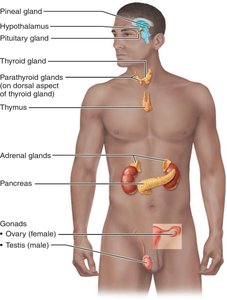
The endocrine system is a collection of ductless glands that secrete hormones directly into the bloodstream to regulate various physiological processes. Unlike the nervous system, which uses electrical impulses and neurotransmitters for rapid, short-term responses, the endocrine system relies on hormones for slower, long-lasting effects throughout the body.
Endocrine glands are ductless and secrete hormones into the blood.
Exocrine glands secrete non-hormonal products (e.g., sweat, saliva) via ducts to a membrane surface.
Some organs have both endocrine and exocrine functions (e.g., pancreas, gonads, thymus).
The hypothalamus is both neural and endocrine in function.
Comparison of Nervous and Endocrine Systems
The nervous and endocrine systems are the two main regulatory systems of the body, but they differ in their mechanisms and effects.
Feature | Nervous System | Endocrine System |
|---|---|---|
Speed of Response | Rapid | Slow |
Duration of Response | Short | Long |
Signal Type | Action potentials, neurotransmitters | Hormones in blood |
Target Location | Specific (axon pathways) | Diffuse (anywhere blood reaches) |
Distance of Action | Short | Long |
Signal Strength | Frequency of action potentials | Hormone concentration |
Hormone Action and Regulation
Hormone Types and Mechanisms
Hormones are classified based on their chemical structure and solubility, which determines their mechanism of action:
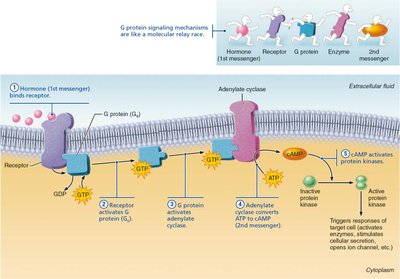
Amino acid-based hormones (water-soluble): Act on plasma membrane receptors, usually via second messenger systems (e.g., cAMP).
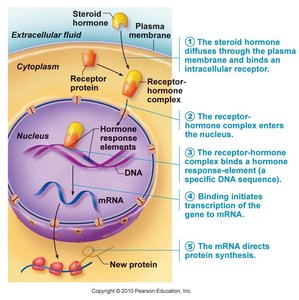
Steroid hormones (lipid-soluble): Diffuse through the plasma membrane and act on intracellular receptors, directly affecting gene expression.
Thyroid hormone is an exception: though derived from amino acids, it behaves like a steroid hormone.
Cyclic AMP (cAMP) Second Messenger Mechanism
Most water-soluble hormones use the cAMP pathway to exert their effects:
Hormone (first messenger) binds to receptor on the cell membrane.
Receptor activates a G protein.
G protein activates adenylate cyclase.
Adenylate cyclase converts ATP to cAMP (second messenger).
cAMP activates protein kinases, which trigger cellular responses (e.g., secretion, enzyme activation).
Steroid Hormones: Direct Gene Activation
Lipid-soluble hormones (steroids and thyroid hormone) act through direct gene activation:
The hormone diffuses through the plasma membrane and binds to an intracellular receptor.
The hormone-receptor complex enters the nucleus and binds to specific DNA sequences (hormone response elements).
This binding initiates transcription of target genes to mRNA.
mRNA directs protein synthesis, leading to the cellular response.
Regulation of Hormone Release
Hormone secretion is regulated by three main types of stimuli:
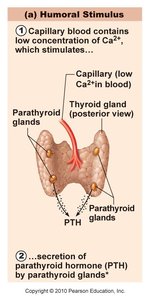
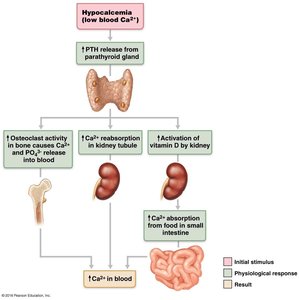
Humoral stimuli: Changes in blood levels of ions or nutrients directly stimulate hormone release (e.g., low blood Ca2+ stimulates parathyroid hormone release).
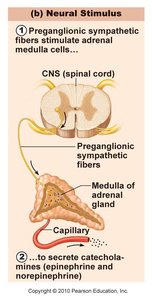
Neural stimuli: Nerve fibers stimulate hormone release (e.g., sympathetic stimulation of adrenal medulla to release catecholamines).
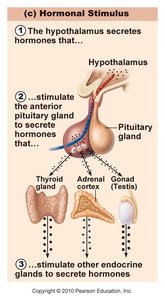
Hormonal stimuli: Hormones stimulate other endocrine glands to release their hormones (e.g., hypothalamic hormones stimulate pituitary hormones).
Major Endocrine Glands and Their Hormones
Hypothalamus and Pituitary Gland
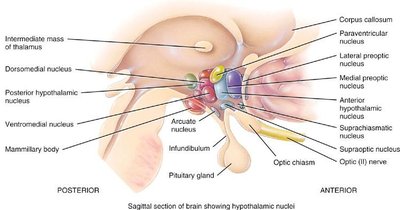
The hypothalamus is the master regulator of the endocrine system, controlling the pituitary gland through releasing and inhibiting hormones. The pituitary gland is divided into anterior and posterior lobes, each releasing different hormones that regulate various target organs.
Posterior Pituitary Hormones
Oxytocin: Stimulates uterine contractions during labor and milk ejection during breastfeeding.
Antidiuretic hormone (ADH, vasopressin): Promotes water reabsorption in the kidneys, reducing urine output and increasing blood pressure.
Anterior Pituitary Hormones
Growth hormone (GH): Stimulates growth of bones and tissues, increases blood glucose, and promotes fat breakdown.
Thyroid-stimulating hormone (TSH): Stimulates the thyroid gland to release thyroid hormones.
Adrenocorticotropic hormone (ACTH): Stimulates the adrenal cortex to release glucocorticoids.
Follicle-stimulating hormone (FSH) and Luteinizing hormone (LH): Regulate function of gonads (ovaries and testes).
Prolactin (PRL): Promotes lactation in breast tissue.
Thyroid Gland
The thyroid gland produces thyroid hormones (T3 and T4) that regulate metabolism, growth, and development. It also produces calcitonin, which helps regulate blood calcium levels.

Regulation of Thyroid Hormone Secretion
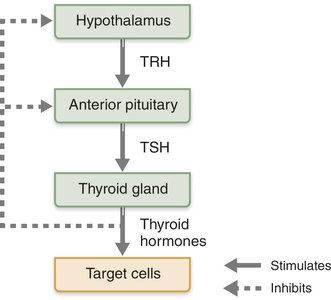
Thyroid hormone release is regulated by the hypothalamic-pituitary-thyroid axis:
Hypothalamus releases TRH (thyrotropin-releasing hormone).
TRH stimulates the anterior pituitary to release TSH (thyroid-stimulating hormone).
TSH stimulates the thyroid gland to release T3 and T4.
Thyroid hormones exert negative feedback on both the hypothalamus and pituitary.
Major Effects of Thyroid Hormone
System | Normal Effect | Hyposecretion | Hypersecretion |
|---|---|---|---|
Metabolism | Promotes normal BMR, calorigenesis | Low BMR, weight gain | High BMR, weight loss |
Nervous System | Normal development/function | Mental dulling, slowed reflexes | Irritability, insomnia |
Cardiovascular | Normal heart function | Low HR/BP | High HR/BP |
Muscular/Skeletal | Normal growth/function | Weakness, stunted growth | Muscle atrophy, early closure of growth plates |
GI/Reproductive/Integumentary | Normal function | Constipation, infertility, dry skin | Diarrhea, infertility, moist skin |
Parathyroid Glands
The parathyroid glands secrete parathyroid hormone (PTH), which is the primary regulator of blood calcium levels. PTH increases blood calcium by stimulating osteoclast activity, increasing calcium reabsorption in the kidneys, and activating vitamin D to enhance calcium absorption in the gut.
Adrenal Glands
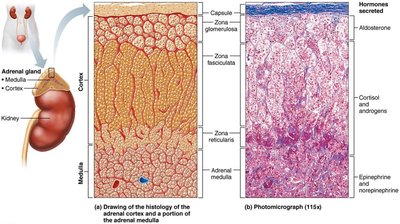
The adrenal glands consist of the cortex and medulla, each producing different hormones:
Adrenal cortex: Produces corticosteroids (mineralocorticoids, glucocorticoids, and gonadocorticoids).
Adrenal medulla: Produces catecholamines (epinephrine and norepinephrine) in response to sympathetic stimulation.
Major Adrenal Cortex Hormones
Hormone | Main Effect | Hyposecretion | Hypersecretion |
|---|---|---|---|
Aldosterone (mineralocorticoid) | Increases Na+ reabsorption, K+ excretion | Addison's disease | Aldosteronism |
Cortisol (glucocorticoid) | Increases blood glucose, resists stress, anti-inflammatory | Addison's disease | Cushing's syndrome |
Androgens (gonadocorticoids) | Sex characteristics, libido | Masculinization in females | No significant effect |
Pancreas
The pancreas has both endocrine and exocrine functions. Its endocrine portion (islets of Langerhans) secretes insulin (lowers blood glucose) and glucagon (raises blood glucose), maintaining glucose homeostasis. Dysfunction leads to diabetes mellitus.
Pineal Gland
The pineal gland secretes melatonin, which regulates circadian rhythms and may influence mood and reproductive timing.
Other Hormone-Producing Organs
Adipose tissue: Leptin (regulates appetite), resistin, adiponectin (influence insulin sensitivity).
Heart: Atrial natriuretic peptide (ANP) lowers blood pressure by inhibiting sodium reabsorption.
Kidneys: Erythropoietin (EPO) stimulates red blood cell production.
Skin: Cholecalciferol (vitamin D3 precursor).
Thymus: Thymosins (involved in immune cell development).
Key Terms and Concepts
Permissiveness: One hormone cannot exert its effects without another hormone being present.
Synergism: More than one hormone produces the same effects on a target cell, amplifying the response.
Antagonism: One hormone opposes the action of another hormone.
Up-regulation: Target cells form more receptors in response to the hormone.
Down-regulation: Target cells lose receptors in response to the hormone.
