 뒤로
뒤로The Endocrine System: Structure, Function, and Regulation
스터디 가이드 - 스마트 노트
 자료에 맞춘 맞춤형 노트, 핵심 정의, 예시, 맥락을 확장해 제공합니다.
The Endocrine System
Overview of the Endocrine System
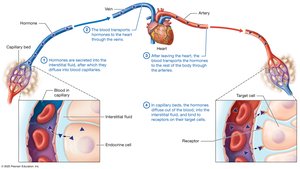
The endocrine system is one of the two major regulatory systems of the body, alongside the nervous system. It consists of glands that synthesize and secrete chemical messengers called hormones into the bloodstream. These hormones interact with specific target cells that possess receptors for the hormone, leading to changes in cellular function. The tissues containing these target cells are known as target tissues.
Hormones are secreted into the interstitial fluid, diffuse into blood capillaries, and are transported throughout the body.
Target cells have specific receptors for hormones, allowing for precise regulation of physiological processes.
Comparison of the Endocrine and Nervous Systems
The endocrine and nervous systems both regulate body functions but differ in their mechanisms and effects:
The endocrine system uses hormones that travel through the blood to reach distant target cells, resulting in slower but longer-lasting effects.
The nervous system uses electrical and chemical signals that act rapidly and locally.
Types of Chemical Signaling
Hormones can act in different ways depending on their route and target:
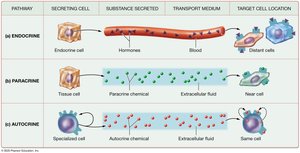
Endocrine signals: Hormones secreted into the blood to affect distant targets.
Paracrine signals: Chemicals secreted into the extracellular fluid to affect nearby cells.
Autocrine signals: Chemicals secreted by a cell that affect the same cell.
Overview of Endocrine Organs
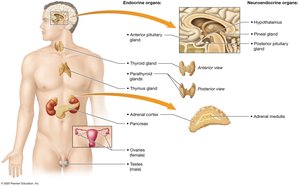
Endocrine glands are ductless organs that secrete hormones directly into the bloodstream. Their effects are generally slower but longer-lasting than those of the nervous system. In contrast, exocrine glands secrete their products into ducts leading to body surfaces or cavities.
Primary endocrine organs: anterior pituitary gland, thyroid gland, parathyroid glands, adrenal cortices, endocrine pancreas, thymus, ovaries/testes.
Secondary endocrine glands: heart, kidneys, small intestine, adipose tissue.
Neuroendocrine organs: hypothalamus, pineal gland, adrenal medulla.
Hormones: Structure, Function, and Mechanisms
Classes of Hormones
Hormones are classified based on their chemical structure:
Amino acid-based hormones: Derived from amino acids; generally hydrophilic and interact freely with water (e.g., thyroid hormone, catecholamines).
Peptide/protein hormones: Chains of amino acids; hydrophilic (e.g., insulin, growth hormone).
Steroid hormones: Derived from cholesterol; hydrophobic and lipid-soluble (e.g., cortisol, testosterone, estrogen).
Hormone Transport in Blood
Free hormones: Hydrophilic hormones that travel unbound in plasma.
Bound hormones: Hydrophobic hormones that travel bound to plasma proteins, providing a reservoir and extending their half-life.
Target Cells and Receptors
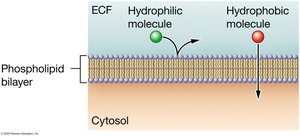
Target cells possess specific receptors for hormones, which may be located on the plasma membrane (for hydrophilic hormones) or within the cytosol/nucleus (for hydrophobic hormones).
Receptor number can be regulated by the cell (upregulation or downregulation) to adjust sensitivity to hormones.
Some hormones bind to multiple receptor types, producing different effects depending on the target tissue.
Mechanisms of Hormone Action
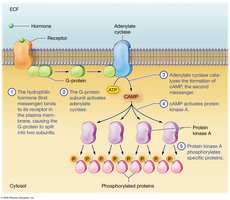
Hydrophilic hormones bind to cell surface receptors and typically use second-messenger systems (e.g., cAMP pathway) to amplify the signal and trigger cellular responses.
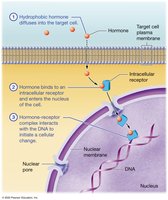
Hydrophobic hormones diffuse through the plasma membrane, bind to intracellular receptors, and directly influence gene expression by interacting with DNA.
Regulation of Hormone Secretion
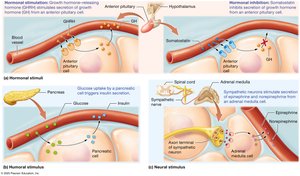
Hormone secretion is regulated by three main types of stimuli:
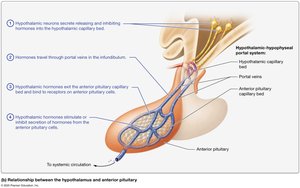
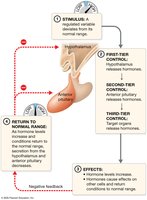
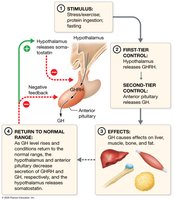
Hormonal stimuli: Hormones stimulate the release of other hormones (e.g., hypothalamic hormones regulate pituitary hormones).
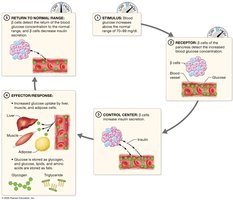
Humoral stimuli: Changes in blood levels of ions or nutrients trigger hormone release (e.g., blood glucose levels regulate insulin and glucagon).
Neural stimuli: Nerve fibers stimulate hormone release (e.g., sympathetic stimulation of adrenal medulla).
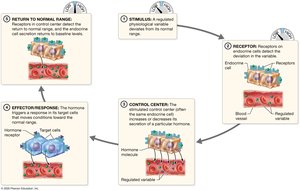
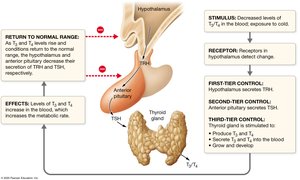
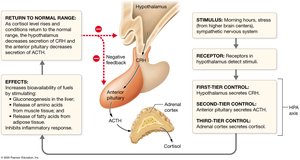
Most hormone secretion is regulated by negative feedback loops, maintaining homeostasis by adjusting hormone levels in response to physiological changes.
Major Endocrine Glands and Their Hormones
Hypothalamus and Pituitary Gland
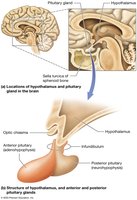
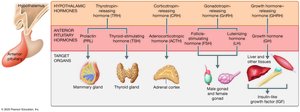
The hypothalamus links the nervous and endocrine systems and regulates the pituitary gland via releasing and inhibiting hormones. The pituitary gland consists of:
Anterior pituitary (adenohypophysis): True glandular tissue; secretes tropic hormones that regulate other endocrine glands.
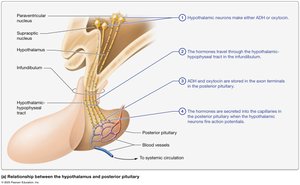
Posterior pituitary (neurohypophysis): Nervous tissue; stores and releases neurohormones produced by the hypothalamus (ADH and oxytocin).
Posterior Pituitary Hormones
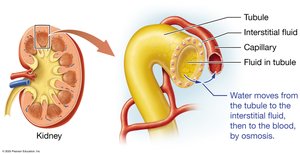
Antidiuretic hormone (ADH): Promotes water retention by the kidneys, reducing urine output and maintaining blood osmolarity.
Oxytocin: Stimulates uterine contractions during childbirth and milk ejection during breastfeeding; may play a role in emotional bonding.
Anterior Pituitary Hormones
Thyroid-stimulating hormone (TSH): Stimulates thyroid hormone production.
Adrenocorticotropic hormone (ACTH): Stimulates adrenal cortex hormone production.
Prolactin: Stimulates milk production in mammary glands.
Luteinizing hormone (LH) and Follicle-stimulating hormone (FSH): Regulate gonadal function and sex hormone production.
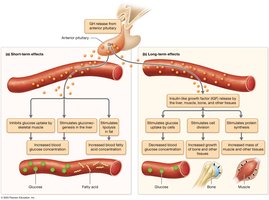
Growth hormone (GH): Stimulates growth, protein synthesis, and metabolism.
Thyroid and Parathyroid Glands
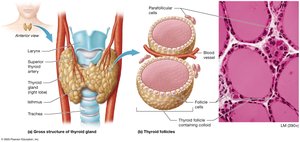
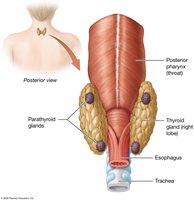
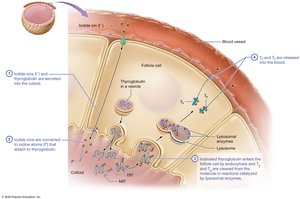
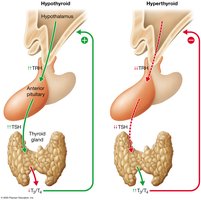
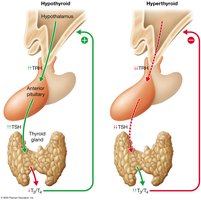
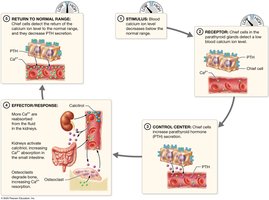
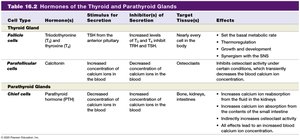
The thyroid gland produces thyroid hormones (T3 and T4) that regulate metabolism, growth, and development. Parafollicular cells produce calcitonin, which lowers blood calcium levels. The parathyroid glands secrete parathyroid hormone (PTH), which increases blood calcium levels by acting on bone, kidneys, and the intestine.

Adrenal Glands
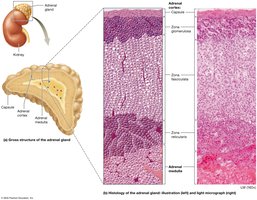
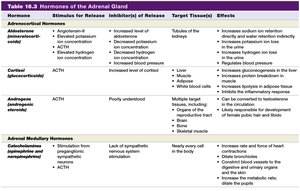
The adrenal glands are located on top of the kidneys and consist of the adrenal cortex and adrenal medulla. The cortex produces steroid hormones, while the medulla produces catecholamines.
Adrenal cortex:
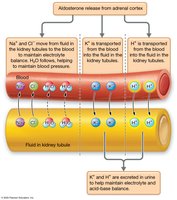
Mineralocorticoids (e.g., aldosterone): Regulate sodium, potassium, and fluid balance.
Glucocorticoids (e.g., cortisol): Regulate metabolism, stress response, and inflammation.
Androgenic steroids: Minor role in sex hormone production.
Adrenal medulla: Produces epinephrine and norepinephrine, mediating the fight-or-flight response.

Pancreas
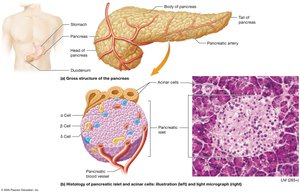
The pancreas has both endocrine and exocrine functions. The endocrine portion consists of pancreatic islets that secrete hormones regulating blood glucose:
Alpha cells: Secrete glucagon, which raises blood glucose by promoting glycogen breakdown and gluconeogenesis.
Beta cells: Secrete insulin, which lowers blood glucose by promoting glucose uptake and storage.
Delta cells: Secrete somatostatin, which inhibits the release of both insulin and glucagon.
Other Endocrine Organs and Hormones
Thymus
The thymus secretes thymosin and thymopoietin, which are important for T lymphocyte maturation and immune function. The thymus is most active in childhood and atrophies in adulthood.
Gonads
Testes: Produce testosterone, which regulates male reproductive development and secondary sex characteristics.
Ovaries: Produce estrogens and progesterone, which regulate female reproductive development, menstrual cycle, and pregnancy.
Pineal Gland
The pineal gland secretes melatonin, which helps regulate sleep-wake cycles in response to light and dark.
Other Hormone-Secreting Tissues
Adipose tissue: Produces leptin, which regulates appetite and energy balance.
Heart: Produces atrial natriuretic peptide (ANP), which lowers blood pressure by promoting sodium and water excretion.
Kidneys: Produce erythropoietin (EPO) to stimulate red blood cell production, renin for blood pressure regulation, and activate vitamin D.
Hormonal Control of Homeostasis
Metabolic Homeostasis
Endocrine hormones regulate metabolic rate, fuel availability, growth, and feeding behaviors. Key hormones include thyroid hormones (set basal metabolic rate), insulin (promotes nutrient storage), glucagon (promotes fuel mobilization), and catecholamines (increase metabolic rate during stress or exercise).
Fluid Homeostasis
Fluid balance is maintained by ADH, aldosterone, and ANP. These hormones regulate water retention, urine output, and blood pressure in response to changes in plasma volume and solute concentration.
Summary Table: Major Hormones of the Endocrine System
Hormone | Source | Main Target(s) | Primary Effect(s) |
|---|---|---|---|
ADH | Posterior pituitary | Kidneys | Water retention |
Oxytocin | Posterior pituitary | Uterus, mammary glands | Uterine contractions, milk ejection |
TSH | Anterior pituitary | Thyroid gland | Stimulates thyroid hormone release |
ACTH | Anterior pituitary | Adrenal cortex | Stimulates cortisol release |
GH | Anterior pituitary | Liver, muscle, bone | Growth, protein synthesis |
Insulin | Pancreas (beta cells) | Most cells | Lowers blood glucose |
Glucagon | Pancreas (alpha cells) | Liver, adipose | Raises blood glucose |
Cortisol | Adrenal cortex | Most tissues | Stress response, metabolism |
Aldosterone | Adrenal cortex | Kidneys | Sodium retention, potassium excretion |
Thyroid hormones (T3, T4) | Thyroid gland | Most cells | Increase metabolic rate |
PTH | Parathyroid glands | Bone, kidneys, intestine | Raises blood calcium |
Calcitonin | Thyroid gland | Bone | Lowers blood calcium |
Testosterone | Testes | Many tissues | Male development |
Estrogen, Progesterone | Ovaries | Many tissues | Female development, pregnancy |
