 뒤로
뒤로The Endocrine System: Structure, Function, and Regulation
스터디 가이드 - 스마트 노트
 자료에 맞춘 맞춤형 노트, 핵심 정의, 예시, 맥락을 확장해 제공합니다.
Overview of the Endocrine System
Major Regulatory Systems of the Body
The body uses two main regulatory systems to maintain homeostasis: the nervous system and the endocrine system. Both systems use chemical messengers to communicate with cells, but differ in their mechanisms and effects.
Nervous System: Utilizes neurotransmitters for immediate, short-lasting effects via action potentials.
Endocrine System: Utilizes hormones secreted into the bloodstream for delayed, long-lasting effects.
Cell-to-cell communication is essential for regulating body functions, with both systems playing complementary roles.
The Endocrine Function
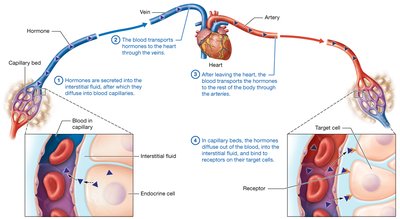
Hormones are secreted by endocrine cells into the interstitial fluid, diffuse into blood capillaries, and are transported throughout the body to reach target cells.
Hormones are secreted into the interstitial fluid and diffuse into blood capillaries.
The blood transports hormones to the heart through the veins.
After leaving the heart, the blood transports the hormones to the rest of the body through the arteries.
In capillary beds, hormones diffuse out of the blood into the interstitial fluid and bind to receptors on their target cells.
Paracrine and Autocrine Signals
Not all chemical signals act as classic hormones. Some act locally:
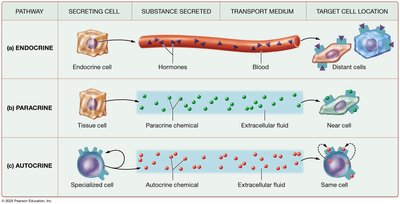
Endocrine: Hormones travel through the blood to distant target cells.
Paracrine: Chemicals act on nearby cells in the extracellular fluid.
Autocrine: Chemicals act on the same cell that secreted them.
Endocrine Glands and Organs
Types of Endocrine Organs
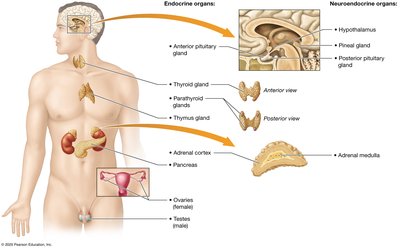
Primary Endocrine Organs: Main function is hormone production (e.g., anterior pituitary, thyroid, parathyroid, adrenal cortex, pancreas, thymus).
Secondary Endocrine Organs: Have other primary functions but also produce hormones (e.g., heart, kidneys, small intestine, adipose tissue, ovaries, testes).
Neuroendocrine Organs: Composed of nervous tissue and secrete neurohormones (e.g., hypothalamus, pineal gland, adrenal medulla).
Classes of Hormones
Amino Acid-Based Hormones
Derived from amino acids or peptides/proteins.
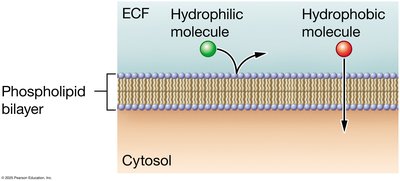
Hydrophilic (except thyroid hormone, which is hydrophobic).
Produced by hypothalamus, adrenal medullae, thyroid, pancreas, anterior pituitary, and parathyroid glands.
Steroid Hormones
Derived from cholesterol (lipid-soluble, hydrophobic).
Produced by adrenal cortices, testes, and ovaries.
Can be stored in adipose tissue.
Hormone Transport in Blood
Free Hormones: Hydrophilic, travel unbound in plasma.
Bound Hormones: Hydrophobic, travel bound to plasma proteins, increasing their lifespan in blood.
Hormone Receptors and Target Cells
Target Cells and Receptors
Target cells possess specific receptors for hormones, allowing for selective response even at low hormone concentrations.
Hormones may bind to one or multiple cell types, or to different receptors producing varied effects.
Receptor Locations and Regulation
Plasma Membrane Receptors: Bind hydrophilic hormones.
Intracellular Receptors: Bind hydrophobic hormones (in cytosol or nucleus).
Upregulation: Increase in receptor number when hormone levels are low.
Downregulation: Decrease in receptor number after prolonged high hormone exposure.
Mechanisms of Hormone Action
Second-Messenger System (Hydrophilic Hormones)
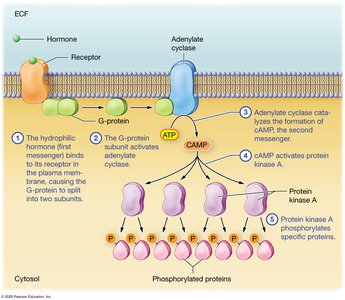
Hydrophilic hormones cannot cross the plasma membrane and act via second-messenger systems, often involving G-proteins.
Hormone (first messenger) binds to receptor, activating G-protein.
G-protein activates adenylate cyclase.
Adenylate cyclase forms cAMP (second messenger).
cAMP activates protein kinase A.
Protein kinase A phosphorylates proteins, altering cell activity.
Intracellular Receptor Mechanism (Hydrophobic Hormones)
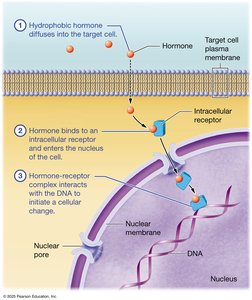
Hydrophobic hormones diffuse into target cells, bind intracellular receptors, and directly influence gene expression.
Hormone diffuses into the cell.
Binds to intracellular receptor and enters the nucleus.
Hormone-receptor complex binds DNA, altering transcription of specific genes.
Effects of Hormone Actions
Stimulate secretion from other cells
Activate/inhibit enzymes
Stimulate/inhibit mitosis or meiosis
Alter membrane potential by opening/closing ion channels
Regulate gene expression
Hormone Interactions
Complementary: Different hormones act on different cells for a common goal.
Synergists: Hormones act together on the same cell for an amplified effect.
Antagonists: Hormones have opposing effects on the same cell.
Hormone Half-Life and Elimination
Hormones are removed by uptake into target cells, breakdown by kidneys (urine), or liver (enzymatic reactions).
Half-life: Time for plasma concentration to decrease by half; hydrophobic hormones generally have longer half-lives.
Regulation of Hormone Secretion
Types of Stimuli
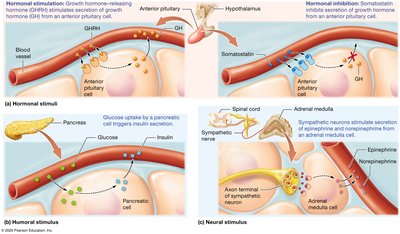
Hormonal Stimuli: Hormone release in response to other hormones (e.g., hypothalamic control of anterior pituitary).
Humoral Stimuli: Changes in blood levels of ions or nutrients (e.g., insulin release in response to glucose).
Neural Stimuli: Nerve fibers stimulate hormone release (e.g., adrenal medulla secretion of catecholamines).
Negative Feedback Regulation
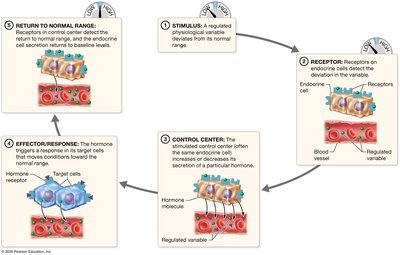
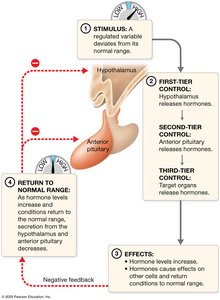
Most hormone secretion is regulated by negative feedback loops to maintain homeostasis.
Stimulus: Physiological variable deviates from normal.
Receptor: Endocrine cell detects deviation.
Control Center: Endocrine cell adjusts hormone secretion.
Effector/Response: Hormone triggers response to restore normal range.
Return to Normal: Secretion returns to baseline as homeostasis is restored.
The Hypothalamus and Pituitary Gland
Structure and Functional Relationships
Hypothalamus: Located in the diencephalon, connected to the pituitary gland by the infundibulum.
Pituitary Gland: Divided into anterior (glandular) and posterior (nervous tissue) lobes.
Hypothalamic-Hypophyseal Portal System: Capillary network connecting hypothalamus and anterior pituitary for hormone transport.
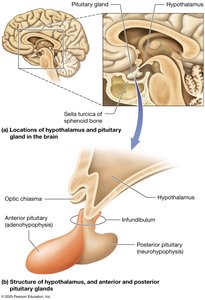
Hormones of the Hypothalamus and Posterior Pituitary
Antidiuretic Hormone (ADH): Increases water retention by kidneys, regulates water balance.
Oxytocin: Stimulates uterine contractions and milk ejection; involved in reproductive and emotional bonding.
The posterior pituitary stores and releases hormones produced by the hypothalamus.
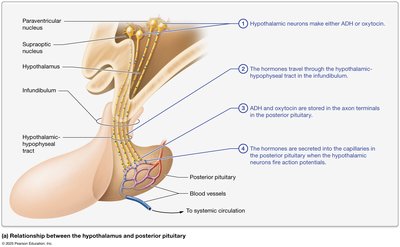
ADH: Water Retention
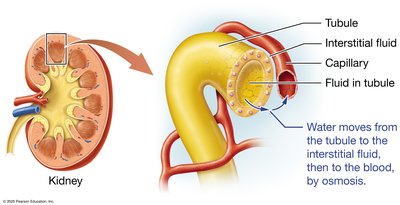
ADH triggers insertion of aquaporins in kidney tubules, increasing water reabsorption.
Stimulated by high blood solute concentration; deficiency leads to diabetes insipidus.
Oxytocin: Reproduction and Milk Release
Targets uterus and mammary glands for contraction and milk ejection.
Operates via positive feedback during breastfeeding.
Hypothalamus and Anterior Pituitary
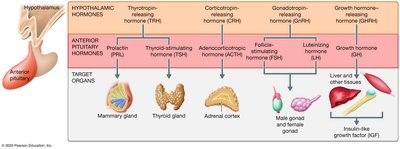
Hypothalamus secretes releasing/inhibiting hormones into portal system, regulating anterior pituitary hormone secretion.
Anterior pituitary produces tropic hormones that regulate other endocrine glands (e.g., TSH, ACTH, LH, FSH, prolactin, GH).
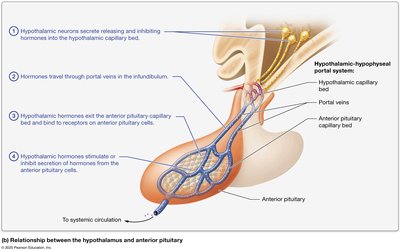
Negative Feedback Control of Anterior Pituitary Hormones
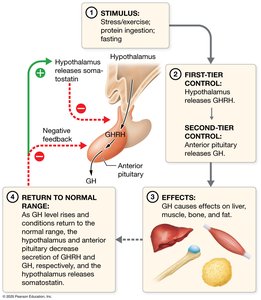
Multi-tiered feedback: hypothalamus (first tier), anterior pituitary (second tier), target organs (third tier).
Anterior Pituitary Hormones
Thyroid-Stimulating Hormone (TSH): Stimulates thyroid gland.
Adrenocorticotropic Hormone (ACTH): Stimulates adrenal cortex.
Prolactin: Stimulates mammary gland growth and milk production.
Luteinizing Hormone (LH): Stimulates sex hormone production and ovulation/testosterone synthesis.
Follicle-Stimulating Hormone (FSH): Stimulates gamete production and estrogen synthesis.
Growth Hormone (GH)
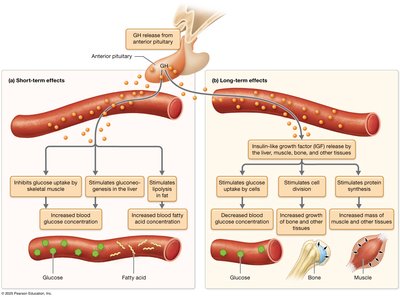
Short-term: Increases blood glucose and fatty acids via lipolysis and gluconeogenesis.
Long-term: Stimulates IGF production, protein synthesis, cell division, and growth.
Regulated by GHRH (stimulates) and somatostatin (inhibits).
Growth Hormone Disorders
Gigantism: Excess GH before epiphyseal plate closure; abnormal height and organ enlargement.
Acromegaly: Excess GH after plate closure; tissue thickening, organ enlargement.
Pituitary Dwarfism: GH deficiency before plate closure; proportional short stature.
The Thyroid and Parathyroid Glands
Thyroid Gland
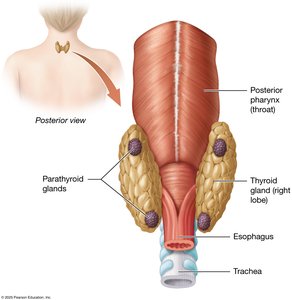
Located in anterior neck; consists of right and left lobes connected by the isthmus.
Follicle cells produce thyroid hormones (T3 and T4); parafollicular cells produce calcitonin.
Thyroid Hormones (T3 and T4)
Consist of amino acid core bound to iodine atoms; hydrophobic, act via intracellular receptors.
T3 (triiodothyronine) is more active; T4 (thyroxine) is more abundant and converted to T3 in target cells.
Effects of Thyroid Hormones
Regulate basal metabolic rate and thermoregulation.
Promote growth and development, especially of bone, muscle, and nervous system.
Synergize with the sympathetic nervous system to regulate cardiovascular function.
Thyroid Hormone Production
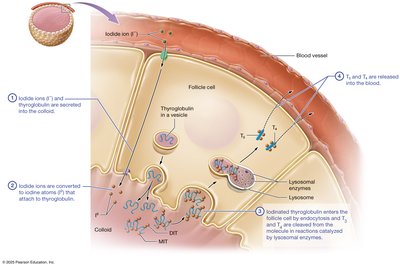
Iodide ions and thyroglobulin are secreted into the colloid.
Iodide is converted to iodine and attaches to thyroglobulin, forming MIT and DIT.
Iodinated thyroglobulin is endocytosed, and T3/T4 are cleaved and released into the blood.
Most hormone is T4; only free T3/T4 is biologically active.
Regulation of Thyroid Hormone Production
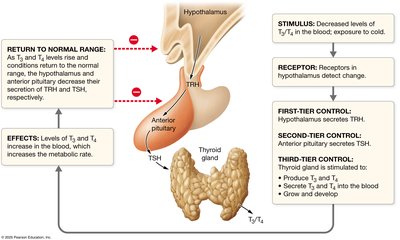
Negative feedback loop involving TRH (hypothalamus), TSH (anterior pituitary), and T3/T4 (thyroid gland).
TSH stimulates hormone production, secretion, and gland growth.
Thyroid Disorders
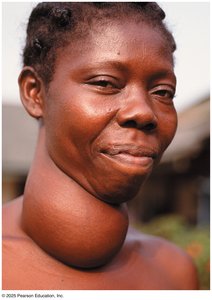
Hyperthyroidism (e.g., Graves Disease): Excess hormone, weight loss, heat intolerance, goiter, exophthalmos.
Hypothyroidism (e.g., Hashimoto Thyroiditis): Deficiency, weight gain, cold intolerance, goiter, developmental delays if congenital.
Parathyroid Glands and Hormone
Located on posterior thyroid; chief cells produce parathyroid hormone (PTH).
PTH increases blood calcium by stimulating osteoclasts, increasing intestinal absorption (via vitamin D), and increasing renal reabsorption.
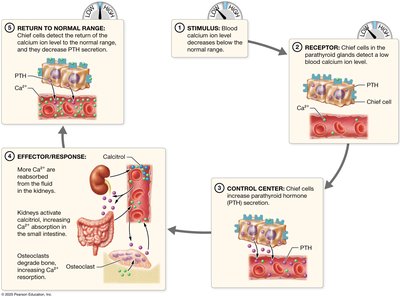
Calcitonin
Produced by thyroid parafollicular cells in response to high blood calcium.
Inhibits osteoclasts, promoting bone formation and lowering blood calcium.
The Adrenal Glands
Structure and Zones
Pyramid-shaped glands atop kidneys; outer cortex (endocrine), inner medulla (neuroendocrine).
Cortex zones: zona glomerulosa (mineralocorticoids), zona fasciculata (glucocorticoids), zona reticularis (androgens).
Mineralocorticoids (Aldosterone)
Regulate Na+, K+, and fluid balance; indirectly regulate blood pressure and acid-base homeostasis.
Stimulated by high K+, low pH, angiotensin-II; regulated by HPA axis.
Glucocorticoids (Cortisol)
Mediate stress response; increase gluconeogenesis, mobilize amino/fatty acids, anti-inflammatory effects.
Regulated by HPA axis; peaks in the morning.
Cortisol Disorders
Hypercortisolism (Cushing's Disease/Syndrome): Truncal obesity, moon face, muscle wasting, hypertension, immunosuppression.
Adrenal Insufficiency (Addison Disease): Low cortisol/aldosterone, risk of adrenal crisis, fluid/electrolyte imbalance.
Adrenal Medulla
Chromaffin cells secrete catecholamines (epinephrine, norepinephrine) in response to sympathetic stimulation.
Effects: Increase heart rate, blood pressure, metabolic rate, and prolong sympathetic response.
The Endocrine Pancreas
Structure and Cell Types
Located posterior to the stomach; contains endocrine islets (alpha, beta, delta cells) and exocrine acinar cells.
Alpha cells secrete glucagon; beta cells secrete insulin; delta cells secrete somatostatin.
Hormones of the Endocrine Pancreas
Glucagon: Raises blood glucose by promoting glycogenolysis, gluconeogenesis, and ketone body formation.
Insulin: Lowers blood glucose by promoting uptake and storage of glucose, lipids, and amino acids.
Blood Glucose Regulation
Hypoglycemia: Low blood glucose, often due to excess insulin; can cause neurological symptoms and death if severe.
Hyperglycemia: High blood glucose, often due to insufficient insulin or insulin resistance; hallmark of diabetes mellitus.
Diabetes Mellitus
Type 1: Autoimmune destruction of beta cells; requires insulin therapy; risk of ketoacidosis.
Type 2: Insulin resistance and/or beta cell dysfunction; managed with lifestyle, oral hypoglycemics, and sometimes insulin.
Other Endocrine Glands and Hormone-Secreting Tissues
Thymus
Site of T lymphocyte maturation; secretes thymosin and thymopoietin.
Gonads
Testes: Produce testosterone (anabolic and androgenic effects).
Ovaries: Produce estrogens and progesterone (secondary sex characteristics, menstrual cycle, pregnancy support).
Pineal Gland
Secretes melatonin; regulates sleep-wake cycles in response to light/dark.
Adipose Tissue
Secretes leptin, which induces satiety and regulates feeding behavior.
Heart
Secretes atrial natriuretic peptide (ANP) to lower blood pressure by promoting vasodilation and sodium/water excretion.
Kidneys
Secrete erythropoietin (stimulates red blood cell production), renin (regulates blood pressure), and activate vitamin D.
Endocrine Control of Physiological Variables
Metabolic Homeostasis
Thyroid hormones set basal metabolic rate; insulin and glucagon regulate nutrient storage and mobilization; catecholamines and GH adjust metabolism during exercise and fasting.
Fluid Homeostasis
ADH, aldosterone, and ANP regulate water and electrolyte balance, blood volume, and pressure.
Hormonal Response to Stress
Involves coordinated actions of the HPA axis, catecholamines, and metabolic hormones to maintain homeostasis during stressors.
