
Ch. 11 Introduction to the Nervous System and Nervous Tissue
Amerman- Human Anatomy & Physiology 3e
Amerman3rd EditionHuman Anatomy & PhysiologyISBN: 9780138247201, 9780138247928, 9780138201814당신이 사용하는 게 아니라요?교과서 변경
11장, 문제 12

Which of the following is not a method by which the effects of neurotransmitters are terminated?
a. Reuptake into the presynaptic neuron
b. Diffusion away from the synaptic cleft and uptake by glial cells
c. Movement back to the cell body by retrograde axonal transport
d. Degradation by enzymes in the synaptic cleft

검증된 단계별 안내
1
Step 1: Understand the question. The problem is asking which of the listed options is NOT a method by which the effects of neurotransmitters are terminated. This means we need to identify the incorrect mechanism from the options provided.
Step 2: Review the common mechanisms for neurotransmitter termination. These include: (a) reuptake into the presynaptic neuron, where neurotransmitters are taken back into the neuron for reuse or breakdown; (b) diffusion away from the synaptic cleft, where neurotransmitters move away from the synapse and may be taken up by glial cells; and (c) enzymatic degradation, where enzymes in the synaptic cleft break down neurotransmitters.
Step 3: Analyze the option involving retrograde axonal transport. Retrograde axonal transport is a process where materials are transported from the axon terminal back to the cell body. This is not a recognized method for terminating neurotransmitter effects, as it is primarily involved in transporting cellular components, not neurotransmitters.
Step 4: Compare the options to the known mechanisms. Options (a), (b), and (d) are established methods for terminating neurotransmitter effects, while option (c) does not align with these mechanisms.
Step 5: Conclude that the correct answer is the option that does not describe a termination mechanism, which is the one involving retrograde axonal transport.

비슷한 문제에 대한 검증된 영상 답변:

이 영상 해법은 위 문제에 도움이 된다고 튜터들이 추천한 것입니다.
도움이 되었나요?

주요 개념

질문에 올바르게 답하기 위해 반드시 이해해야 하는 핵심 개념들은 다음과 같습니다.

Neurotransmitter Reuptake

Reuptake is a process where neurotransmitters are reabsorbed by the presynaptic neuron after they have transmitted a signal across the synapse. This mechanism helps to terminate the action of neurotransmitters, allowing the neuron to recycle them for future use. It is a key method for regulating neurotransmitter levels and ensuring that signals are not prolonged unnecessarily.
추천 영상:
2:30
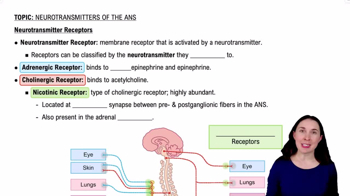
Neurotransmitter Receptors

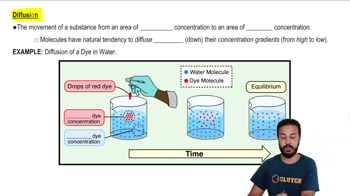
Diffusion and Uptake by Glial Cells

After neurotransmitters are released into the synaptic cleft, they can diffuse away from the synapse. Glial cells, which support and protect neurons, can uptake these neurotransmitters, effectively removing them from the synaptic space. This process contributes to the termination of neurotransmitter action and helps maintain homeostasis in the neural environment.
추천 영상:

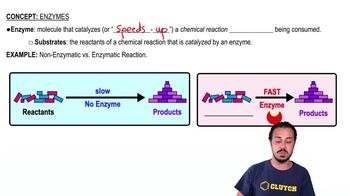
Enzymatic Degradation

Enzymatic degradation involves the breakdown of neurotransmitters by specific enzymes present in the synaptic cleft. This process is crucial for terminating the neurotransmitter's action and preventing overstimulation of the postsynaptic neuron. For example, acetylcholine is broken down by the enzyme acetylcholinesterase, illustrating how enzymatic activity can regulate neurotransmitter levels.
추천 영상:
관련 실천
교과서 질문

Identify the following as properties of electrical synapses (ES), chemical synapses (CS), or both (B).           

a. ______ The plasma membranes of presynaptic and postsynaptic neurons are joined by gap junctions.          

b. ______ Transmission is unidirectional and delayed.          

c. ______ A presynaptic neuron and a postsynaptic neuron are involved.          

d. ______ The use of neurotransmitters packaged into synaptic vesicles is required.          

e. ______ Transmission is nearly instantaneous and bidirectional.

918
views
교과서 질문

Mark the following statements as true or false. If a statement is false, correct it to make a true statement.

The Na+/K+ pumps and gated channels maintain the Na+ and K+ gradients necessary for action potentials to occur.

665
views
교과서 질문

A ________ is characterized by multiple input neurons synapsing on one postsynaptic neuron.

a. Diverging circuit

b. Discharge zone

c. Facilitation zone

d. Converging circuit

1018
views
교과서 질문

Which of the following statements best describes saltatory conduction?

a. Every section of the axolemma must be depolarized and triggered to generate an action potential.

b. The internodes must generate action potentials.

c. The dendrites and cell bodies propagate EPSPs toward the trigger zone.

d. Only the nodes of Ranvier must generate action potentials.

924
views
교과서 질문

Mark the following statements as true or false. If a statement is false, correct it to make a true statement.

A depolarization is a change in membrane potential that makes the potential less negative.

748
views
교과서 질문

The trigger for exocytosis of synaptic vesicles from the presynaptic neuron is:

a. Arrival of an action potential at the axon terminal and influx of calcium ions.

b. Summation of IPSPs at the presynaptic neuron.

c. Binding of neurotransmitters to the axon hillock.

d. Influx of Na+ into the postsynaptic neuron.

642
views