Ch. 18 The Cardiovascular System II: The Blood Vessels
Amerman- Human Anatomy & Physiology 3e
Amerman3rd EditionHuman Anatomy & PhysiologyISBN: 9780138247201, 9780138247928, 9780138201814당신이 사용하는 게 아니라요?교과서 변경
18장, 문제 10

Define each term:
a. Pressure gradient
b. Blood pressure
c. Blood flow
d. Resistance

검증된 단계별 안내
1
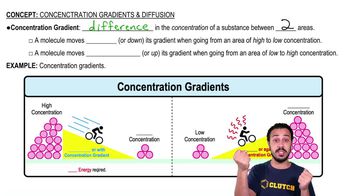
Step 1: Define 'Pressure Gradient': A pressure gradient refers to the difference in pressure between two points in a system, such as blood vessels. It drives the movement of blood from areas of higher pressure to areas of lower pressure. This concept is crucial for understanding how blood circulates through the body.
Step 2: Define 'Blood Pressure': Blood pressure is the force exerted by circulating blood on the walls of blood vessels. It is typically measured in millimeters of mercury (mmHg) and consists of two values: systolic pressure (pressure during heart contraction) and diastolic pressure (pressure during heart relaxation).
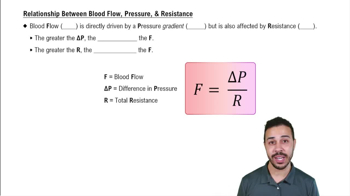
Step 3: Define 'Blood Flow': Blood flow refers to the volume of blood moving through a vessel, organ, or the entire circulatory system over a given period of time. It is influenced by factors such as pressure gradients, resistance, and the diameter of blood vessels.
Step 4: Define 'Resistance': Resistance is the opposition to blood flow within the circulatory system, primarily caused by the friction between blood and the walls of blood vessels. It is influenced by vessel diameter, blood viscosity, and vessel length. Resistance is inversely proportional to blood flow.
Step 5: Explain the relationship between these terms: Pressure gradient, blood pressure, blood flow, and resistance are interconnected. Blood flow is directly proportional to the pressure gradient and inversely proportional to resistance, as described by the equation: \( Q = \frac{\Delta P}{R} \), where \( Q \) is blood flow, \( \Delta P \) is the pressure gradient, and \( R \) is resistance.

비슷한 문제에 대한 검증된 영상 답변:

이 영상 해법은 위 문제에 도움이 된다고 튜터들이 추천한 것입니다.
도움이 되었나요?

주요 개념

질문에 올바르게 답하기 위해 반드시 이해해야 하는 핵심 개념들은 다음과 같습니다.

Pressure Gradient

A pressure gradient refers to the difference in pressure between two points in a fluid system. In the context of the circulatory system, it drives blood flow from areas of higher pressure to areas of lower pressure, facilitating the movement of blood through arteries and veins. Understanding this concept is crucial for analyzing how blood circulates and how various factors can influence this flow.
추천 영상:
가이드 코스
04:51
Concentration Gradients and Diffusion

Blood Pressure

Blood pressure is the force exerted by circulating blood on the walls of blood vessels, typically measured in millimeters of mercury (mmHg). It is expressed as two values: systolic pressure (during heartbeats) and diastolic pressure (between heartbeats). Blood pressure is a vital sign that reflects cardiovascular health and is influenced by factors such as cardiac output and vascular resistance.
추천 영상:
6:12
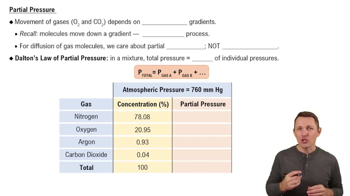
Partial Pressure

Blood Flow

Blood flow refers to the movement of blood through the circulatory system, driven by the heart's pumping action and influenced by pressure gradients and resistance within the blood vessels. It is essential for delivering oxygen and nutrients to tissues and removing waste products. Understanding blood flow dynamics is important for assessing cardiovascular function and diagnosing related health issues.
추천 영상:
가이드 코스
6:40
Relationship Between Blood Flow, Pressure, & Resistance