

Ch. 20 The Lymphatic System and Immunity
Amerman- Human Anatomy & Physiology 3e
Amerman3rd EditionHuman Anatomy & PhysiologyISBN: 9780138247201, 9780138247928, 9780138201814당신이 사용하는 게 아니라요?교과서 변경
20장, 문제 L3.1

Your friend tests her snake-wrangling skills on an eastern diamondback rattlesnake, and is bitten and envenomated (injected with the snake's venom). In the emergency department, doctors administer the antivenin CroFab, which contains antibodies to the toxins in snake venom. Is this an example of active or passive immunity? Will this confer any lasting protection to your friend?

검증된 단계별 안내
1
Understand the concept of immunity: Immunity can be classified into active and passive immunity. Active immunity involves the body producing its own antibodies in response to an antigen, while passive immunity involves the direct introduction of antibodies into the body without the immune system actively producing them.
Analyze the situation: In this case, the antivenin CroFab contains pre-formed antibodies that neutralize the toxins in the snake venom. These antibodies are not produced by your friend's immune system but are externally provided.
Determine the type of immunity: Since the antibodies are introduced directly and not produced by the immune system, this is an example of passive immunity.
Evaluate lasting protection: Passive immunity does not confer long-term protection because the externally provided antibodies are temporary and do not stimulate the immune system to produce memory cells. Once the antibodies are metabolized and removed from the body, there is no lasting immunity.
Conclude the explanation: Your friend will not have lasting protection against future snake bites from the same species because passive immunity does not involve the development of immunological memory.

비슷한 문제에 대한 검증된 영상 답변:

이 영상 해법은 위 문제에 도움이 된다고 튜터들이 추천한 것입니다.
도움이 되었나요?

주요 개념

질문에 올바르게 답하기 위해 반드시 이해해야 하는 핵심 개념들은 다음과 같습니다.

Active Immunity

Active immunity occurs when an individual's immune system is stimulated to produce antibodies in response to an antigen, such as a pathogen or toxin. This can happen naturally through infection or artificially through vaccination. The protection provided by active immunity is usually long-lasting, as the immune system retains memory cells that can respond quickly to future exposures.
추천 영상:
가이드 코스
02:37
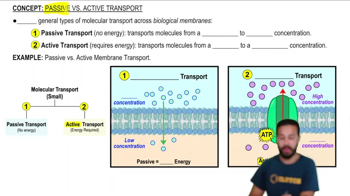
Active Transport

Passive Immunity

Passive immunity involves the transfer of antibodies from one individual to another, providing immediate but temporary protection. This can occur naturally, such as when a mother passes antibodies to her baby through breast milk, or artificially through treatments like antivenin. Since the recipient's immune system does not produce its own antibodies, the protection typically lasts only a few weeks to months.
추천 영상:
가이드 코스
05:05
Passive vs. Active Transport

Antivenin (Antivenom)

Antivenin, or antivenom, is a medical treatment that contains antibodies specifically designed to neutralize venom from snake bites or other venomous creatures. In the case of CroFab, it is derived from the plasma of immunized animals and is used to treat envenomation. While it provides immediate protection against the effects of venom, it does not confer lasting immunity, as the recipient's immune system does not develop memory against the venom.
관련 실천
교과서 질문

Mr. White has been diagnosed with febrile neutropenia, a condition characterized by the presence of a fever with an extremely low number of neutrophils in the blood. Blood work demonstrates the presence of bacteria in his blood. Explain why neutropenia might lead to a bacterial infection. Why is a bacterial infection particularly dangerous for Mr. White?

146
views
교과서 질문

Carla presents to her physician with a complaint of swollen axillary lymph nodes. Her physician performs a breast exam and finds a tumor on the same side as the swollen nodes.

b. Carla undergoes surgery to have the tumor and affected lymph nodes and surrounding lymphatic vessels removed. Predict any complications Carla might have after the surgery that could arise from removal of the lymph nodes and vessels.

157
views
교과서 질문

The lymphoid organ that filters the blood is the ______, and the lymphoid organ that filters the lymph is the______.

1038
views
교과서 질문

Carla presents to her physician with a complaint of swollen axillary lymph nodes. Her physician performs a breast exam and finds a tumor on the same side as the swollen nodes.

a. Explain what process has likely caused her nodes to swell.

180
views
교과서 질문

Mark the following statements as true or false. If a statement is false, correct it to make a true statement.

The thymus is the site of maturation of B cells.

193
views
교과서 질문

Mark the following statements as true or false. If a statement is false, correct it to make a true statement.

Clusters of MALT located around the oral and nasal cavities are known as Peyer's patches.

866
views