Ch. 4 Histology
Amerman- Human Anatomy & Physiology 3e
Amerman3rd EditionHuman Anatomy & PhysiologyISBN: 9780138247201, 9780138247928, 9780138201814당신이 사용하는 게 아니라요?교과서 변경
4장, 문제 13e

Each of the following statements is false. Correct each to make a true statement.
Serous membranes line all hollow organs that open to the outside of the body.

검증된 단계별 안내
1
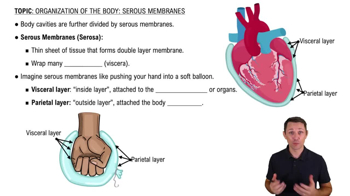
Understand the definition of serous membranes: Serous membranes are thin tissues that line body cavities that do not open to the outside of the body, such as the thoracic and abdominal cavities. They also cover the organs within these cavities.
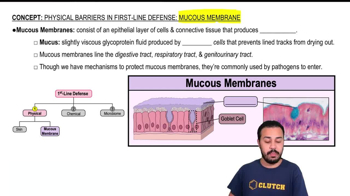
Identify the type of membranes that line hollow organs opening to the outside of the body: These are mucous membranes, not serous membranes. Mucous membranes are found in areas such as the respiratory, digestive, urinary, and reproductive tracts.
Correct the false statement: Replace 'serous membranes' with 'mucous membranes' in the original statement to make it accurate.
Revised statement: 'Mucous membranes line all hollow organs that open to the outside of the body.'
Review the distinction between serous and mucous membranes: Serous membranes are associated with closed cavities and produce serous fluid to reduce friction, while mucous membranes are associated with open cavities and secrete mucus to protect and lubricate surfaces.

비슷한 문제에 대한 검증된 영상 답변:

이 영상 해법은 위 문제에 도움이 된다고 튜터들이 추천한 것입니다.
도움이 되었나요?

주요 개념

질문에 올바르게 답하기 위해 반드시 이해해야 하는 핵심 개념들은 다음과 같습니다.

Serous Membranes

Serous membranes are thin layers of tissue that line body cavities not open to the outside, such as the thoracic and abdominal cavities. They secrete serous fluid, which reduces friction between organs and the cavity walls. In contrast, mucous membranes line cavities and surfaces that open to the exterior, such as the respiratory and digestive tracts.
추천 영상:
가이드 코스
4:09
Serous Membranes

Mucous Membranes

Mucous membranes are epithelial tissues that line body passages and cavities that communicate with the exterior, such as the mouth, nose, and intestines. They produce mucus, which serves to protect and lubricate these surfaces. Understanding the distinction between serous and mucous membranes is crucial for accurately interpreting statements about their functions and locations.
추천 영상:
2:36
Mucous Membranes

Body Cavities

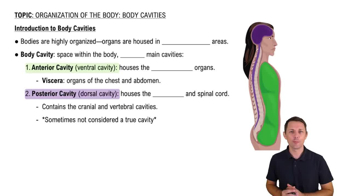
Body cavities are spaces within the body that house organs and are divided into two main categories: dorsal (containing the brain and spinal cord) and ventral (containing thoracic and abdominal organs). The organization of these cavities is essential for understanding how different membranes function and interact with the organs they encase or protect.
추천 영상:
가이드 코스
3:20
Introduction to Body Cavities