Ch. 17 Blood
Marieb - Human Anatomy & Physiology 11th Edition
Marieb, Hoehn11th EditionHuman Anatomy & PhysiologyISBN: 9780136874034당신이 사용하는 게 아니라요?교과서 변경
17장, 문제 7

The blood cell that can become an antibody-secreting cell is:
a. Lymphocyte
b. Megakaryocyte
c. Neutrophil
d. Basophil

검증된 단계별 안내
1
Step 1: Understand the function of each blood cell type listed in the options.
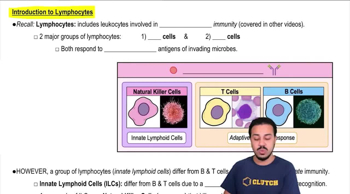
Step 2: Recall that lymphocytes are a type of white blood cell involved in the adaptive immune response, with some differentiating into plasma cells that secrete antibodies.
Step 3: Recognize that megakaryocytes are large bone marrow cells responsible for producing platelets, not antibodies.
Step 4: Know that neutrophils are white blood cells primarily involved in phagocytosis and innate immunity, not antibody production.
Step 5: Understand that basophils are involved in inflammatory responses and release histamine, but do not produce antibodies.

비슷한 문제에 대한 검증된 영상 답변:

이 영상 해법은 위 문제에 도움이 된다고 튜터들이 추천한 것입니다.
영상 길이:
4m
도움이 되었나요?

주요 개념

질문에 올바르게 답하기 위해 반드시 이해해야 하는 핵심 개념들은 다음과 같습니다.

Lymphocytes

Lymphocytes are a type of white blood cell essential for the adaptive immune response. They include B cells and T cells, where B cells can differentiate into plasma cells that produce antibodies to neutralize pathogens.
추천 영상:

Antibody-Secreting Cells (Plasma Cells)

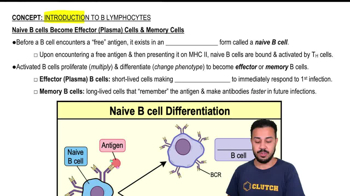
Plasma cells are the mature form of B lymphocytes that actively secrete antibodies. These antibodies specifically target antigens, helping the immune system identify and eliminate foreign invaders.
추천 영상:
가이드 코스
4:23
Naive B cells Become Effector (Plasma) Cells & Memory Cells

Other Blood Cells (Megakaryocytes, Neutrophils, Basophils)

Megakaryocytes produce platelets for blood clotting, neutrophils are phagocytic cells that engulf pathogens, and basophils release histamine during allergic responses. None of these cells produce antibodies.
추천 영상:
가이드 코스
07:02
Other Epidermal Cells