Ch. 17 Blood
Marieb - Human Anatomy & Physiology 11th Edition
Marieb, Hoehn11th EditionHuman Anatomy & PhysiologyISBN: 9780136874034당신이 사용하는 게 아니라요?교과서 변경
17장, 문제 4

The most numerous WBC is:
a. Eosinophil
b. Neutrophil
c. Monocyte
d. Lymphocyte

검증된 단계별 안내
1
Step 1: Understand that WBC stands for white blood cells, which are part of the immune system and help defend the body against infections.
Step 2: Recall the main types of white blood cells: neutrophils, eosinophils, monocytes, lymphocytes, and basophils.
Step 3: Recognize that the question asks for the most numerous type of WBC in normal human blood.
Step 4: Remember that neutrophils typically make up the largest percentage of white blood cells, usually around 50-70% of the total WBC count.
Step 5: Compare the options given (eosinophil, neutrophil, monocyte, lymphocyte) and identify neutrophils as the most abundant type.

비슷한 문제에 대한 검증된 영상 답변:

이 영상 해법은 위 문제에 도움이 된다고 튜터들이 추천한 것입니다.
영상 길이:
5m
도움이 되었나요?

주요 개념

질문에 올바르게 답하기 위해 반드시 이해해야 하는 핵심 개념들은 다음과 같습니다.

White Blood Cells (WBCs)

White blood cells are immune cells that protect the body against infections and foreign substances. They are classified into different types based on their structure and function, including neutrophils, eosinophils, monocytes, and lymphocytes.
추천 영상:
가이드 코스
7:49
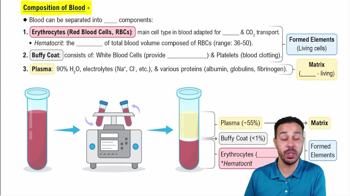
Composition of Blood

Neutrophils

Neutrophils are the most abundant type of white blood cells in the bloodstream. They play a key role in the innate immune response by quickly responding to infections, especially bacterial, through phagocytosis and releasing enzymes to destroy pathogens.
추천 영상:

Differential WBC Count

A differential WBC count measures the percentage of each type of white blood cell in the blood. It helps identify which WBC is most numerous and can indicate the body's immune status or presence of disease.
추천 영상:
가이드 코스
4:50
Introduction to Leukocytes