Ch. 22 The Respiratory System
Marieb - Human Anatomy & Physiology 11th Edition
Marieb, Hoehn11th EditionHuman Anatomy & PhysiologyISBN: 9780136874034당신이 사용하는 게 아니라요?교과서 변경
22장, 문제 9

Most oxygen carried in the blood is:
a. In solution in the plasma
b. Combined with plasma proteins
c. Chemically combined with the heme in red blood cells
d. In solution in the red blood cells

검증된 단계별 안내
1
Understand the role of oxygen transport in the blood: Oxygen is transported from the lungs to tissues primarily through the blood. It is important to identify the main mechanism by which oxygen is carried.
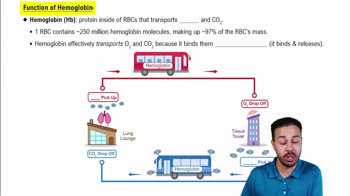
Review the structure of hemoglobin: Hemoglobin is a protein found in red blood cells. It consists of four subunits, each containing a heme group. The heme group has an iron atom that binds oxygen molecules chemically.
Analyze the options provided: a) Oxygen dissolved in plasma is minimal because oxygen has low solubility in plasma. b) Plasma proteins do not bind oxygen directly. c) Hemoglobin in red blood cells chemically binds oxygen to its heme group, making this the primary method of oxygen transport. d) Oxygen dissolved in red blood cells is also minimal compared to the amount bound to hemoglobin.
Correlate the physiological significance: The majority of oxygen in the blood is carried by hemoglobin in red blood cells. This mechanism ensures efficient oxygen delivery to tissues, as hemoglobin can bind and release oxygen depending on the oxygen concentration in the environment.
Conclude the reasoning: Based on the analysis, the correct answer is related to the chemical combination of oxygen with the heme in red blood cells, which is facilitated by hemoglobin.

비슷한 문제에 대한 검증된 영상 답변:

이 영상 해법은 위 문제에 도움이 된다고 튜터들이 추천한 것입니다.
영상 길이:
1m
도움이 되었나요?

주요 개념

질문에 올바르게 답하기 위해 반드시 이해해야 하는 핵심 개념들은 다음과 같습니다.

Oxygen Transport in Blood

Oxygen transport in the blood primarily occurs through two mechanisms: dissolved in plasma and bound to hemoglobin in red blood cells. While a small percentage of oxygen is carried in solution, the majority is transported by hemoglobin, which allows for efficient oxygen delivery to tissues.
추천 영상:
가이드 코스
6:11
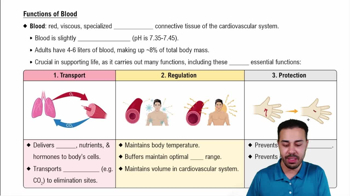
Functions of Blood

Role of Hemoglobin

Hemoglobin is a protein found in red blood cells that binds oxygen molecules. Each hemoglobin molecule can carry up to four oxygen molecules, facilitating the transport of oxygen from the lungs to the body's tissues and playing a crucial role in maintaining adequate oxygen levels in the blood.
추천 영상:
가이드 코스
7:52
Function of Hemoglobin

Plasma vs. Red Blood Cells

Blood consists of plasma and cellular components, including red blood cells. While plasma carries nutrients, hormones, and waste products, red blood cells are specialized for oxygen transport, highlighting the distinct roles of these components in the circulatory system.
추천 영상:
가이드 코스
4:27
Review of Cytotoxic vs Helper T Cells
관련 실천
교과서 질문

In mouth-to-mouth artificial respiration, the rescuer blows air from his or her own respiratory system into that of the victim. Which of the following statements are correct?

(1) Expansion of the victim's lungs is brought about by blowing air in at higher than atmospheric pressure (positive-pressure breathing).

(2) During inflation of the lungs, the intrapleural pressure increases.

(3) This technique will not work if the victim has a hole in the chest wall, even if the lungs are intact.

(4) Expiration during this procedure depends on the elasticity of the alveolar and thoracic walls.

a. All of these

b. 1, 2, 4

c. 1, 2, 3

d. 1, 4

166
views
교과서 질문

Oxygen and carbon dioxide are exchanged in the lungs and through all cell membranes by:

a. Active transport

b. Diffusion

c. Filtration

d. Osmosis

1270
views
교과서 질문

When the inspiratory muscles contract:

a. The size of the thoracic cavity increases in diameter

b. The size of the thoracic cavity increases in length

c. The volume of the thoracic cavity decreases

d. The size of the thoracic cavity increases in both length and diameter

1187
views
교과서 질문

The nutrient blood supply of the lungs is provided by:

a. The pulmonary arteries

b. The aorta

c. The pulmonary veins

d. The bronchial arteries

131
views
교과서 질문

A baby holding its breath will:

a. Have brain cells damaged because of low blood oxygen levels

b. Automatically start to breathe again when the carbon dioxide levels in the blood reach a high enough value

c. Suffer heart damage because of increased pressure in the carotid sinus and aortic arch areas

d. Be called a 'blue baby'

119
views
교과서 질문

Which of the following has the greatest stimulating effect on the respiratory centers in the brain?

a. Oxygen

b. Carbon dioxide

c. Calcium

d. Willpower

124
views