Ch. 3 Cells and Tissues
Marieb - Essentials of Human Anatomy & Physiology 13th Edition
Marieb13th EditionEssentials of Human Anatomy & PhysiologyISBN: 9780135624340당신이 사용하는 게 아니라요?교과서 변경
3장, 문제 14

Describe the four structural components of the plasma membrane and the function of each.

검증된 단계별 안내
1
Identify the four main structural components of the plasma membrane: phospholipids, proteins, carbohydrates, and cholesterol.
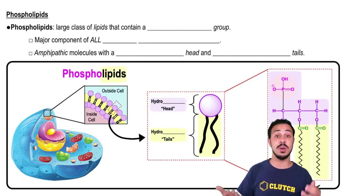
Explain the role of phospholipids: These form the bilayer structure of the membrane, with hydrophilic (water-attracting) heads facing outward and hydrophobic (water-repelling) tails facing inward. This arrangement creates a selective barrier that regulates the movement of substances in and out of the cell.
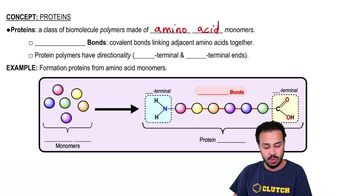
Describe the function of proteins: Membrane proteins can be integral (embedded within the bilayer) or peripheral (attached to the surface). They serve various functions, such as transport (e.g., channels and carriers), signaling (e.g., receptors), and structural support.
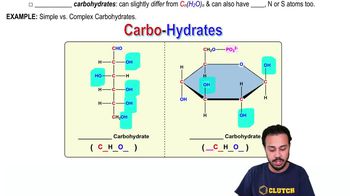
Discuss the role of carbohydrates: These are attached to proteins (glycoproteins) or lipids (glycolipids) on the extracellular surface of the membrane. They play a key role in cell recognition, communication, and adhesion.
Explain the function of cholesterol: Cholesterol molecules are interspersed within the phospholipid bilayer. They help maintain membrane fluidity and stability, preventing the membrane from becoming too rigid or too permeable under varying temperature conditions.

비슷한 문제에 대한 검증된 영상 답변:

이 영상 해법은 위 문제에 도움이 된다고 튜터들이 추천한 것입니다.
영상 길이:
2m
도움이 되었나요?

주요 개념

질문에 올바르게 답하기 위해 반드시 이해해야 하는 핵심 개념들은 다음과 같습니다.

Phospholipid Bilayer

The phospholipid bilayer is the fundamental structure of the plasma membrane, consisting of two layers of phospholipids. Each phospholipid has a hydrophilic (water-attracting) 'head' and two hydrophobic (water-repelling) 'tails.' This arrangement creates a semi-permeable barrier that allows selective passage of substances, maintaining the internal environment of the cell.
추천 영상:
04:05
Phospholipids

Proteins

Integral and peripheral proteins are embedded within or attached to the phospholipid bilayer, playing crucial roles in membrane function. Integral proteins often act as channels or transporters for molecules, while peripheral proteins are involved in signaling and maintaining the cell's shape. Together, they facilitate communication and transport across the membrane.
추천 영상:
02:50
Proteins

Carbohydrates

Carbohydrates are often attached to proteins (glycoproteins) or lipids (glycolipids) on the extracellular surface of the plasma membrane. These carbohydrate chains play essential roles in cell recognition, signaling, and adhesion, allowing cells to communicate and interact with their environment and other cells effectively.
추천 영상:
04:53
Carbohydrates