Ch. 3 Cells and Tissues
Marieb - Essentials of Human Anatomy & Physiology 13th Edition
Marieb13th EditionEssentials of Human Anatomy & PhysiologyISBN: 9780135624340당신이 사용하는 게 아니라요?교과서 변경
3장, 문제 23

Think carefully about the chemistry of the plasma membrane, and then answer this question: Why is minor damage to the membrane usually not a problem?

검증된 단계별 안내
1
Understand the structure of the plasma membrane: The plasma membrane is primarily composed of a phospholipid bilayer, along with embedded proteins, cholesterol, and carbohydrates. The phospholipid bilayer is fluid and dynamic, allowing for flexibility and self-repair.
Recognize the fluid mosaic model: The plasma membrane is described by the fluid mosaic model, which highlights its ability to move and rearrange components. This fluidity allows the membrane to adapt to minor disruptions without losing its integrity.
Consider the role of hydrophobic interactions: The phospholipids in the bilayer are held together by hydrophobic interactions between their fatty acid tails. These interactions are strong enough to maintain the membrane's structure but flexible enough to allow for self-sealing when minor damage occurs.
Understand the self-repair mechanism: When minor damage occurs, the phospholipids can rearrange themselves to fill gaps or seal small tears. This is due to the natural tendency of hydrophobic molecules to avoid water and reassemble into a bilayer structure.
Evaluate the role of embedded proteins and cholesterol: Proteins and cholesterol within the membrane contribute to its stability and flexibility. Cholesterol helps prevent the membrane from becoming too rigid or too fluid, while proteins can assist in maintaining the membrane's function even after minor damage.

비슷한 문제에 대한 검증된 영상 답변:

이 영상 해법은 위 문제에 도움이 된다고 튜터들이 추천한 것입니다.
영상 길이:
2m

주요 개념

질문에 올바르게 답하기 위해 반드시 이해해야 하는 핵심 개념들은 다음과 같습니다.

Fluid Mosaic Model

The fluid mosaic model describes the structure of the plasma membrane as a dynamic and flexible layer composed of a phospholipid bilayer with embedded proteins. This model emphasizes that the lipids and proteins can move laterally within the layer, allowing for self-healing properties. When minor damage occurs, the fluid nature of the membrane enables it to quickly reseal, maintaining its integrity and functionality.
추천 영상:
3:33
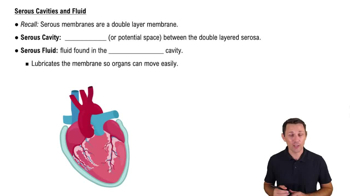
Serous Cavity and Fluid

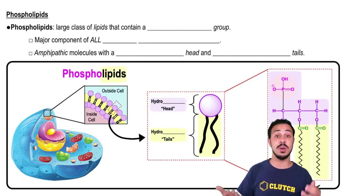
Phospholipid Bilayer

The phospholipid bilayer is the fundamental structure of the plasma membrane, consisting of two layers of phospholipids with hydrophilic heads facing outward and hydrophobic tails facing inward. This arrangement creates a semi-permeable barrier that regulates the movement of substances in and out of the cell. Minor damage to the membrane can often be repaired as the phospholipids can rearrange and fill in gaps, restoring the barrier.
추천 영상:

Membrane Repair Mechanisms

Cells possess various membrane repair mechanisms that are activated in response to damage. These include the recruitment of specific proteins that facilitate the resealing of the membrane and the use of vesicles to patch up holes. Such mechanisms are crucial for maintaining cellular homeostasis and preventing the loss of essential cellular components, allowing cells to survive minor membrane injuries.
추천 영상: