
교과서 질문
Name three changes that occur in the skin as one ages.
36
views

 검증된 단계별 안내
 01:20
01:20
 4:08
4:08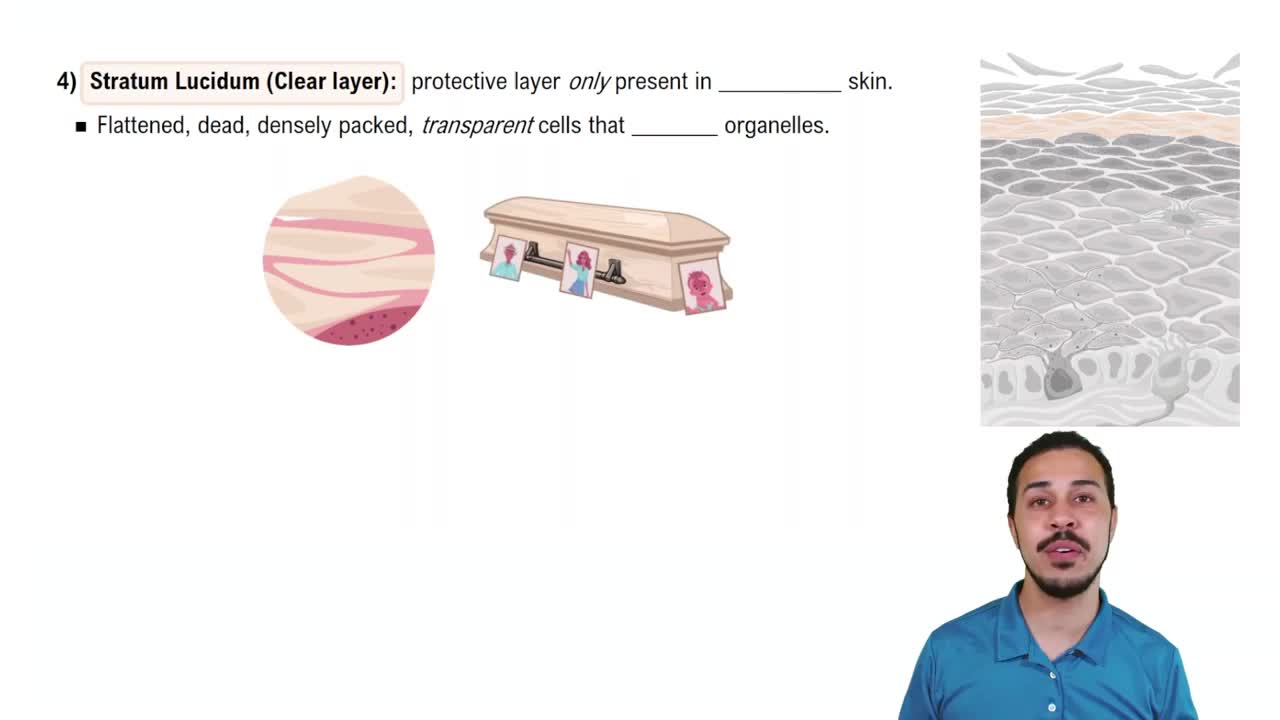 02:31
02:31Name three changes that occur in the skin as one ages.
Both newborn infants and aged individuals have very little subcutaneous tissue. How does this affect their sensitivity to cold environmental temperature?
Match the appropriate structure with the proper description and/or function.
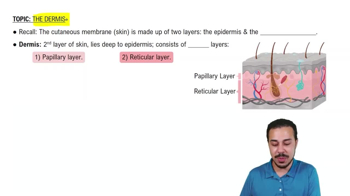
1. Made of dense, irregular connective tissue
2. Produce sebum
3. Helps regulate body temperature by producing sweat
4. Cause fingerprints
5. Houses the hair root
6. Superficial keratinized stratified squamous epithelium
7. Deep pressure receptors
8. Vascular layer that houses skin appendages
a. Dermal papillae
b. Lamellar corpuscles
c. Dermis
d. Hair follicle
e. Epidermis
f. Eccrine sweat gland
g. Reticular layer
h. Sebaceous glands
Match the appropriate structure with the proper description and/or function.
1. Made of dense, irregular connective tissue
2. Produce sebum
3. Helps regulate body temperature by producing sweat
4. Cause fingerprints
5. Houses the hair root
6. Superficial keratinized stratified squamous epithelium
7. Deep pressure receptors
8. Vascular layer that houses skin appendages
a. Dermal papillae
b. Lamellar corpuscles
c. Dermis
d. Hair follicle
e. Epidermis
f. Eccrine sweat gland
g. Reticular layer
h. Sebaceous glands
Match the appropriate structure with the proper description and/or function.
4. Cause Fingerprints
a. Dermal papillae
b. Lamellar corpuscles
c. Dermis
d. Hair follicle
e. Epidermis
f. Eccrine sweat gland
g. Reticular layer
h. Sebaceous glands
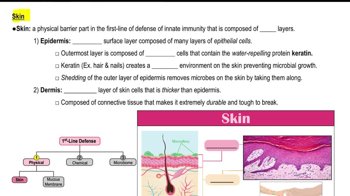
From what types of damage does the skin protect the body?