뒤로
뒤로
문제 1
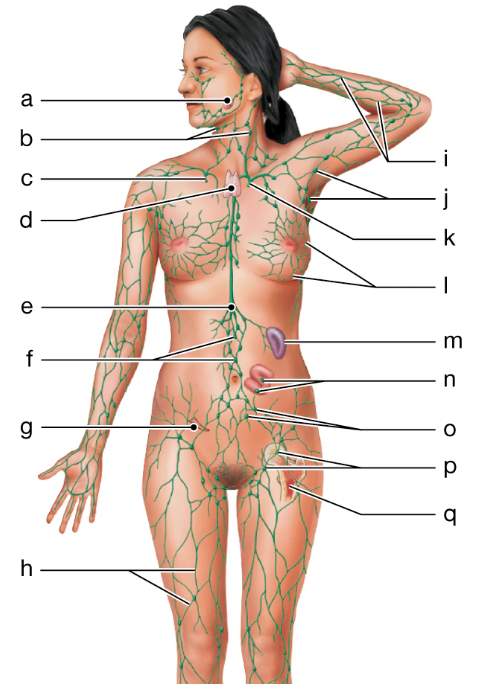
Identify the structures of the lymphatic system in the following diagram.
a. ___
b. ___
c. ___
d. ___
e. ___
f. ___
g. ___
h. ___
i. ___
j. ___
k. ___
l. ___
m. ___
n. ___
o. ___
p. ___
q. ___
문제 2
Lymph from the right arm, the right half of the head, and the right chest is received by the
(a) Cisterna chyli
(b) Right lymphatic duct
(c) Right thoracic duct
(d) Aorta
문제 3
Anatomically, lymphatic vessels resemble
(a) Elastic arteries
(b) Muscular arteries
(c) Arterioles
(d) Medium veins
(e) The venae cavae
문제 4
The specificity of an antibody is determined by the
(a) Fixed segment
(b) Antigenic determinants
(c) Variable region
(d) Size of the antibody
(e) Antibody class
문제 5
The major histocompatibility complex (MHC)
(a) Is responsible for forming lymphocytes
(b) Produces antibodies in lymph glands
(c) Is a group of genes that codes for human leukocyte antigens
(d) Is a membrane protein that can recognize foreign antigens
(e) Is the antigen found on bacteria that stimulates an immune response
문제 6
Red blood cells that are damaged or defective are removed from the bloodstream by the
(a) Thymus
(b) Lymph nodes
(c) Spleen
(d) Tonsils
문제 7
Phagocytes move through capillary walls by squeezing between adjacent endothelial cells, a process known as
(a) Diapedesis
(b) Chemotaxis
(c) Adhesion
(d) Perforation
문제 8
Perforins are proteins associated with the activity of
(a) T cells
(b) B cells
(c) NK cells
(d) Plasma cells
문제 9
Complement activation
(a) Stimulates inflammation
(b) Attracts phagocytes
(c) Enhances phagocytosis
(d) Achieves a, b, and c
문제 10
The most beneficial effect of fever is that it
(a) Inhibits the spread of some bacteria and viruses
(b) Increases the metabolic rate by up to 10 percent
(c) Stimulates the release of pyrogens
(d) Achieves a and b
문제 11
CD4 markers are associated with
(a) Cytotoxic T cells
(b) Regulatory T cells
(c) Helper T cells
(d) All of these
문제 12
List the specific functions of each of the body's primary and secondary lymphoid tissues and organs.
문제 13
Give a function for each of the following:
(a) Cytotoxic T cells
(b) Helper T cells
(c) Regulatory T cells
(d) Plasma cells
(e) NK cells
문제 14
What are the three classes of lymphocytes, and where does each class originate?
문제 15
What seven defenses, present at birth, provide the body with the defensive capability known as innate (nonspecific) immunity?
문제 16
Compared with innate defenses, adaptive defenses
(a) Do not distinguish between one threat and another
(b) Are always present at birth
(c) Protect against threats on an individual basis
(d) Deny the entry of pathogens to the body
문제 17
Blocking the antigen receptors on the surface of lymphocytes would interfere with
(a) Phagocytosis of the antigen
(b) That lymphocyte's ability to produce antibodies
(c) Antigen recognition
(d) The ability of the lymphocyte to present antigen
(e) Opsonization of the antigen
문제 20
Compare and contrast the effects of complement with those of interferon.
문제 21
How does a cytotoxic T cell destroy another cell displaying antigens bound to class I MHC proteins?
문제 22
How does the formation of an antigen–antibody complex cause the elimination of an antigen?
문제 23
Give one example of each type of immunity: innate immunity, naturally acquired active immunity, artificially acquired active immunity, artificially acquired passive immunity, and naturally acquired passive immunity.
문제 24
An anesthesia technician is advised that she should be vaccinated against hepatitis B, which is caused by a virus. She is given one injection and is told to come back for a second injection in a month and a third injection after 6 months. Why is this series of injections necessary?
문제 25
An investigator at a crime scene discovers some body fluid on the victim's clothing. The investigator carefully takes a sample and sends it to the crime lab for analysis. On the basis of the analysis of antibodies, could the crime lab determine whether the sample is blood plasma or semen? Explain.
문제 26
Ted finds out that he has been exposed to measles. He is concerned that he might have contracted the disease, so he goes to see his physician. The physician takes a blood sample and sends it to a lab for antibody levels and titers. The results show an elevated level and activity of IgM antibodies to rubella (measles) virus but very few IgG antibodies to the virus. Has Ted contracted the disease?
문제 28
Paula's grandfather is diagnosed as having lung cancer. His physician takes biopsies of several lymph nodes from neighboring regions of the body, and Paula wonders why, since his cancer is in the lungs. What would you tell her?