 뒤로
뒤로A Tour of the Cell: Eukaryotic and Prokaryotic Cell Structure
스터디 가이드 - 스마트 노트
 자료에 맞춘 맞춤형 노트, 핵심 정의, 예시, 맥락을 확장해 제공합니다.
A Tour of the Cell
Introduction to Cell Structure
Cells are the fundamental units of life, and all living organisms are composed of one or more cells. Cells can be broadly classified into two types: eukaryotic cells and prokaryotic cells. Understanding the differences in their structure is essential for studying biology at the cellular level.
Eukaryotic Cells
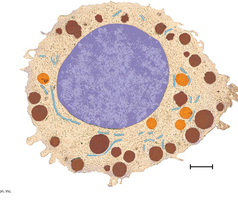
Eukaryotic cells are characterized by the presence of a true nucleus and membrane-bound organelles. These cells are typically found in animals, plants, fungi, and protists.
Nucleus: Contains the cell's genetic material (DNA) and is surrounded by a nuclear envelope.
Organelles: Specialized structures such as mitochondria, endoplasmic reticulum, Golgi apparatus, and lysosomes perform distinct cellular functions.
Cytoplasm: The region between the nucleus and the plasma membrane, containing organelles suspended in cytosol.
Plasma Membrane: A selective barrier that regulates the passage of substances into and out of the cell.
Prokaryotic Cells
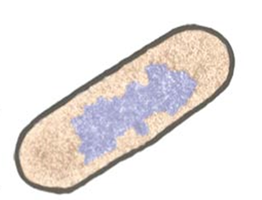
Prokaryotic cells lack a true nucleus and membrane-bound organelles. They are generally smaller and simpler than eukaryotic cells and are found in Bacteria and Archaea.
Nucleoid: Region where the cell's DNA is located, not enclosed by a membrane.
Cell Membrane: Encloses the cell, controlling the movement of substances.
Cytoplasm: Contains ribosomes and other molecules necessary for cellular processes.
Cell Wall: Provides structural support and shape (present in most prokaryotes).
Comparison of Eukaryotic and Prokaryotic Cells
The following table summarizes the key differences between eukaryotic and prokaryotic cells:
Feature | Eukaryotic Cell | Prokaryotic Cell |
|---|---|---|
Nucleus | Present | Absent |
Membrane-bound Organelles | Present | Absent |
Size | Larger (10–100 μm) | Smaller (0.1–5 μm) |
Examples | Animals, plants, fungi, protists | Bacteria, Archaea |
Significance of Cellular Organization
The compartmentalization of functions in eukaryotic cells allows for greater complexity and specialization. In contrast, the simplicity of prokaryotic cells enables rapid growth and adaptation to diverse environments.
Example: Human muscle cells (eukaryotic) contain many mitochondria to meet high energy demands, while Escherichia coli (a prokaryote) efficiently reproduces in nutrient-rich environments.
Additional info: The images provided visually reinforce the structural differences between eukaryotic and prokaryotic cells, which is a foundational concept in cell biology.
