 뒤로
뒤로A Tour of the Cell: Structure and Function of Eukaryotic Organelles
스터디 가이드 - 스마트 노트
 자료에 맞춘 맞춤형 노트, 핵심 정의, 예시, 맥락을 확장해 제공합니다.
The Nucleus and Ribosomes
The Nucleus: Genetic Control Center
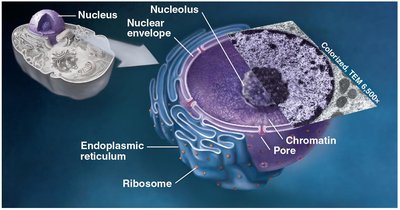
The nucleus is the command center of the eukaryotic cell, housing most of the cell’s genetic material in the form of DNA. It directs cellular activities by controlling gene expression and protein synthesis through the production of messenger RNA (mRNA). The nucleolus, a dense region within the nucleus, is responsible for assembling ribosomal subunits from ribosomal RNA (rRNA) and proteins.
Nuclear envelope: A double membrane that encloses the nucleus and contains nuclear pores for molecular transport.
Chromatin: DNA and associated proteins that condense to form chromosomes during cell division.
Nucleolus: Site of ribosome subunit assembly.
Ribosomes: Protein Factories
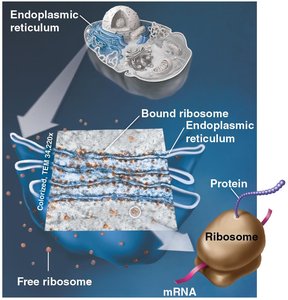
Ribosomes are molecular machines composed of rRNA and proteins. They translate genetic instructions from mRNA to synthesize polypeptides (proteins). Ribosomes can be found free in the cytosol or bound to the endoplasmic reticulum (ER).
Free ribosomes: Synthesize proteins that function within the cytosol.
Bound ribosomes: Attached to the rough ER, synthesize proteins for membranes, organelles, or export.
The Endomembrane System
Overview of the Endomembrane System
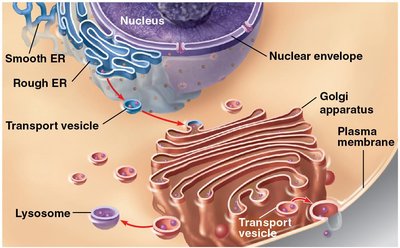
The endomembrane system is a network of membranes and organelles in eukaryotic cells that work together in the synthesis, modification, packaging, and transport of cellular materials. It includes the nuclear envelope, endoplasmic reticulum, Golgi apparatus, lysosomes, vacuoles, and the plasma membrane.
Functions: Synthesis, distribution, storage, and export of molecules.
Endoplasmic Reticulum (ER): Biosynthetic Workshop
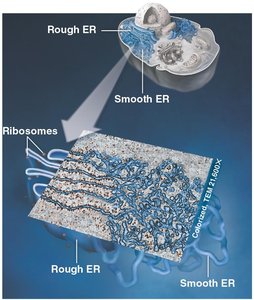
The endoplasmic reticulum is a network of membranous tubules and sacs (cisternae). It comes in two forms:
Smooth ER: Lacks ribosomes; synthesizes lipids, metabolizes carbohydrates, detoxifies drugs and poisons, and stores calcium ions.
Rough ER: Studded with ribosomes; produces membranes and proteins destined for secretion or for use in membranes.
Golgi Apparatus: Processing and Shipping Center
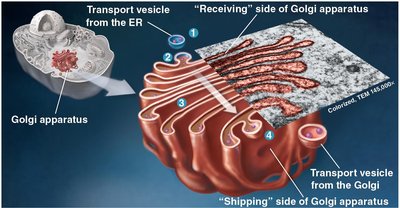
The Golgi apparatus consists of flattened membranous sacs (cisternae). It modifies, sorts, and packages products from the ER for delivery to other organelles or the cell surface.
Receives vesicles from the ER on the "cis" face.
Modifies products (e.g., glycosylation of proteins).
Ships products from the "trans" face in vesicles.
Lysosomes: Digestive Compartments
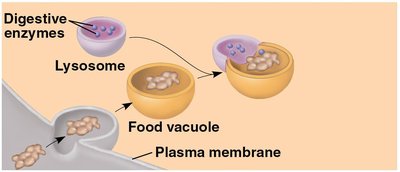
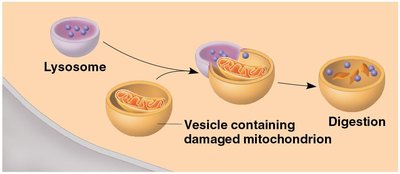
Lysosomes are membrane-bound organelles containing hydrolytic enzymes that digest macromolecules, old organelles, and foreign substances. They play a key role in cellular cleanup and recycling.
Fuse with food vacuoles to digest nutrients.
Break down damaged organelles (autophagy).
Vacuoles: Storage and Maintenance
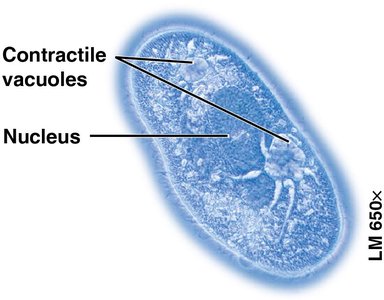
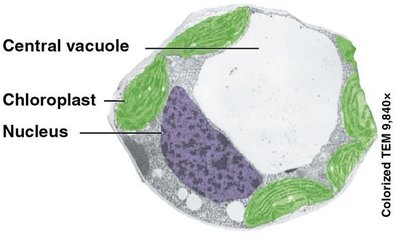
Vacuoles are large vesicles with diverse functions. In protists, contractile vacuoles expel excess water. In plants, the central vacuole stores nutrients, waste products, and helps maintain turgor pressure for structural support.
Contractile vacuole: Pumps water out of freshwater protists.
Central vacuole: Stores water, ions, and waste in plant cells.
Review: Endomembrane System Relationships
The organelles of the endomembrane system are interconnected by direct physical contact or by the transfer of membrane segments as vesicles. This system ensures efficient manufacturing, processing, and transport of cellular materials.
Peroxisomes: Metabolic Compartments
Peroxisomes are specialized metabolic compartments that break down fatty acids and detoxify harmful substances. They are not derived from the endomembrane system.
Energy-Converting Organelles
Mitochondria: Cellular Respiration
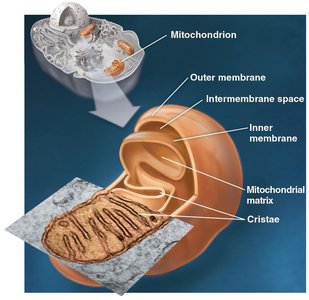
Mitochondria are the sites of cellular respiration, a process that converts chemical energy from food into ATP, the cell’s main energy currency. Mitochondria have two membranes and contain their own DNA and ribosomes.
Intermembrane space: Region between inner and outer membranes.
Mitochondrial matrix: Contains enzymes, mitochondrial DNA, and ribosomes.
Cristae: Folds of the inner membrane that increase surface area for ATP production.
Chloroplasts: Photosynthesis
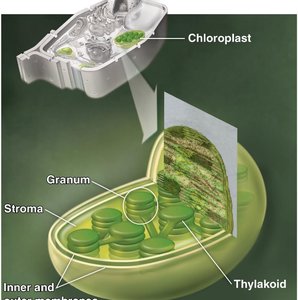
Chloroplasts are the photosynthetic organelles in plants and algae. They convert solar energy into chemical energy stored in sugars through the process of photosynthesis.
Thylakoids: Membranous sacs where light reactions occur.
Grana: Stacks of thylakoids.
Stroma: Fluid surrounding the grana, site of the Calvin cycle.
Endosymbiont Theory
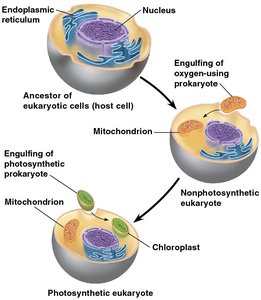
The endosymbiont theory proposes that mitochondria and chloroplasts originated as free-living prokaryotes that were engulfed by ancestral eukaryotic cells. Over time, they became integrated as organelles, explaining their double membranes and own genetic material.
The Cytoskeleton and Cell Surfaces
The Cytoskeleton: Internal Framework
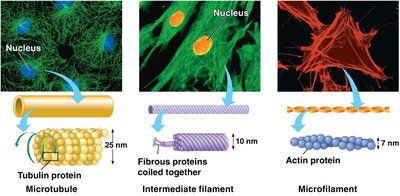
The cytoskeleton is a network of protein fibers that provides structural support, organizes cell components, and facilitates cell movement. It consists of three main types of fibers:
Microfilaments (actin filaments): Support cell shape and are involved in movement.
Intermediate filaments: Reinforce cell shape and anchor organelles.
Microtubules: Hollow tubes that shape the cell, guide organelle movement, and separate chromosomes during cell division.
Cilia and Flagella: Motile Structures
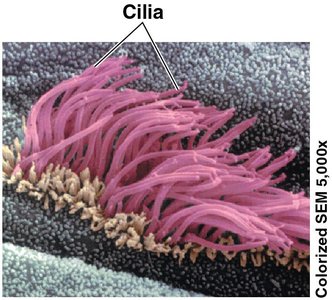
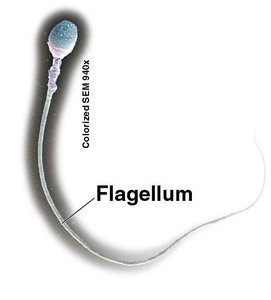
Cilia and flagella are extensions of the cell membrane containing microtubules arranged in a "9+2" pattern. They enable movement of cells or movement of substances across cell surfaces.
Flagella: Long, whip-like structures that propel cells (e.g., sperm).
Cilia: Short, numerous projections that move in coordinated waves.
Extracellular Matrix (ECM) of Animal Cells
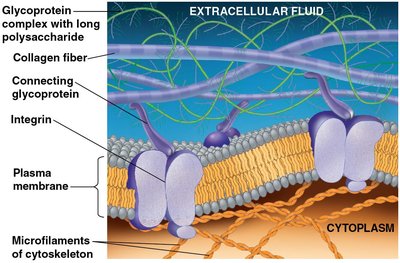
The extracellular matrix is a complex network of glycoproteins and other molecules secreted by animal cells. It provides structural support, helps bind cells together, and facilitates communication between the cell exterior and interior via integrins.
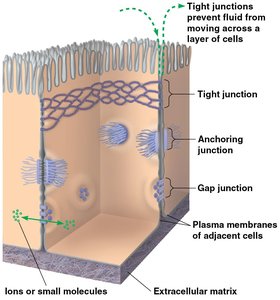
Cell Junctions in Animal Tissues
Animal cells are connected by specialized junctions that facilitate adhesion and communication:
Tight junctions: Seal cells together to prevent leakage of extracellular fluid.
Anchoring junctions (desmosomes): Fasten cells into strong sheets.
Gap junctions: Allow ions and small molecules to pass between cells for communication.
Cell Walls and Plasmodesmata in Plants
Plant cell walls are rigid structures composed mainly of cellulose. They provide support, protection, and help maintain cell shape. Plasmodesmata are channels that traverse cell walls, allowing transport and communication between plant cells.
Functional Categories of Eukaryotic Cell Structures
Eukaryotic cell structures can be grouped into four main functional categories:
Genetic control: Nucleus, ribosomes
Manufacturing, distribution, and breakdown: Endomembrane system (ER, Golgi apparatus, lysosomes, vacuoles, peroxisomes)
Energy processing: Mitochondria, chloroplasts
Structural support, movement, and communication: Cytoskeleton, plasma membrane, cell wall, ECM, cell junctions
Summary Table: Major Eukaryotic Organelles and Their Functions
Organelle | Main Function | Key Features |
|---|---|---|
Nucleus | Genetic control, DNA storage | Double membrane, nucleolus |
Ribosome | Protein synthesis | Free or bound to ER |
Rough ER | Protein and membrane synthesis | Ribosomes attached |
Smooth ER | Lipid synthesis, detoxification | No ribosomes |
Golgi apparatus | Modification, sorting, shipping of proteins/lipids | Stacked cisternae |
Lysosome | Digestion and recycling | Hydrolytic enzymes |
Vacuole | Storage, waste disposal, water balance | Large in plants |
Mitochondrion | ATP production (cellular respiration) | Double membrane, own DNA |
Chloroplast | Photosynthesis | Double membrane, thylakoids |
Peroxisome | Breakdown of fatty acids, detoxification | Single membrane |
Cytoskeleton | Support, movement | Microtubules, microfilaments, intermediate filaments |
Cell wall (plants) | Protection, support | Cellulose |
Extracellular matrix (animals) | Support, adhesion, signaling | Glycoproteins, collagen |
