 뒤로
뒤로Biomolecules: Structure, Function, and Synthesis in General Biology
스터디 가이드 - 스마트 노트
 자료에 맞춘 맞춤형 노트, 핵심 정의, 예시, 맥락을 확장해 제공합니다.
Biological Macromolecules and Their Importance
Overview of Biomolecules
Biological macromolecules are essential for life, forming the structural and functional basis of cells. These molecules are typically polymers, constructed from smaller units called monomers. The four major classes of biomolecules are nucleic acids, proteins, carbohydrates, and lipids. Each class plays a distinct role in cellular processes and structure.
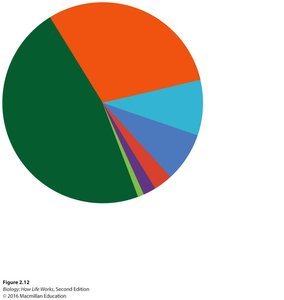
Nucleic acids (~15%): DNA and RNA, responsible for genetic information storage and transfer.
Proteins (~50%): Enzymes, structural proteins, and signaling molecules.
Carbohydrates (~15%): Energy storage and structural components.
Lipids (~15%): Membrane structure and energy storage.
Cells are composed of approximately 80% water, with the remaining 20% consisting of these biomolecules in the proportions listed above.
Monomers and Polymers
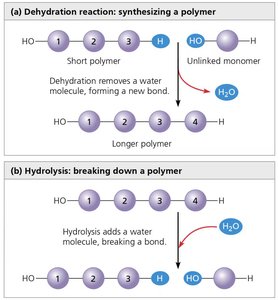
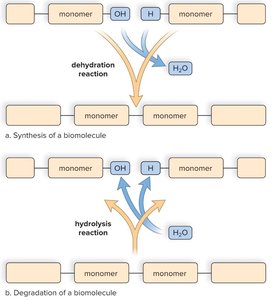
Macromolecules are often referred to as polymers because they are made from repeating monomer units. The process of assembling and disassembling these polymers is fundamental to cell biology.
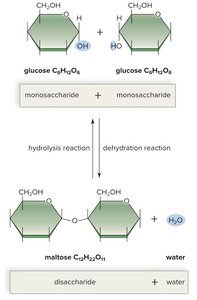
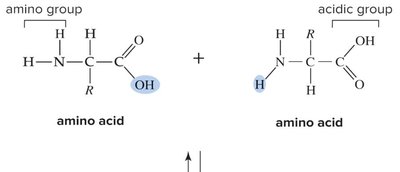
Dehydration Synthesis (Condensation): Joins monomers to form polymers by removing a water molecule.
Hydrolysis: Breaks polymers into monomers by adding a water molecule.
Category | Subunits (Monomers) | Polymer |
|---|---|---|
Carbohydrates | Monosaccharide | Polysaccharide |
Lipids | Glycerol and fatty acids | Does not form polymers |
Proteins | Amino acids | Polypeptide |
Nucleic acids | Nucleotide | DNA, RNA |
Carbon: The Backbone of Life
Properties of Carbon
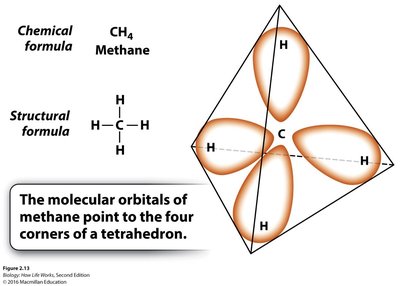
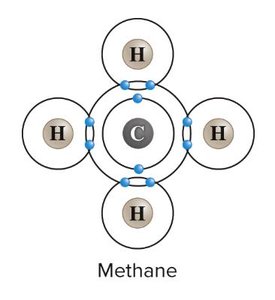
Carbon is the central element in organic molecules due to its ability to form four covalent bonds, allowing for a variety of molecular shapes and functions. Carbon atoms can bond to other carbons and to atoms of other elements, creating a vast diversity of organic compounds.
Can form single, double, or triple bonds.
Can create chains, branched structures, and rings.
Each bond can rotate freely, contributing to molecular flexibility.
Carbon Skeletons and Functional Groups
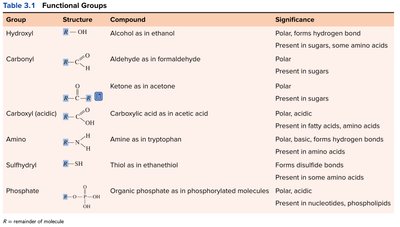
The diversity of organic molecules arises from variations in carbon skeletons and the presence of functional groups. Functional groups are specific groups of atoms that confer distinct chemical properties and reactivity to molecules.
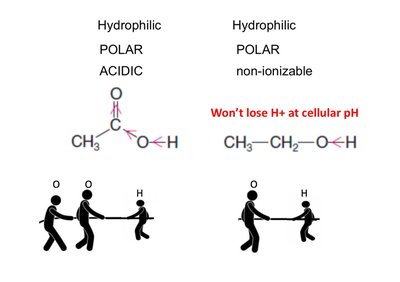
Hydroxyl (–OH): Polar, forms hydrogen bonds.
Carboxyl (–COOH): Acidic, can donate H+.
Amino (–NH2): Basic, can accept H+.
Phosphate (–PO4): Polar, acidic, important in nucleic acids.
Sulfhydryl (–SH): Forms disulfide bonds in proteins.
Group | Structure | Compound | Significance |
|---|---|---|---|
Hydroxyl | –OH | Alcohol | Polar, forms hydrogen bonds |
Carboxyl | –COOH | Carboxylic acid | Polar, acidic |
Amino | –NH2 | Amine | Polar, basic |
Sulfhydryl | –SH | Thiols | Forms disulfide bonds |
Phosphate | –PO4 | Organic phosphate | Polar, acidic |
Carbohydrates
Structure and Function
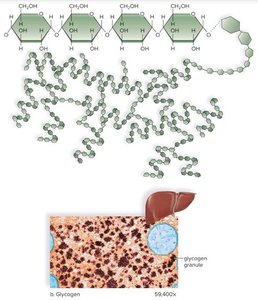
Carbohydrates are composed of monosaccharide monomers, such as glucose. They serve as energy sources and structural materials. Polysaccharides like starch and glycogen are storage forms, while cellulose provides structural support in plants.
Monosaccharides: Simple sugars (e.g., glucose).
Disaccharides: Two monosaccharides joined by dehydration synthesis (e.g., maltose).
Polysaccharides: Long chains of monosaccharides (e.g., glycogen, cellulose).
Lipids
Structure and Function
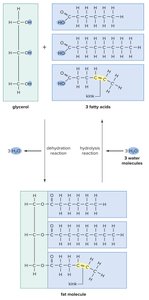
Lipids are hydrophobic molecules, including fats, oils, and phospholipids. They are not true polymers but are formed from glycerol and fatty acids. Lipids are important for energy storage, membrane structure, and signaling.
Triglycerides: Formed by joining glycerol and three fatty acids via dehydration synthesis.
Phospholipids: Major component of cell membranes.
Proteins
Structure and Function
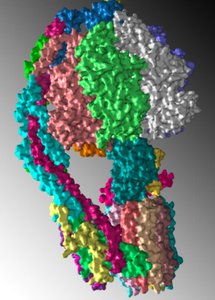
Proteins are polymers of amino acids, linked by peptide bonds. They serve as enzymes, structural components, and signaling molecules. The structure of a protein determines its function, and changes in environment can denature proteins, rendering them inactive.
Primary structure: Sequence of amino acids.
Secondary structure: Alpha helices and beta sheets formed by hydrogen bonding.
Tertiary structure: Three-dimensional folding due to side chain interactions.
Quaternary structure: Association of multiple polypeptide subunits.
Protein Folding and Side Chains
The chemical nature of amino acid side chains (R groups) determines protein folding and function. Side chains can be hydrophobic, hydrophilic, acidic, or basic, affecting how proteins interact with their environment and other molecules.
Hydrophobic side chains: Tend to be buried inside proteins.
Hydrophilic side chains: Often exposed to the aqueous environment.
Acidic and basic side chains: Can form ionic bonds and participate in catalysis.
Nucleic Acids
Structure and Function
Nucleic acids, including DNA and RNA, are polymers of nucleotide monomers. They store and transmit genetic information. DNA is double-stranded and stable, while RNA is single-stranded and more versatile.
Nucleotide structure: Composed of a sugar, phosphate group, and nitrogenous base.
DNA: Double helix, bases A, T, G, C.
RNA: Single strand, bases A, U, G, C.
Phosphodiester bonds: Link nucleotides in a chain.
DNA Replication and Base Pairing
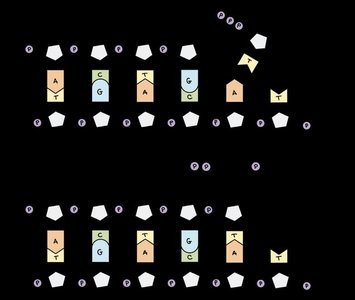
DNA replication relies on complementary base pairing: A pairs with T, and G pairs with C. The two strands of DNA are antiparallel, and replication involves separating the strands and synthesizing new ones using base-pairing rules.
Base pairing: A-T (2 hydrogen bonds), G-C (3 hydrogen bonds).
Antiparallel strands: 5' to 3' directionality.
Class Recap and Key Concepts
pH: Impacts biomolecule structure and function, especially proteins and nucleic acids.
Role of carbon: Central to biomolecule diversity.
Functional groups: Determine chemical properties and reactivity.
Polymer synthesis and breakdown: Dehydration synthesis and hydrolysis.
Additional info: This guide expands on brief lecture notes to provide a comprehensive overview of biomolecules, their structure, function, and synthesis, suitable for General Biology students.
