 뒤로
뒤로Carbon and the Molecular Diversity of Life: Study Notes
스터디 가이드 - 스마트 노트
 자료에 맞춘 맞춤형 노트, 핵심 정의, 예시, 맥락을 확장해 제공합니다.
Carbon and the Molecular Diversity of Life
Introduction to Organic Chemistry
Organic chemistry is the study of compounds containing carbon, regardless of their origin. Organic compounds range from simple molecules to complex macromolecules and are fundamental to life. - Organic compounds contain carbon, usually bonded to hydrogen. - Inorganic compounds usually do not contain carbon, or contain it in forms such as carbonates or cyanides. - Organic chemistry is central to understanding the origin and diversity of life. 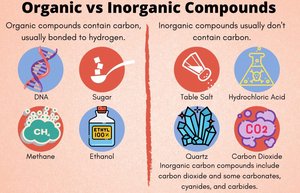
Origin of Organic Compounds on Earth
The abiotic synthesis of organic compounds was demonstrated by Stanley Miller's classic experiment, which simulated early Earth conditions. - Experiments suggest that organic molecules could have formed near volcanoes or other natural settings. - Key organic molecules produced include amino acids, carbohydrates, and nucleic acids. 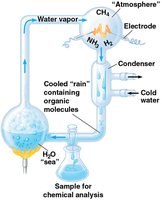
Major Elements of Life
The major elements found in living organisms are carbon (C), hydrogen (H), oxygen (O), nitrogen (N), sulfur (S), and phosphorus (P). Their proportions are remarkably consistent across different organisms. - These elements form the building blocks for a wide variety of organic molecules. - The versatility of carbon is a key factor in the diversity of life. 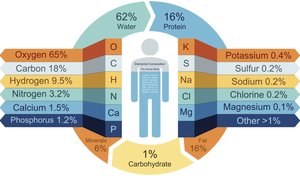
Carbon's Atomic Structure and Bonding
Electron Configuration and Bond Formation
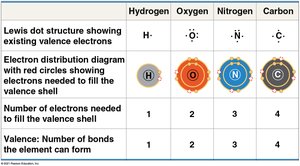
The electron configuration of carbon determines its chemical characteristics and bonding behavior. - Carbon has four valence electrons, allowing it to form four covalent bonds. - This enables carbon to create large, complex molecules with diverse structures. - In molecules with multiple carbons, each carbon bonded to four other atoms has a tetrahedral shape. - When two carbons are joined by a double bond, the atoms attached are in the same plane. 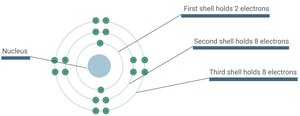
Molecular Diversity from Carbon Skeletons
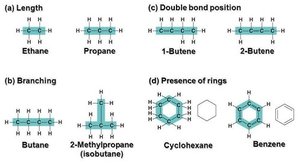
Carbon atoms can be linked into chains, forming the skeletons of most organic molecules. - Carbon chains vary in length, branching, and the presence of rings or double bonds. - This structural diversity leads to a wide variety of organic molecules. 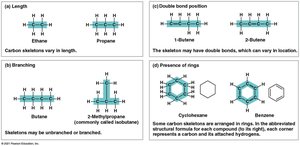
Hydrocarbons and Energy
Hydrocarbons
Hydrocarbons are organic molecules consisting only of carbon and hydrogen. - Many biological molecules, such as fats, contain hydrocarbon components. - Hydrocarbons can undergo reactions that release significant amounts of energy. 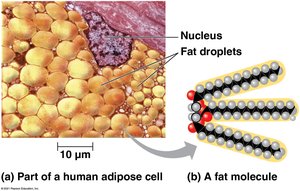
Isomers: Structural Diversity
Types of Isomers
Isomers are compounds with the same molecular formula but different structures and properties. - Structural isomers: Different covalent arrangements of atoms. - Cis-trans (geometric) isomers: Same covalent bonds, different spatial arrangements. - Enantiomers: Mirror images of each other, often with different biological activity. 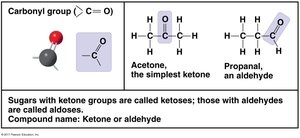
Biological Importance of Enantiomers
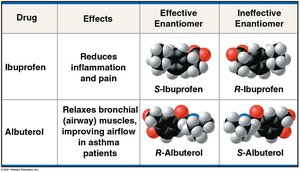
Enantiomers are crucial in pharmaceuticals, as only one enantiomer may be biologically active. - Organisms are sensitive to subtle molecular variations.
Drug | Effects | Effective Enantiomer | Ineffective Enantiomer |
|---|---|---|---|
Ibuprofen | Reduces inflammation and pain | S-Ibuprofen | R-Ibuprofen |
Albuterol | Relaxes bronchial muscles in asthma patients | R-Albuterol | S-Albuterol |
Functional Groups and Molecular Function
Functional Groups
Functional groups are specific groups of atoms within molecules that are responsible for characteristic chemical reactions. - The number and arrangement of functional groups determine a molecule's properties. - Seven key functional groups in biology:
Hydroxyl group (-OH)
Carbonyl group (-CO)
Carboxyl group (-COOH): Acts as an acid, can donate H+
Amino group (-NH2): Acts as a base
Sulfhydryl group (-SH)
Phosphate group (-OPO3)
Methyl group (-CH3)
Functional Groups in Biological Molecules
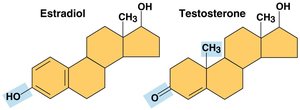
Functional groups are essential for the unique properties of biological molecules. - Example: Estradiol and testosterone are steroids with a common carbon skeleton but differ in functional groups, resulting in distinct biological functions.
ATP: The Energy Currency of the Cell
Structure and Function of ATP
Adenosine triphosphate (ATP) is a key organic phosphate in cells. - ATP consists of adenosine attached to three phosphate groups. - ATP stores potential energy and releases it upon reaction with water. - The reaction: 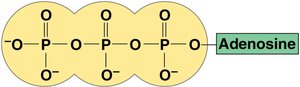
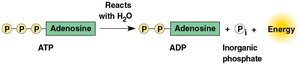 Example: ATP hydrolysis provides energy for cellular processes such as muscle contraction and active transport.
Additional info: The notes expand on brief lecture points to provide context, definitions, and examples for General Biology students.
