 뒤로
뒤로Ch 13 Meiosis
스터디 가이드 - 스마트 노트
 자료에 맞춘 맞춤형 노트, 핵심 정의, 예시, 맥락을 확장해 제공합니다.
Cell Division – Meiosis
Introduction to Genetics and Heredity
Genetics is the scientific study of heredity and variation in living organisms. Heredity refers to the transmission of traits from one generation to the next, while variation describes the differences in appearance and traits among offspring, parents, and siblings. Genes, the units of heredity, are composed of DNA segments and are located at specific loci on chromosomes. These genes are passed to the next generation via reproductive cells called gametes (sperm and eggs).

Sexual and Asexual Reproduction
Organisms reproduce either sexually or asexually, with significant implications for genetic diversity:
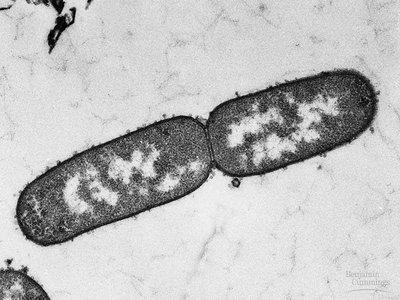
Asexual reproduction: A single individual produces offspring genetically identical to itself, often through mitosis and cytokinesis. Examples include bacteria and some multicellular organisms.
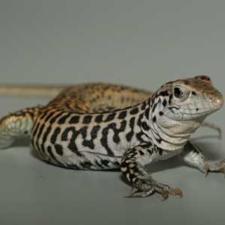
Sexual reproduction: Two parents contribute genetic material to produce offspring with unique gene combinations. This process involves meiosis (formation of gametes) and fertilization (fusion of gametes to form a zygote).

Diploid vs. Haploid Cells
Cells can be classified based on their chromosome number:
Diploid (2n): Cells with two sets of chromosomes, one from each parent. Most somatic (body) cells are diploid.
Haploid (n): Cells with only one set of chromosomes, such as gametes (sperm and eggs).

Types of Sexual Life Cycles
Sexual life cycles alternate between haploid and diploid stages. In humans and most animals, meiosis produces haploid gametes, which fuse during fertilization to restore the diploid state in the zygote. Mitosis then enables growth and development of the multicellular organism.

Stages of Meiosis
Overview of Meiosis
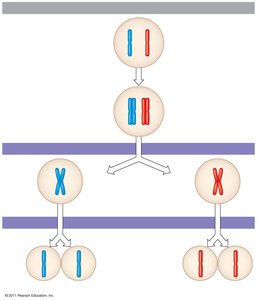
Meiosis is a specialized type of cell division that reduces the chromosome number by half, producing four haploid cells from one diploid cell. It consists of one round of DNA replication followed by two consecutive cell divisions: Meiosis I and Meiosis II.
Meiosis I (reductional division): Homologous chromosomes pair up and separate, resulting in two haploid cells with duplicated chromosomes.
Meiosis II (equational division): Sister chromatids separate, producing four haploid cells with unduplicated chromosomes.
Detailed Stages of Meiosis
Prophase I: Chromosomes condense, homologous chromosomes pair (synapsis), and crossing over occurs, exchanging genetic material between non-sister chromatids. The nuclear envelope breaks down and spindle fibers form.
Metaphase I: Homologous chromosome pairs (tetrads) align at the metaphase plate.
Anaphase I: Homologous chromosomes are pulled to opposite poles; sister chromatids remain attached.
Telophase I and Cytokinesis: Chromosomes decondense, nuclear envelopes reform, and the cell divides into two haploid cells.
Meiosis II: Similar to mitosis, where sister chromatids separate in each haploid cell, resulting in four genetically unique haploid cells.
Comparison: Mitosis vs. Meiosis
While both processes involve chromosome duplication and division, meiosis introduces genetic diversity through unique events:
Synapsis and crossing over (Prophase I): Homologous chromosomes physically connect and exchange genetic material.
Alignment of homologous pairs (Metaphase I): Homologous chromosomes, not individual chromosomes, align at the metaphase plate.
Separation of homologs (Anaphase I): Homologous chromosomes, not sister chromatids, are separated.
Genetic Variation from Sexual Reproduction
Mechanisms of Genetic Variation
Sexual reproduction generates genetic diversity through several mechanisms:
Independent assortment of chromosomes: Homologous pairs orient randomly at metaphase I, leading to numerous possible combinations in gametes. For humans, this results in about 8.4 million possible combinations ().
Crossing over: Non-sister chromatids exchange DNA segments during Prophase I, producing recombinant chromosomes with new allele combinations.
Random fertilization: Any sperm can fuse with any egg, further increasing genetic variation. The fusion of two gametes can produce a zygote with about 70 trillion possible diploid combinations.
Mutations
Mutations are random changes in DNA sequence that can introduce new genetic variations. While most mutations are neutral or harmful, some can be beneficial and contribute to evolution.
Mistakes During Meiosis
Nondisjunction and Aneuploidy
Mistakes during meiosis, such as nondisjunction, occur when homologous chromosomes or sister chromatids fail to separate properly during Anaphase. This results in gametes with abnormal chromosome numbers (aneuploidy). Common outcomes include:
Down syndrome: Caused by an extra copy of chromosome 21 (trisomy 21).
Klinefelter’s syndrome: Males with an extra X chromosome (XXY).
Many aneuploidies result in spontaneous abortion (miscarriage).
Summary Table: Key Differences Between Mitosis and Meiosis
Feature | Mitosis | Meiosis |
|---|---|---|
Number of divisions | 1 | 2 |
Number of daughter cells | 2 | 4 |
Chromosome number in daughter cells | Diploid (2n) | Haploid (n) |
Genetic identity | Identical to parent | Genetically unique |
Role in organism | Growth, repair, asexual reproduction | Sexual reproduction (gamete formation) |
Conclusion
Meiosis is essential for sexual reproduction, ensuring genetic diversity and the correct chromosome number in offspring. The processes of independent assortment, crossing over, and random fertilization contribute to the vast genetic variation observed in sexually reproducing populations. Errors in meiosis can lead to genetic disorders, highlighting the importance of accurate chromosome segregation.
