 뒤로
뒤로Chapter 23: Evolutionary Processes – Study Notes
스터디 가이드 - 스마트 노트
 자료에 맞춘 맞춤형 노트, 핵심 정의, 예시, 맥락을 확장해 제공합니다.
Chapter 23: Evolutionary Processes
Genes, Alleles, Genotypes, and Phenotypes
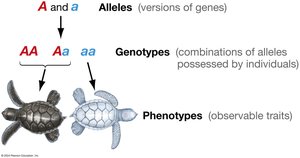
Understanding evolution requires a clear grasp of genetic terminology. A gene is a sequence of DNA bases that codes for a protein. Most genes exist in multiple forms called alleles. The genotype of an organism refers to the specific alleles it carries, while the phenotype is the observable characteristics resulting from the genotype and environmental influences.
Homozygote: An individual with two identical alleles for a gene.
Heterozygote: An individual with two different alleles for a gene.
Population Genetics and Evolution
Population genetics studies the processes that change allele and genotype frequencies in populations. A population is a group of individuals of the same species living in the same area at the same time and capable of interbreeding. Evolution is defined as any change in allele frequency within a population over time.
Allele frequency: The proportion of a specific allele among all alleles for a gene in a population.
The Hardy–Weinberg Equilibrium
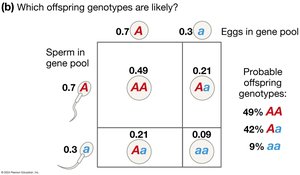
The Hardy–Weinberg equilibrium provides a mathematical model to predict genotype and allele frequencies in the next generation, assuming no evolution is occurring. If observed frequencies match predictions, the population is in equilibrium.
Equations:
p: Frequency of one allele
q: Frequency of the other allele
p^2: Frequency of homozygote for allele 1
2pq: Frequency of heterozygotes
q^2: Frequency of homozygote for allele 2
Assumptions of the Hardy–Weinberg Model
The model is based on five key assumptions:
Random mating (no mate choice)
No gene flow (no new alleles added or lost)
No genetic drift (large population size)
No mutation (no new alleles introduced)
No natural selection (all individuals contribute equally to the gene pool)
Forces of Evolution
There are five main evolutionary mechanisms that can alter allele frequencies:
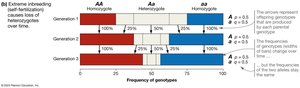
Nonrandom Mating: Increases homozygosity, decreases heterozygosity.
Natural Selection: Differential survival and reproduction sorts genetic variation.
Genetic Drift: Random changes in allele frequencies, especially in small populations.
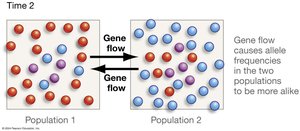
Gene Flow: Movement of alleles between populations, making them more similar.
Mutation: The ultimate source of new genetic variation.
Nonrandom Mating and Inbreeding
Inbreeding
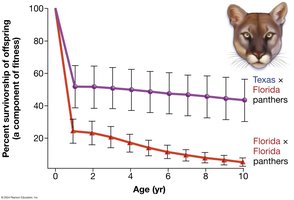
Inbreeding increases homozygosity and decreases heterozygosity, which can lead to inbreeding depression—reduced fitness due to the expression of deleterious recessive alleles.
Natural Selection
Natural selection is the process by which individuals with advantageous traits survive and reproduce more successfully, causing those traits to increase in frequency over generations. Selection can act in several modes:
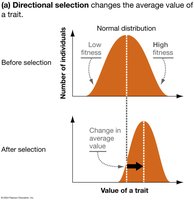
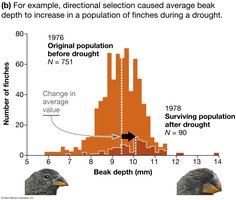
Directional Selection
Directional selection favors one extreme phenotype, shifting the population mean in one direction.
Stabilizing Selection
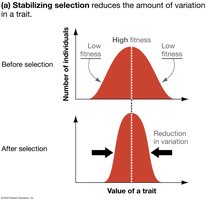
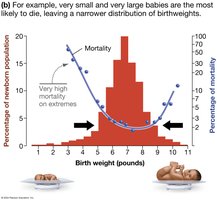
Stabilizing selection favors intermediate phenotypes, reducing variation and maintaining the status quo.
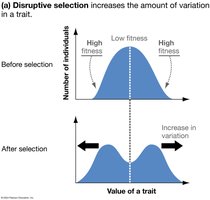
Disruptive Selection
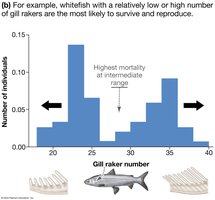
Disruptive selection favors both extreme phenotypes over intermediates, increasing variation.
Balancing Selection
Balancing selection maintains multiple alleles in a population. This can occur through heterozygote advantage or frequency-dependent selection.
Heterozygote advantage: Heterozygotes have higher fitness than either homozygote.
Frequency-dependent selection: Fitness of a phenotype depends on its frequency in the population.
Genetic Drift
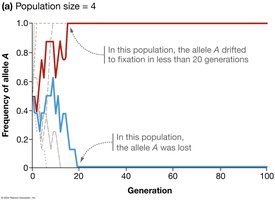
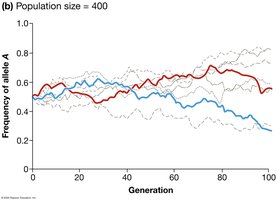
Genetic drift is the random change in allele frequencies due to chance events. It is most pronounced in small populations and can lead to the loss or fixation of alleles.
Founder Effect and Bottleneck Effect
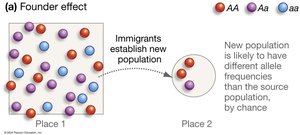
Founder Effect: When a new population is established by a small number of individuals, allele frequencies may differ from the source population.
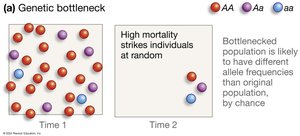
Bottleneck Effect: A sudden reduction in population size due to a random event can drastically alter allele frequencies.
Gene Flow
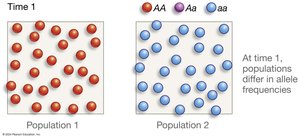
Gene flow is the movement of alleles between populations, which tends to reduce genetic differences between them and can introduce new alleles into a population.
Mutation
Mutation is the ultimate source of genetic variation, producing new alleles. Most mutations are neutral or deleterious, but beneficial mutations can increase in frequency through natural selection.
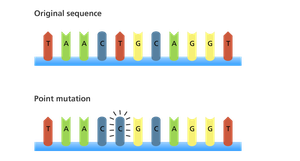
Point mutations: Changes in a single base pair in DNA.
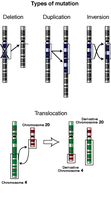
Chromosome-level mutations: Changes in chromosome number or structure (e.g., duplications, deletions).
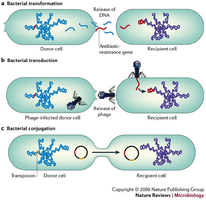
Lateral (horizontal) gene transfer: Transfer of genes between species, especially in prokaryotes.
Mutation and Evolution
Mutation alone is usually a weak force for changing allele frequencies but is essential for providing the raw material for evolution. Without mutation, evolution would eventually stop as genetic variation is depleted by selection and drift.
Experimental Evidence for Evolutionary Processes
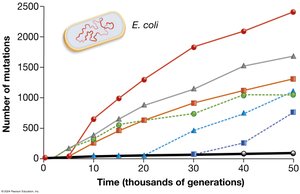
Experimental Evolution in E. coli
Long-term experiments with Escherichia coli demonstrate the accumulation of mutations over thousands of generations, with different populations accumulating mutations at different rates.
Balancing Selection in Pea Aphids
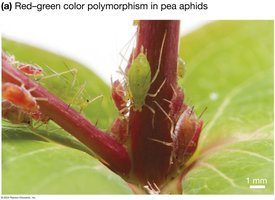
Red and green color morphs in pea aphids (Acyrthosiphon pisum) are maintained by balancing selection, as different predators preferentially target different color morphs. The ability to synthesize carotenoid pigments in aphids is due to gene transfer and subsequent mutation.
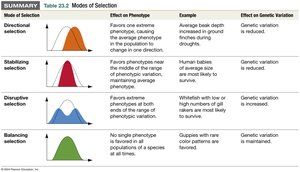
Summary Table: Modes of Selection
Mode of Selection | Effect on Phenotype | Example | Effect on Genetic Variation |
|---|---|---|---|
Directional selection | Favors one extreme phenotype, causing the average phenotype to change in one direction | Average beak depth increased in ground finches during droughts | Genetic variation is reduced |
Stabilizing selection | Favors phenotypes near the middle of the range of phenotypic variation | Human babies of average size are most likely to survive | Genetic variation is reduced |
Disruptive selection | Favors extreme phenotypes at both ends of the range of phenotypic variation | Whitefish with low or high numbers of gill rakers are most likely to survive | Genetic variation is increased |
Balancing selection | No single phenotype is favored; balance among multiple alleles is maintained | Guppies with rare color forms have a selective advantage | Genetic variation is maintained |
