 뒤로
뒤로Chapter 3: The Molecules of Cells – Structure and Function of Biological Macromolecules
스터디 가이드 - 스마트 노트
 자료에 맞춘 맞춤형 노트, 핵심 정의, 예시, 맥락을 확장해 제공합니다.
Chapter 3: The Molecules of Cells
Big Ideas of Chapter 3
This chapter explores the molecular diversity of life, focusing on the structure and function of organic molecules essential to all living organisms. The four major classes of biological macromolecules—carbohydrates, lipids, proteins, and nucleic acids—are introduced, along with the chemical principles underlying their formation and function.
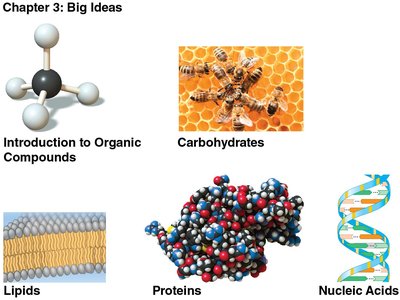
Introduction to Organic Compounds
Life’s Molecular Diversity and the Role of Carbon
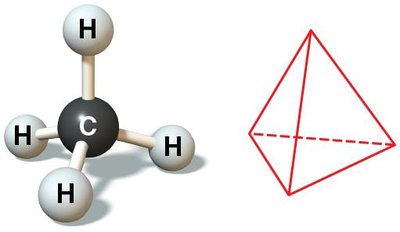
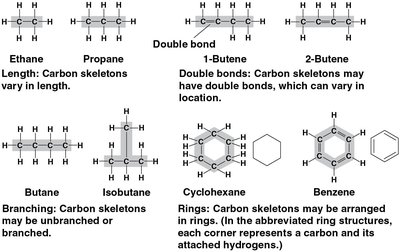
Organic compounds are molecules containing carbon and are the foundation of all living matter. Carbon's unique ability to form four covalent bonds allows for the construction of a wide variety of complex and diverse molecules, including chains, rings, and branched structures.
Carbon Skeletons: The backbone of most organic molecules, varying in length, branching, and ring formation.
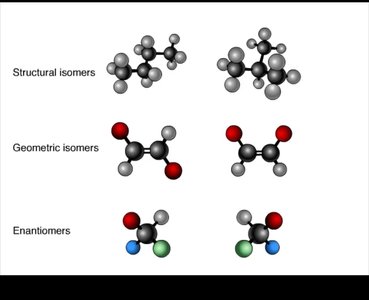
Isomers: Compounds with the same molecular formula but different structural arrangements, leading to different properties.
Hydrocarbons: Molecules consisting only of carbon and hydrogen; they are nonpolar and hydrophobic.
Isomers
Isomers are molecules with the same chemical formula but different structures. Types include structural isomers, geometric isomers, and enantiomers, each with distinct physical and chemical properties.
Functional Groups and Chemical Properties
The chemical behavior of organic molecules is largely determined by functional groups attached to the carbon skeleton. These groups are often hydrophilic and participate in chemical reactions.
Hydroxyl group (–OH): Found in alcohols; makes molecules polar.
Carbonyl group (C=O): Found in aldehydes and ketones.
Carboxyl group (–COOH): Acts as an acid; found in amino acids and fatty acids.
Amino group (–NH2): Acts as a base; found in amino acids.
Phosphate group (–OPO32–): Found in nucleotides and ATP.
Methyl group (–CH3): Nonpolar; affects gene expression.
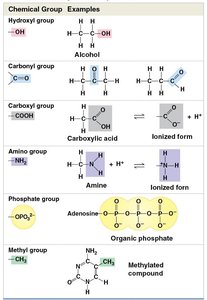
Functional Groups in Biological Molecules
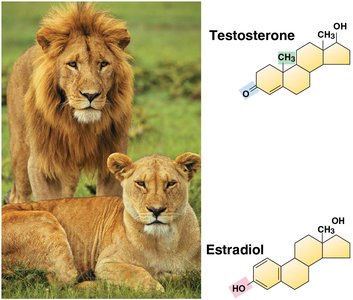
Small differences in functional groups can lead to significant differences in biological activity. For example, the sex hormones testosterone and estradiol differ only in their functional groups, yet have distinct effects in organisms.
Macromolecules: Polymers and Monomers
Formation and Breakdown of Polymers
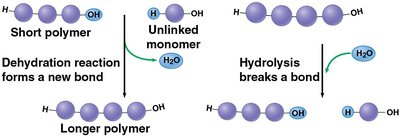
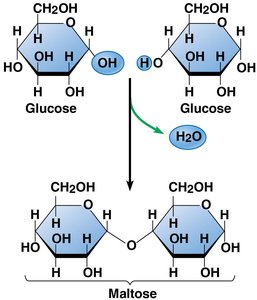
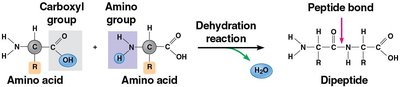
Cells construct macromolecules (polymers) by linking smaller units (monomers) through dehydration reactions, which remove water to form bonds. Polymers are broken down into monomers by hydrolysis, which adds water to break bonds. Enzymes catalyze both processes.
Dehydration Reaction: Joins monomers by removing a water molecule.
Hydrolysis: Breaks polymers into monomers by adding water.
Carbohydrates
Monosaccharides: The Simplest Carbohydrates
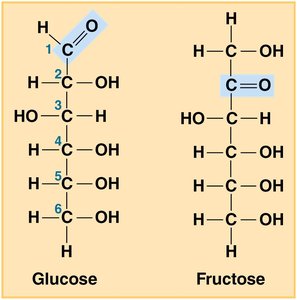
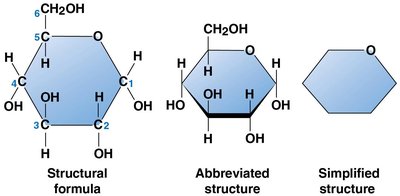
Carbohydrates are sugars and their polymers. Monosaccharides are the simplest form, typically with the formula (CH2O)n. They serve as the main energy source for cells and contain hydroxyl and carbonyl groups.
Examples: Glucose and fructose (C6H12O6).
Disaccharides
Disaccharides are formed by joining two monosaccharides via a dehydration reaction. For example, maltose is formed from two glucose molecules, and lactose (milk sugar) is formed from glucose and galactose.
Polysaccharides
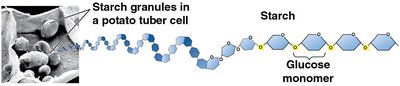
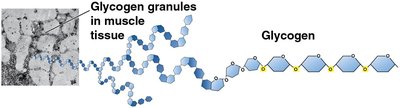
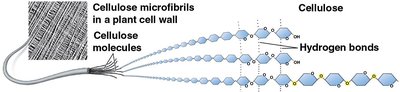
Polysaccharides are long chains of monosaccharide units. They serve as energy storage (starch in plants, glycogen in animals) or structural components (cellulose in plants, chitin in fungi and arthropods).
Starch: Storage form in plants; composed of glucose monomers.
Glycogen: Storage form in animals; highly branched glucose polymer.
Cellulose: Structural component of plant cell walls; forms strong fibers due to hydrogen bonding.
Lipids
Fats (Triglycerides)
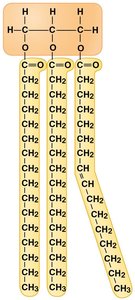
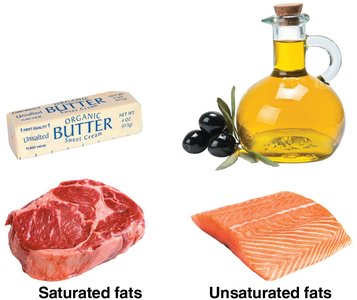
Lipids are hydrophobic molecules, mainly composed of carbon and hydrogen. Fats (triglycerides) are energy-storage molecules made from glycerol and three fatty acids. Fatty acids can be saturated (no double bonds; solid at room temperature) or unsaturated (one or more double bonds; liquid at room temperature).
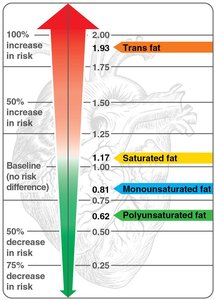
Saturated fats: Found in animal products; associated with higher health risks.
Unsaturated fats: Found in plant oils and fish; considered healthier.
Trans fats: Produced by hydrogenating unsaturated fats; linked to increased health risks.
Phospholipids and Steroids
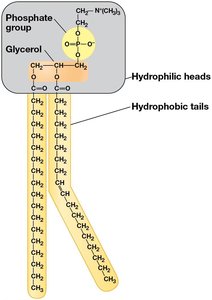
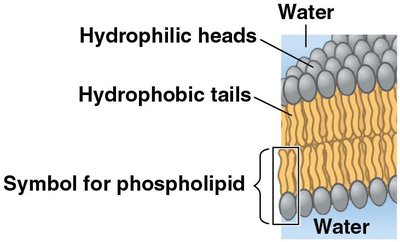
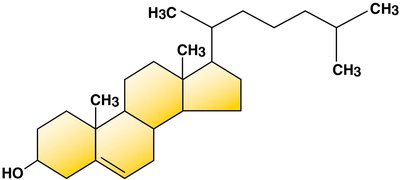
Phospholipids are major components of cell membranes, consisting of a glycerol, two fatty acids, and a phosphate group. They form bilayers in aqueous environments due to their hydrophilic heads and hydrophobic tails. Steroids, such as cholesterol, have a structure of four fused rings and serve as hormones and membrane components.
Proteins
Functions and Structure of Proteins
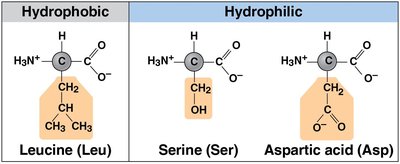
Proteins are the most diverse macromolecules, performing functions such as catalysis (enzymes), transport, defense (antibodies), signaling, movement, structure, and storage. They are polymers of 20 different amino acids, each with a unique R group.
Denaturation: Loss of protein structure and function due to environmental changes.
Amino Acids and Peptide Bonds
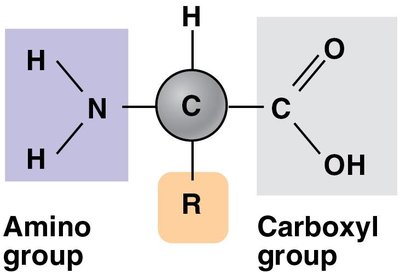
Amino acids have a central carbon bonded to an amino group, a carboxyl group, a hydrogen atom, and an R group. Peptide bonds link amino acids via dehydration reactions, forming polypeptides.
Levels of Protein Structure
Protein function depends on its shape, which is determined by four levels of structure:
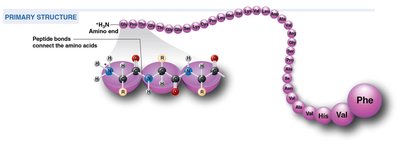
Primary structure: Sequence of amino acids.
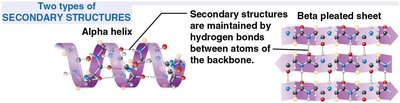
Secondary structure: Coiling (alpha helix) or folding (beta sheet) stabilized by hydrogen bonds.
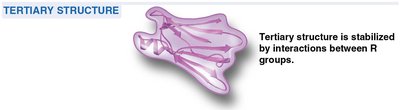
Tertiary structure: Overall 3D shape due to interactions among R groups.
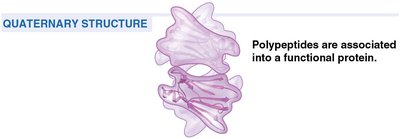
Quaternary structure: Association of multiple polypeptide chains.
Nucleic Acids
DNA and RNA: Structure and Function
Nucleic acids are polymers of nucleotides, each consisting of a sugar, a phosphate group, and a nitrogenous base. DNA is a double helix, while RNA is single-stranded. These molecules store and transmit genetic information, serving as blueprints for protein synthesis.
DNA: Molecule of inheritance; double-stranded.
RNA: Involved in protein synthesis; single-stranded.
Evolution Connection: Lactose Tolerance
Human Evolution and Lactose Tolerance
Lactose tolerance in adults is a recent evolutionary adaptation in some human populations, resulting from mutations that keep the lactase gene active. This trait is associated with the domestication of dairy animals and is an example of how genetic variation can lead to new metabolic capabilities.
Summary Table: Major Classes of Biological Macromolecules
Macromolecule | Monomer | Bond Type | Main Functions | Examples |
|---|---|---|---|---|
Carbohydrates | Monosaccharide | Glycosidic linkage | Energy storage, structure | Starch, cellulose, glycogen |
Lipids | Fatty acids, glycerol | Ester linkage | Energy storage, membranes, hormones | Fats, phospholipids, steroids |
Proteins | Amino acid | Peptide bond | Catalysis, structure, transport, defense | Enzymes, antibodies, collagen |
Nucleic Acids | Nucleotide | Phosphodiester bond | Genetic information, protein synthesis | DNA, RNA |
Key Equations and Concepts
General formula for monosaccharides:
Dehydration reaction (formation of maltose):
