 뒤로
뒤로Descent with Modification and Evolution of Populations: A Darwinian View of Life
스터디 가이드 - 스마트 노트
 자료에 맞춘 맞춤형 노트, 핵심 정의, 예시, 맥락을 확장해 제공합니다.
Descent with Modification: A Darwinian View of Life
Three Key Observations About Life
Biologists have long observed that organisms are well suited for their environments, share fundamental similarities, and display remarkable diversity. These observations form the foundation for understanding evolution.
Adaptation: Organisms possess traits that enhance survival and reproduction in their specific environments.
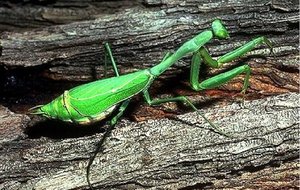
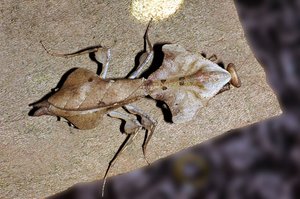
Unity of Life: Despite differences, all living things share certain characteristics, such as the three pairs of legs, bulging eyes, triangular head, and flexible neck in Mantodea (praying mantises).
Diversity of Life: There are thousands of species within groups like Mantodea, illustrating life's diversity.

Endless Forms Most Beautiful
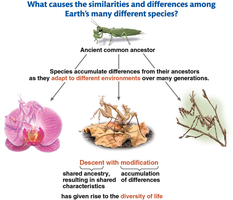
Mantises exemplify adaptation, unity, and diversity. Evolution, summarized by Darwin as "descent with modification," explains how species accumulate differences from their ancestors as they adapt to different environments over time.
Pattern: Scientific data reveal that life has evolved over time.
Process: Mechanisms such as natural selection drive evolutionary change.
The Darwinian Revolution
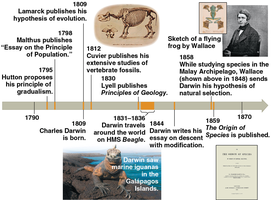
Darwin's work challenged the traditional view of a young, unchanging Earth. The publication of On The Origin of Species in 1859 marked the beginning of evolutionary biology as a scientific discipline.
Darwin's ideas were influenced by earlier thinkers and his own observations during his travels.
Scala Naturae and Classification of Species
Before Darwin, Aristotle proposed that species were fixed and arranged on a scale of increasing complexity (scala naturae). Carolus Linnaeus developed a nested classification system and the binomial nomenclature for naming species (e.g., Homo sapiens).
Ideas About Evolution: Change Over Time
Jean-Baptiste de Lamarck: Proposed that traits acquired during an organism's lifetime could be inherited (use and disuse, inheritance of acquired characteristics). These ideas are not supported by modern evidence.
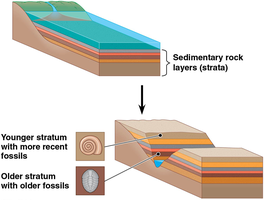
Georges Cuvier: Developed paleontology, noting that fossils in older strata differ from current organisms and that extinctions and new species appear over time. He attributed changes to catastrophic events.
Charles Lyell: Proposed uniformitarianism, the idea that geological processes operate at the same rates now as in the past, implying an ancient Earth.
Darwin’s Research: The Voyage of the Beagle
During his voyage on the HMS Beagle, Darwin collected specimens and made observations that led him to hypothesize that species change over time and adapt to their environments. He noted similarities between fossils and living species, and between island and mainland species, especially in the Galápagos Islands.
Darwin’s Focus on Adaptation
Darwin observed that adaptations—heritable traits that enhance survival and reproduction—could accumulate over generations, leading to the formation of new species. He proposed natural selection as the mechanism for this process.
Artificial Selection, Natural Selection, and Adaptation
Humans use artificial selection to breed plants and animals with desirable traits. Darwin recognized that a similar process occurs in nature—natural selection—where individuals with advantageous traits survive and reproduce more successfully.
Observation 1: Members of a population vary in their inherited traits.
Observation 2: All species can produce more offspring than the environment can support; many offspring fail to survive and reproduce.
Inferences from Darwin’s Observations
Inference 1: Individuals with traits that increase survival and reproduction leave more offspring.
Inference 2: Favorable traits accumulate in the population over generations.
Key Features of Natural Selection
Natural selection acts on heritable variation in populations, not individuals.
It increases the frequency of advantageous adaptations.
Environmental changes can shift which traits are favored, potentially leading to new species.
Evidence for Evolution
Multiple lines of evidence support evolution:
Direct observations: Evolution of drug-resistant bacteria, changes in populations in response to environmental pressures.
Homology: Similarities due to common ancestry, including anatomical, embryological, and molecular homologies.
The fossil record: Documents the history of life and reveals transitional forms.
Biogeography: Geographic distribution of species supports evolutionary relationships.
Homology and Evolutionary Trees
Homologous structures are anatomical features inherited from a common ancestor. Evolutionary trees illustrate relationships among species based on shared characteristics.
Convergent Evolution
Convergent evolution occurs when unrelated species independently evolve similar traits due to similar environmental pressures. These traits are called analogous, not homologous.
The Evolution of Populations
Mechanisms of Evolution in Populations
Evolution occurs at the population level, not in individuals. Microevolution refers to changes in allele frequencies within a population over generations.
Natural selection: Adaptation to the environment.
Genetic drift: Random changes in allele frequencies due to chance events.
Gene flow: Movement of alleles between populations.
Genetic Variation
Genetic variation is the raw material for evolution. It arises from mutations, gene duplication, and sexual reproduction (crossing over, independent assortment, fertilization).
Phenotype: The observable traits of an organism, influenced by genotype and environment.
Genotype: The genetic makeup of an organism.
The Hardy-Weinberg Principle
The Hardy-Weinberg equation describes the genetic makeup of a non-evolving population:
Where p and q are the frequencies of two alleles at a locus. If observed frequencies differ from expectations, the population may be evolving.
Conditions for Hardy-Weinberg Equilibrium
No mutations
Random mating
No natural selection
Extremely large population size
No gene flow
Genetic Drift
Genetic drift is more pronounced in small populations and can lead to loss of genetic variation. Two special cases are:
Founder effect: A few individuals establish a new population with different allele frequencies.
Bottleneck effect: A sudden reduction in population size changes allele frequencies.
Gene Flow
Gene flow is the movement of alleles between populations, which can reduce differences between populations and affect adaptation.
Natural Selection and Adaptive Evolution
Natural selection is the only mechanism that consistently leads to adaptive evolution, increasing the frequency of beneficial alleles.
Modes of Selection
Directional selection: Favors one extreme phenotype.
Disruptive selection: Favors both extreme phenotypes.
Stabilizing selection: Favors intermediate phenotypes.
Sexual Selection
Sexual selection favors traits that increase mating success. It can lead to sexual dimorphism (differences between sexes) and includes:
Intrasexual selection: Competition among the same sex for mates.
Intersexual selection: Mate choice, often by females.
Limits of Natural Selection
Selection can only act on existing variation.
Evolution is constrained by ancestry and history.
Adaptations are often compromises.
Chance events and environmental changes interact with selection.
