 뒤로
뒤로ch 20 study guide
스터디 가이드 - 스마트 노트
 자료에 맞춘 맞춤형 노트, 핵심 정의, 예시, 맥락을 확장해 제공합니다.
DNA Technology and Genetic Engineering
Introduction to DNA Technology
DNA technology encompasses the techniques used to sequence, manipulate, and analyze DNA. These methods are foundational for genetic engineering, which is the direct manipulation of genes for practical purposes in research, medicine, and industry.
Nucleic acid hybridization: The base pairing of one strand of nucleic acid to a complementary sequence on another strand.
Genetic engineering: The direct manipulation of genes for practical purposes.
DNA Sequencing and Cloning
DNA Sequencing Methods
DNA sequencing determines the precise order of nucleotides in a DNA molecule. The development of automated and high-throughput sequencing technologies has revolutionized biological research.
Dideoxy (chain termination) sequencing: Developed by Frederick Sanger, this method uses modified nucleotides to terminate DNA synthesis at specific bases.
Next-generation sequencing: Allows rapid, parallel sequencing of thousands of DNA fragments, increasing speed and reducing cost.
Third-generation sequencing: Sequences single long DNA molecules as they pass through nanopores, detecting bases by changes in electric current.
DNA Cloning and Plasmids
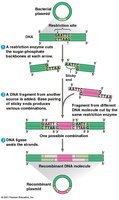
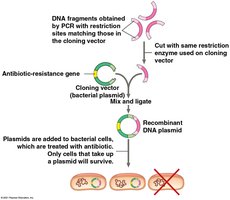
DNA cloning involves making multiple identical copies of a DNA segment, often using bacterial plasmids as vectors.
Plasmids: Small, circular DNA molecules in bacteria that replicate independently of the chromosome.
Recombinant DNA: DNA molecules formed by combining DNA from different sources.
Cloning vector: A plasmid or other agent used to transfer foreign DNA into a host cell.
Restriction Enzymes and Sticky Ends
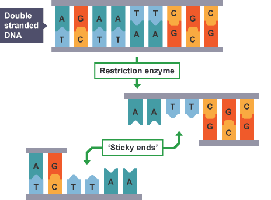
Restriction enzymes cut DNA at specific sequences, generating fragments with 'sticky ends' that can be joined with other DNA fragments using DNA ligase.
Restriction site: Specific DNA sequence recognized and cut by a restriction enzyme.
Sticky ends: Single-stranded overhangs that can base pair with complementary sequences.
Gel Electrophoresis
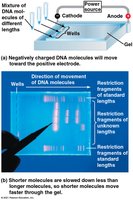
Gel electrophoresis separates DNA fragments by size using an electric field. Shorter fragments move faster through the gel matrix.
Used to analyze restriction fragments and verify recombinant DNA constructs.
Polymerase Chain Reaction (PCR)
PCR is a technique to amplify specific DNA sequences exponentially using cycles of heating, cooling, and extension. It requires sequence-specific primers and a heat-stable DNA polymerase, such as Taq polymerase.
Steps: Denaturation, annealing, extension.
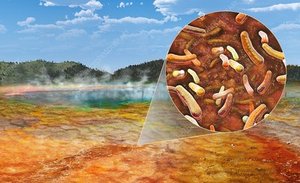
Taq polymerase: Derived from Thermus aquaticus, stable at high temperatures.
Applications: Forensics, diagnostics, cloning, and research.
Gene Expression and Functional Analysis
Expressing Cloned Genes
Cloned genes can be expressed in bacterial or eukaryotic cells to produce proteins for research or therapeutic use. Expression vectors with strong promoters are used to drive gene expression in bacteria.
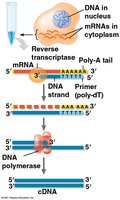
cDNA: Complementary DNA synthesized from mRNA, used to avoid introns in eukaryotic genes.
Expression systems: Bacteria, yeast, mammalian, or insect cells.
Studying Gene Expression
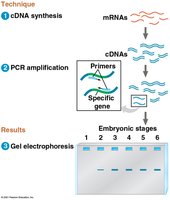
Gene expression can be studied by detecting mRNA using nucleic acid probes, in situ hybridization, or RT-PCR.
RT-PCR: Reverse transcriptase synthesizes cDNA from mRNA, which is then amplified by PCR.
qRT-PCR: Quantitative PCR measures mRNA levels using fluorescent dyes.
Genome-Wide Expression Analysis
RNA sequencing (RNA-seq) and DNA microarrays allow the study of expression patterns of thousands of genes simultaneously, providing insights into gene networks and cellular function.
Gene Function Analysis
Gene function can be determined by disrupting or editing genes and observing phenotypic effects.
In vitro mutagenesis: Introducing specific mutations into cloned genes.
CRISPR-Cas9: A precise gene-editing tool for knocking out or repairing genes.
RNA interference (RNAi): Silencing gene expression by degrading mRNA.
Genetic Markers and Association Studies
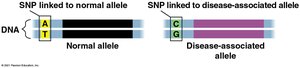
Genome-wide association studies use genetic markers such as SNPs to identify genes linked to diseases.
SNP (Single Nucleotide Polymorphism): A single base-pair variation in the genome, useful for mapping disease genes.
Cloning and Stem Cells
Organismal Cloning
Organismal cloning produces genetically identical individuals. In plants, mature cells can dedifferentiate and regenerate whole plants (totipotency). In animals, nuclear transplantation replaces the nucleus of an egg with that from a differentiated cell.
Reproductive Cloning in Animals
Reproductive cloning has been demonstrated in mammals, but cloned animals often show developmental defects due to incomplete epigenetic reprogramming.

Stem Cells and Therapeutic Cloning
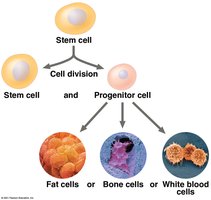
Stem cells are undifferentiated cells capable of self-renewal and differentiation. Embryonic stem (ES) cells are pluripotent, while adult stem cells are multipotent. Therapeutic cloning aims to produce ES cells for disease treatment.
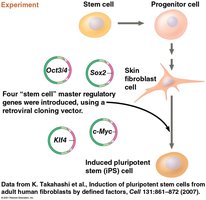
Induced Pluripotent Stem (iPS) Cells
iPS cells are generated by reprogramming differentiated cells to a pluripotent state using master regulatory genes. They offer potential for disease modeling and regenerative medicine.
Applications of DNA Technology and Biotechnology
Medical Applications
DNA technology is used for diagnosing genetic disorders, identifying carriers, and developing personalized medicine based on individual genetic profiles. Gene therapy and gene editing hold promise for treating genetic diseases.
Pharmaceutical Products
Biotechnology enables the production of drugs, hormones, and proteins in cell cultures or transgenic animals. Examples include human insulin and growth hormone.
Forensic Science
DNA profiling using short tandem repeats (STRs) is a powerful tool for identifying individuals, determining paternity, and solving crimes.
Environmental and Agricultural Applications
Genetically engineered microorganisms are used for environmental cleanup, while transgenic plants and animals are developed for improved agricultural traits such as pest resistance, herbicide tolerance, and enhanced nutrition.
Safety and Ethical Considerations
Biotechnology raises important safety and ethical questions, especially regarding genetically modified organisms (GMOs), gene editing in humans, and the potential for unintended consequences. Regulatory frameworks are in place to ensure safe practices.
Summary Table: Key Tools and Applications in DNA Technology
Tool/Technique | Main Purpose | Example/Application |
|---|---|---|
Restriction Enzymes | Cut DNA at specific sites | Creating recombinant DNA |
DNA Ligase | Join DNA fragments | Sealing sticky ends |
PCR | Amplify DNA | Forensics, diagnostics |
Gel Electrophoresis | Separate DNA fragments | Analyzing restriction digests |
CRISPR-Cas9 | Edit genes | Gene knockout/repair |
RT-PCR/qRT-PCR | Measure gene expression | Comparing mRNA levels |
Cloning Vectors | Transfer genes | Gene cloning in bacteria |
iPS Cells | Regenerative medicine | Disease modeling |
