 뒤로
뒤로Bio 100 LEC Chapter 17 Module 1
스터디 가이드 - 스마트 노트
 자료에 맞춘 맞춤형 노트, 핵심 정의, 예시, 맥락을 확장해 제공합니다.
Chapter 17: Gene Expression: From Gene to Protein
Introduction to the Central Dogma of Molecular Biology
The central dogma of molecular biology describes the flow of genetic information within a biological system. It explains how genetic information stored in DNA is used to synthesize proteins, which determine an organism's traits. This process involves two main stages: transcription and translation.
The Relationship Between Genes and Proteins
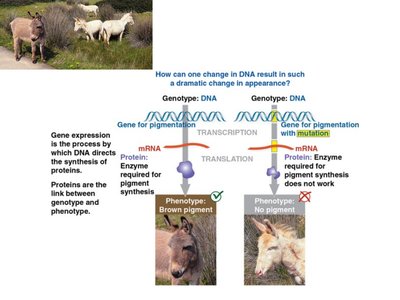
Gene expression is the process by which information from a gene is used to synthesize a functional gene product, typically a protein.
Proteins are the link between genotype (genetic makeup) and phenotype (observable traits).
A single change in DNA (mutation) can result in a dramatic change in phenotype, as seen in genetic disorders like sickle cell anemia or albinism in animals.
Experimental Discovery: Genes Specify Proteins
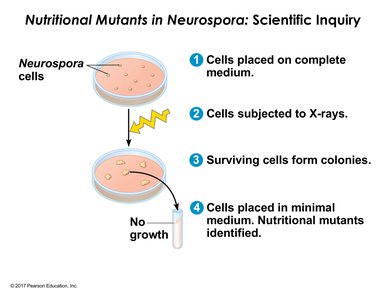
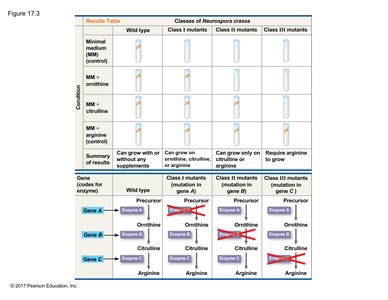
The relationship between genes and proteins was elucidated through experiments using model organisms such as the bread mold Neurospora crassa. These experiments demonstrated that specific genes are responsible for the production of specific enzymes, which catalyze steps in metabolic pathways.
Beadle and Tatum's Experiment
Wild-type Neurospora can grow on minimal medium, which contains only basic nutrients.
Mutants generated by X-ray exposure failed to grow on minimal medium, indicating a loss of function in a metabolic pathway.
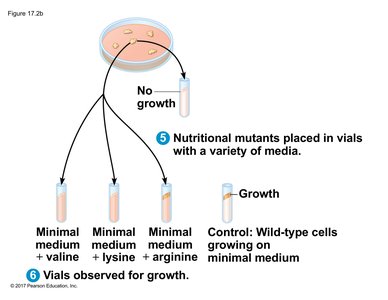
By supplementing the medium with specific amino acids or vitamins, researchers identified which step in the pathway was disrupted.
Classification of Mutants
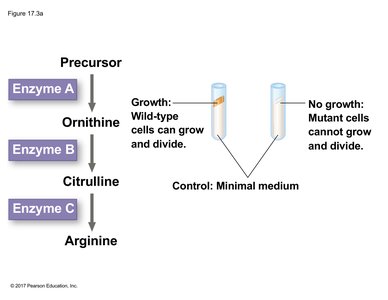
Mutants were classified based on their ability to grow when supplemented with pathway intermediates. This led to the formulation of the "one gene–one enzyme" hypothesis, later refined to "one gene–one polypeptide" as not all proteins are enzymes and many proteins are composed of multiple polypeptides.
Class | Growth on Minimal Medium | Growth with Ornithine | Growth with Citrulline | Growth with Arginine | Gene Mutated |
|---|---|---|---|---|---|
Wild type | Yes | Yes | Yes | Yes | None |
Class I | No | Yes | Yes | Yes | Gene A |
Class II | No | No | Yes | Yes | Gene B |
Class III | No | No | No | Yes | Gene C |
The Flow of Genetic Information
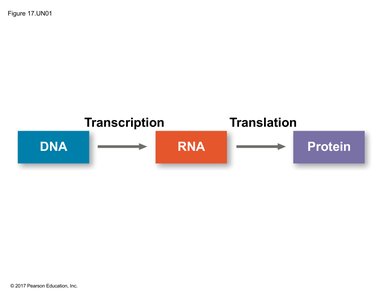
The information content of genes is encoded in the specific sequence of nucleotides in DNA.
Gene expression involves two main stages:
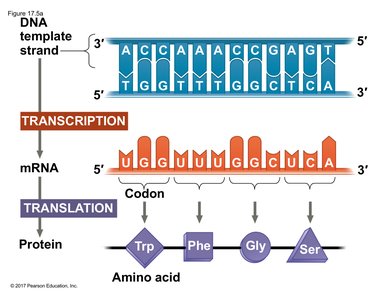
Transcription: Synthesis of RNA from a DNA template.
Translation: Synthesis of a polypeptide (protein) from an mRNA template.
Gene Expression in Prokaryotes vs. Eukaryotes
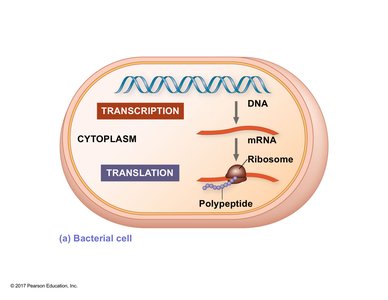
In prokaryotes, transcription and translation occur in the cytoplasm and can happen simultaneously due to the absence of a nuclear envelope.
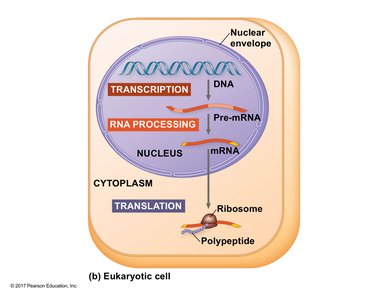
In eukaryotes, transcription occurs in the nucleus, and translation occurs in the cytoplasm. Eukaryotic mRNA undergoes additional processing (e.g., splicing, capping, polyadenylation) before translation.
Refinements of the Central Dogma
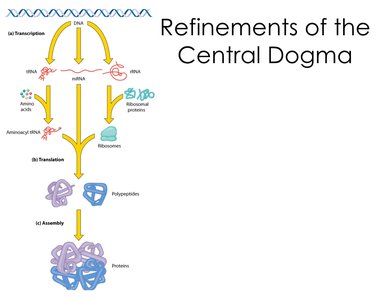
Not all RNA molecules code for proteins. Major types of RNA include:
mRNA (messenger RNA): Encodes proteins.
tRNA (transfer RNA): Brings amino acids to the ribosome during translation.
rRNA (ribosomal RNA): Structural and catalytic component of ribosomes.
Some genes code for functional RNAs (tRNA, rRNA) that are not translated into proteins.
Reverse Transcription and Viruses
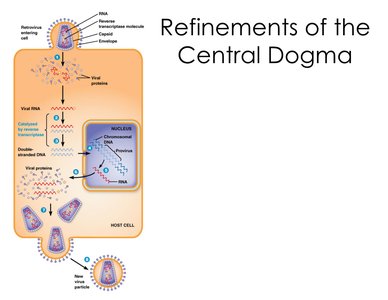
Some viruses (e.g., retroviruses like HIV) use reverse transcriptase to synthesize DNA from an RNA template, integrating viral DNA into the host genome.
This process is called reverse transcription and is an exception to the standard flow of genetic information.
The Genetic Code
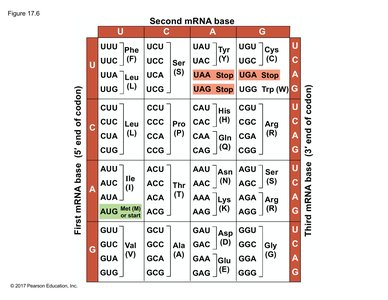
The genetic code is the set of rules by which nucleotide sequences in mRNA are translated into amino acid sequences in proteins.
It is a triplet code: three nucleotides (a codon) specify one amino acid.
There are 64 possible codons (43), but only 20 amino acids, making the code degenerate (more than one codon can specify the same amino acid).
The code is unambiguous: each codon specifies only one amino acid.
Three codons (UAA, UAG, UGA) are stop codons that signal the end of translation.
Experimental Evidence for the Triplet Code
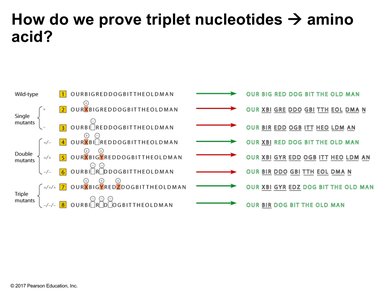
Mutagenesis experiments using insertions and deletions (indels) demonstrated that the genetic code is read in non-overlapping triplets.
Single or double indels disrupt the reading frame (frameshift mutation), while triple indels may restore the reading frame, supporting the triplet nature of the code.
Reading the Genetic Code Table
To determine the amino acid specified by a codon, use the first base (left), second base (top), and third base (right) to locate the correct box in the genetic code table.
For example, the codon GAA codes for glutamic acid (Glu, E).
Evolution of the Genetic Code
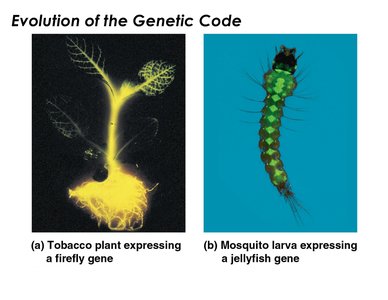
The genetic code is nearly universal among all organisms, providing strong evidence for a common evolutionary origin.
This universality allows genes from one organism to be expressed in another, a principle used in biotechnology (e.g., expressing a jellyfish gene in bacteria to produce fluorescence).
Summary Table: Key Terms and Concepts
Term | Definition | Example/Application |
|---|---|---|
Gene Expression | Process by which information from a gene is used to synthesize a functional product | Transcription and translation of a gene to produce an enzyme |
Transcription | Synthesis of RNA from a DNA template | Formation of mRNA in the nucleus |
Translation | Synthesis of a polypeptide from an mRNA template | Ribosome assembling amino acids into a protein |
Codon | Three-nucleotide sequence in mRNA that specifies an amino acid | AUG codes for methionine (start codon) |
Mutation | Change in the DNA sequence | Sickle cell anemia caused by a single nucleotide change |
