 뒤로
뒤로General Biology: Evolution, Natural Selection, and Population Genetics
스터디 가이드 - 스마트 노트
 자료에 맞춘 맞춤형 노트, 핵심 정의, 예시, 맥락을 확장해 제공합니다.
Biology: The Study of Life
Introduction to Biology and Evolution
Biology is the scientific study of life, encompassing the structure, function, growth, origin, evolution, and distribution of living organisms. Evolution is a central theme in biology, explaining the diversity of life and the adaptations of organisms to their environments.
Evolution explains why organisms, including humans, are the way they are.
Biologists use observation, experimentation, and hypothesis testing to understand life processes.
Evolution by Natural Selection
Theory of Natural Selection
Natural selection is the process by which populations change over time as individuals with advantageous traits survive and reproduce more successfully than others. This leads to the accumulation of beneficial traits in the population.
Heritable Variation: Individuals in a population vary in traits that can be passed to offspring.
Fitness: Some traits increase an individual's reproductive success in a given environment.
Adaptation: A trait that increases fitness in a particular environment.
Key Point: Natural selection acts on individuals, but evolutionary change occurs in populations.
Conditions for Natural Selection
There is heritable variation within a population.
In certain conditions, some traits lead to increased reproductive success (fitness).
Examples and Applications
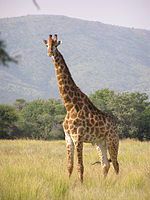
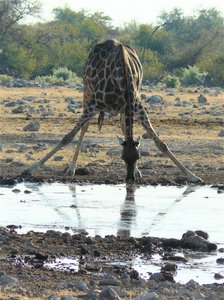
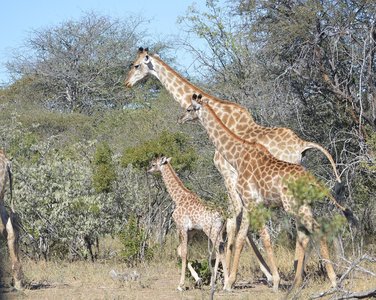
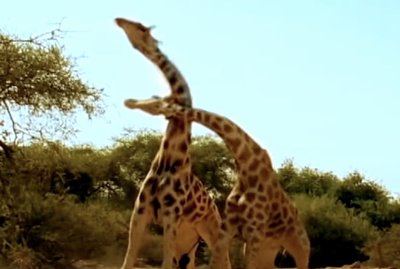
Giraffes' long necks may be explained by natural selection for feeding or sexual selection for fighting.
Field studies and experiments are used to test evolutionary hypotheses.
Phylogenetic Trees and Common Ancestry
Reading Phylogenetic Trees
Phylogenetic trees are diagrams that show the evolutionary relationships among species. They are constructed using similarities and differences in genetic or morphological data.
Branches that share a recent common ancestor represent closely related species.
Branches without a recent common ancestor are more distantly related.
Evidence for Evolution
Fossils and Transitional Features
Fossils provide evidence for change through time, showing extinct species and transitional features that link older and younger species.
Transitional features: Intermediate traits between ancestral and derived species.
Vestigial traits: Reduced or nonfunctional traits similar to those in ancestors.
Homology: Similarity among species due to shared ancestry (e.g., limb bones in vertebrates).
Fitness Trade-Offs
Evolution is not perfect; trade-offs occur when two traits cannot be optimized simultaneously. For example, turtle shells provide protection but are heavy and burdensome for movement.
Population Genetics and the Hardy-Weinberg Principle
Hardy-Weinberg Equilibrium
The Hardy-Weinberg principle provides a mathematical model to study genetic variation in populations. It predicts genotype frequencies under certain conditions and is used to test whether evolution is occurring at a particular gene.
Assumptions: Large population, random mating, no genetic drift, no gene flow, no natural selection, no mutation.
Equation:
p: Frequency of dominant allele
q: Frequency of recessive allele
p^2: Frequency of homozygous dominant genotype
2pq: Frequency of heterozygous genotype
q^2: Frequency of homozygous recessive genotype
Applications of Hardy-Weinberg
Estimate frequencies of genotypes and alleles in a population.
Test for evolution or nonrandom mating (e.g., inbreeding).
Effects of Nonrandom Mating
Inbreeding: Increases frequency of homozygotes but does not change allele frequencies.
Outbreeding: Can alleviate effects of inbreeding.
Modes of Natural Selection
Types of Selection
Directional selection: Favors one extreme phenotype.
Stabilizing selection: Favors intermediate phenotypes.
Disruptive selection: Favors both extreme phenotypes.
Balancing selection: Maintains genetic diversity in a population.
Common Misconceptions about Evolution
Evolutionary change does not occur in individuals, but in populations.
Adaptations do not occur because organisms want or need them.
Organisms are not always optimal due to trade-offs and constraints.
Key Terms and Definitions
Evolution: Change in the characteristics of a population over time.
Fitness: Ability of an individual to produce surviving offspring.
Adaptation: Trait that increases fitness in a particular environment.
Population: Group of individuals of the same species living in the same area at the same time.
Summary Table: Hardy-Weinberg Principle
Assumption | Effect if Violated |
|---|---|
Large population (no genetic drift) | Random changes in allele frequencies |
Random mating | Changes in genotype frequencies (e.g., inbreeding) |
No gene flow | Allele frequencies change due to migration |
No natural selection | Allele frequencies change due to differential fitness |
No mutation | New alleles introduced |
Additional info: For more details on modes of selection, review textbook figures 23.6, 23.7, and 23.8. For practice, apply the Hardy-Weinberg equation to sample allele and genotype frequencies.
