 뒤로
뒤로General Biology I: Comprehensive Study Notes for Final Exam Preparation
스터디 가이드 - 스마트 노트
 자료에 맞춘 맞춤형 노트, 핵심 정의, 예시, 맥락을 확장해 제공합니다.
Characteristics of Life and Scientific Inquiry
Defining Life
Living organisms share a set of fundamental characteristics that distinguish them from non-living matter. These characteristics are essential for the maintenance, growth, and reproduction of life.
Order/Organization: All living things are composed of one or more cells with organized structures.
Energy Processing/Metabolism: Organisms take in energy and matter and transform them to perform work, such as growth, repair, and movement.
Regulation/Homeostasis: Living things maintain stable internal conditions (e.g., temperature, pH, water balance).
Growth and Development: Organisms grow and change, guided by genetic information.
Response to Stimuli: Organisms sense and respond to environmental changes (e.g., light, chemicals, touch).
Reproduction: Living things produce new organisms, either asexually (one parent) or sexually (two parents).
Heredity: Genetic information (DNA/RNA) is passed from one generation to the next.
Evolutionary Adaptation: Populations change over generations, with traits that improve survival becoming more common.
Autotrophs vs. Heterotrophs
Autotrophs: Organisms that produce their own food (e.g., plants, algae, some bacteria). They use sunlight (photoautotrophs) or inorganic chemicals (chemoautotrophs) for energy.
Heterotrophs: Organisms that obtain energy by consuming other organisms (e.g., animals, fungi).
The Scientific Method
The scientific method is a systematic approach to inquiry used to investigate natural phenomena.
Make observations and ask questions
Do background research
Form a hypothesis and prediction
Test with experiments (identify variables and controls, collect data)
Analyze data
Draw conclusions and communicate results
Replicate findings
The Chemical Context of Life
Atoms and Elements
Atoms are the smallest units of matter that retain the properties of an element. They consist of protons and neutrons (in the nucleus) and electrons (orbiting the nucleus).
Atomic Number: Number of protons in the nucleus.
Atomic Mass: Number of protons plus neutrons.
Most Abundant Elements in Living Organisms: Oxygen, carbon, hydrogen, nitrogen.
Chemical Bonds
Ionic Bonds: Formed when one atom donates an electron to another (e.g., NaCl).
Covalent Bonds: Atoms share electrons. Can be non-polar (equal sharing) or polar (unequal sharing, e.g., H2O).
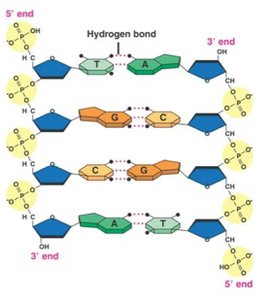
Hydrogen Bonds: Weak attractions between molecules, important in water and DNA structure.
Macromolecules
Carbohydrates: Quick energy and structural support (e.g., glucose, fructose).
Lipids: Long-term energy storage, membrane structure.
Proteins: Enzymes, cell work, structure.
Nucleic Acids: Genetic information (DNA, RNA).
Cell Structure and Function
Major Organelles and Their Functions
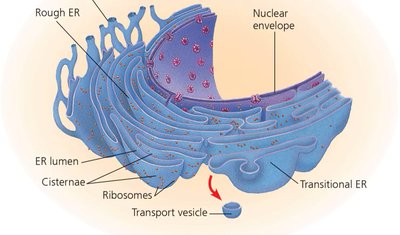
Golgi Apparatus: Modifies, sorts, and packages proteins and lipids for transport.
Ribosomes: Sites of protein synthesis.
Mitochondria: Powerhouse of the cell; site of aerobic respiration and ATP production.
Cell Wall: Provides structure and protection (found in plants and bacteria).
Cell Membrane: Controls entry/exit of substances, communication, structural support, and protection.
Major Constituents of the Cell Membrane: Phospholipids (form bilayer), proteins (transport, receptors, enzymes), and carbohydrates (cell recognition).
Prokaryotes vs. Eukaryotes: Prokaryotes (e.g., bacteria) lack a nucleus and membrane-bound organelles; eukaryotes (plants, animals) have both.
Enzymes and Metabolism
Properties and Regulation of Enzymes
Enzymes are biological catalysts (usually proteins) that speed up chemical reactions by lowering activation energy. They are specific to their substrates and can be regulated by inhibitors and activators.
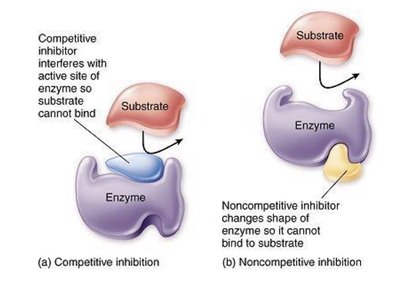
Active Site: Region where substrate binds and reaction occurs.
Allosteric Site: Site other than the active site where molecules can bind and change enzyme activity.
Competitive Inhibitor: Competes with substrate for the active site.
Noncompetitive Inhibitor: Binds elsewhere, changing enzyme shape and function.
ATP and Energy Coupling
ATP (Adenosine Triphosphate): Main energy carrier in cells, composed of adenine, ribose, and three phosphate groups.
ADP (Adenosine Diphosphate): Formed when ATP loses a phosphate group, releasing energy.
Redox Reactions
Oxidation: Loss of electrons.
Reduction: Gain of electrons.
Exergonic vs. Endergonic Reactions
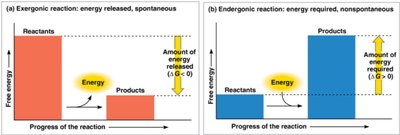
Exergonic: Release energy, spontaneous ().
Endergonic: Require energy input, nonspontaneous ().
Photosynthesis and Cellular Respiration
Photosynthesis
Light-dependent Reactions: Use sunlight to split water, produce ATP and NADPH.
Light-independent Reactions (Calvin Cycle): Use ATP and NADPH to fix carbon dioxide into glucose.
Cellular Respiration
Glycolysis: Splits glucose into pyruvate, yields 2 ATP.
Krebs Cycle: Completes breakdown of glucose, yields 2 ATP.
Electron Transport Chain (ETC): Produces most ATP (about 32) via chemiosmosis.
Aerobes: Require oxygen for respiration.
Anaerobes: Do not require oxygen.
DNA, RNA, and Protein Synthesis
Nucleic Acids Structure
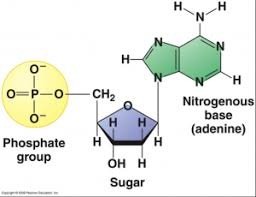
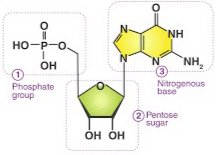
Nucleotides: Building blocks of DNA and RNA, each composed of a phosphate group, a five-carbon sugar, and a nitrogenous base.
DNA vs. RNA
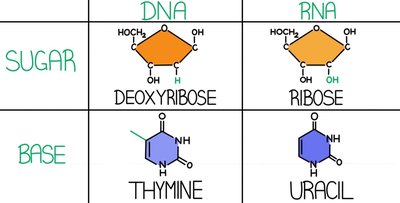
DNA | RNA | |
|---|---|---|
Sugar | Deoxyribose | Ribose |
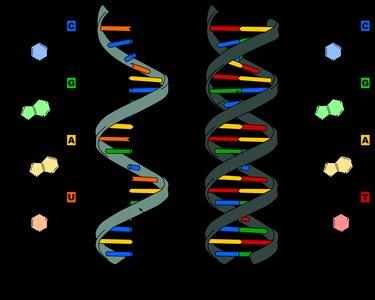
Bases | A, T, G, C | A, U, G, C |
Strands | Double | Single |
Base Pairing
Adenine (A) pairs with Thymine (T) in DNA, or Uracil (U) in RNA.
Guanine (G) pairs with Cytosine (C).
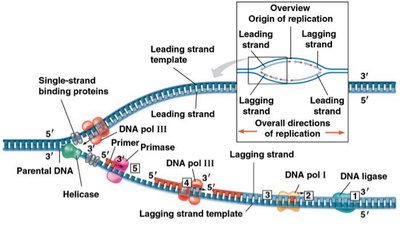
DNA Replication
DNA replication is semi-conservative, producing two identical DNA molecules, each with one parental and one new strand.
Helicase: Unwinds DNA.
Primase: Lays down RNA primer.
DNA Polymerase: Synthesizes new DNA strand.
Ligase: Joins Okazaki fragments on lagging strand.
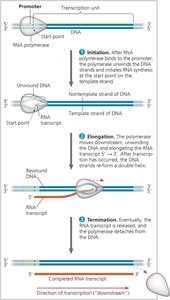
Transcription and Translation
Transcription: DNA is copied into mRNA by RNA polymerase.
Translation: mRNA is decoded by ribosomes to build a polypeptide (protein).
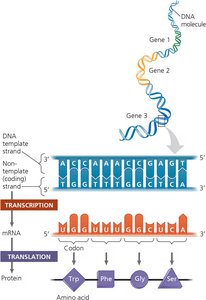
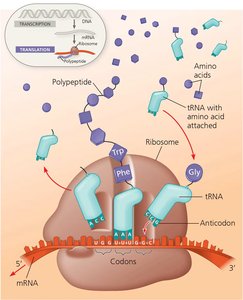
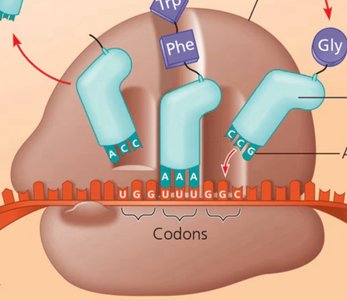
Codon: Sequence of three mRNA nucleotides that codes for an amino acid.
Anticodon: Sequence of three tRNA nucleotides complementary to the mRNA codon.
Cell Cycle, Mitosis, and Meiosis
Cell Cycle
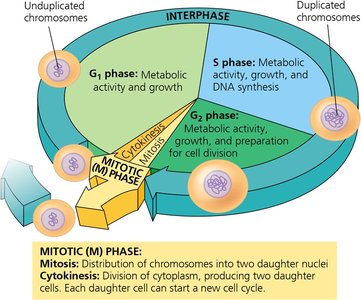
The cell cycle describes the life of a cell from its formation to its own division. It consists of interphase (G1, S, G2) and the mitotic (M) phase.
G1 Phase: Cell growth and normal functions.
S Phase: DNA replication.
G2 Phase: Preparation for division.
M Phase: Mitosis and cytokinesis.
Mitosis
Produces two genetically identical daughter cells.
Essential for growth, repair, and asexual reproduction.
Meiosis
Reduces chromosome number by half, producing four genetically unique haploid cells (gametes).
Enables sexual reproduction and increases genetic diversity through crossing over and independent assortment.
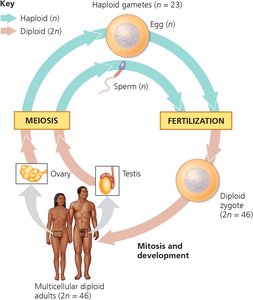
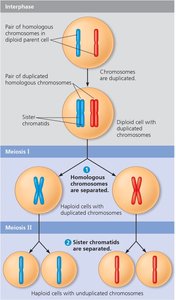
Haploid (n): One set of chromosomes (gametes).
Diploid (2n): Two sets of chromosomes (somatic cells).
Genetics and Inheritance
Genetic Crosses
Monohybrid Cross: Involves one gene with two alleles.
Dihybrid Cross: Involves two genes, each with two alleles.
Codominance: Both alleles are expressed (e.g., AB blood type).
Sex-linked Genes: Genes located on sex chromosomes (e.g., hemophilia, colorblindness).
Dominance Relationships
Autosomal Genes: Located on non-sex chromosomes.
Sex-linked Genes: Located on X or Y chromosomes.
Additional info: These notes cover foundational topics from the General Biology curriculum, including cell structure, metabolism, genetics, and cell division, with relevant images to reinforce key concepts.
