 뒤로
뒤로General Biology I: Core Concepts and Processes Study Guide
스터디 가이드 - 스마트 노트
 자료에 맞춘 맞춤형 노트, 핵심 정의, 예시, 맥락을 확장해 제공합니다.
Characteristics of Life and Scientific Inquiry
Seven Characteristics of Living Things
All living organisms share seven fundamental characteristics that distinguish them from non-living matter:
Order: Organized structure, typically as cells.
Response to Environment: Ability to sense and react to stimuli.
Reproduction: Capable of producing offspring.
Growth and Development: Undergo regulated growth and development patterns.
Energy Processing: Obtain and use energy for metabolism.
Regulation: Maintain internal stability (homeostasis).
Evolutionary Adaptation: Populations evolve over generations.
Levels of Biological Organization
Life is organized in a hierarchy from smallest to largest:
Atom → Molecule → Organelle → Cell → Tissue → Organ → Organ System → Organism → Population → Community → Ecosystem → Biosphere
Prokaryotic vs. Eukaryotic Cells
Cells are classified as prokaryotic or eukaryotic based on structural differences:
Prokaryotic Cells: Smaller, simpler, lack membrane-bound organelles, DNA is free-floating.
Eukaryotic Cells: Larger, more complex, contain membrane-bound organelles (including a nucleus), DNA is in the nucleus.
Both: Have DNA and a cell membrane.
Three Domains of Life
Bacteria (prokaryotes)
Archaea (prokaryotes)
Eukarya (eukaryotes: plants, animals, fungi, protists)
The Scientific Method
Making an observation
Forming a hypothesis
Testing a prediction (experiment)
Drawing a conclusion
Retesting
Variables in Experiments:
Independent Variable (IV): Deliberately changed
Dependent Variable: Measured outcome
Constants: Kept the same between groups
Control Group: Unchanged for comparison
Experimental Group: Receives the IV
Scientific Theory: A broad, testable explanation supported by a large body of evidence.
The Chemical Context of Life
Elements, Compounds, and Atoms
Element: Pure substance, cannot be broken down chemically.
Compound: Substance of two or more elements in a fixed ratio (e.g., KCl).
Atom: Smallest unit of an element, composed of protons (+, nucleus), neutrons (0, nucleus), and electrons (–, orbitals).
CHON: Carbon, Hydrogen, Oxygen, Nitrogen – make up 96% of body mass. Trace elements (e.g., iron) are essential even in small amounts.
Ions and Isotopes
Ion: Atom with a net charge (gained/lost electrons).
Isotope: Atoms of the same element with different numbers of neutrons.
Chemical Bonds
Covalent Bonds: Atoms share electrons (strongest in biology).
Ionic Bonds: Electrons transferred, forming charged ions (moderate strength).
Hydrogen Bonds: Weak attractions between a hydrogen atom and an electronegative atom (weakest).
Polar vs. Nonpolar Covalent Bonds: Polar = unequal sharing (partial charges), Nonpolar = equal sharing.
Law of Conservation of Mass: Atoms are rearranged, not created or destroyed, in chemical reactions.
Water and Life
Properties of Water
Cohesion: Water molecules stick to each other (surface tension).
Adhesion: Water molecules stick to other substances.
High Specific Heat: Water resists temperature changes, helping maintain homeostasis.
Expansion Upon Freezing: Ice is less dense than liquid water due to hydrogen bond lattice.
Versatile Solvent: Dissolves many substances (hydrophilic), but not nonpolar (hydrophobic) molecules.
Acids, Bases, and Buffers
Acidic Solution: More H+ than OH–
Basic Solution: Less H+ than OH–
Neutral pH: 7 (equal H+ and OH–)
Buffer: Substance that stabilizes pH (e.g., bicarbonate in blood)
Molarity Equation:
Carbon and the Molecular Diversity of Life
Structural Isomers
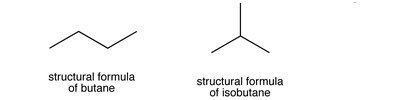
Isomers are molecules with the same molecular formula but different structures. For example, butane and isobutane are structural isomers with different arrangements of carbon atoms.
The Structure and Function of Large Biological Molecules
Macromolecules and Their Building Blocks
Carbohydrates: Monosaccharides (e.g., glucose) form polysaccharides (e.g., starch) for energy and structure.
Lipids: Not true polymers; include fats, phospholipids, and steroids. Hydrophobic due to nonpolar bonds.
Proteins: Polymers of amino acids (20 types), joined by peptide bonds. Structure determines function.
Nucleic Acids: Polymers of nucleotides (DNA, RNA) for genetic information storage and transfer.
Dehydration Reaction: Joins monomers by removing water. Hydrolysis: Breaks polymers by adding water.
A Tour of the Cell
Cell Structure and Organelles
Nucleus: Contains DNA, controls cell activities.
Ribosomes: Protein synthesis.
Endoplasmic Reticulum (ER): Protein and lipid synthesis.
Golgi Apparatus: Modifies, sorts, and packages macromolecules.
Lysosomes: Digestion of macromolecules.
Vacuoles: Storage and maintenance of cell shape (central vacuole in plants).
Mitochondria: Site of cellular respiration (ATP production).
Chloroplasts: Site of photosynthesis in plants and some protists.
Cellular Respiration and Photosynthesis
Energy Flow in Ecosystems
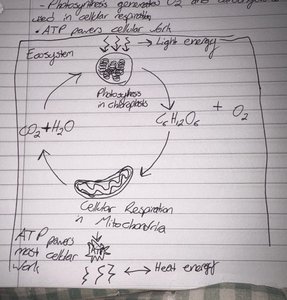
Photosynthesis and cellular respiration are interconnected processes that cycle energy and matter through ecosystems. Photosynthesis in chloroplasts converts light energy, CO2, and H2O into glucose and O2. Cellular respiration in mitochondria uses glucose and O2 to produce ATP, releasing CO2 and H2O. ATP powers cellular work, and energy is ultimately lost as heat.
Mitochondrial Structure
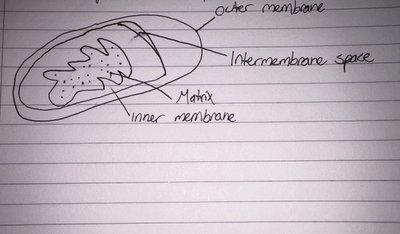
Mitochondria have a double membrane structure with an outer membrane, an inner membrane, an intermembrane space, and a matrix. The inner membrane is highly folded (cristae) to increase surface area for ATP production.
The Molecular Basis of Inheritance
Nucleotide Structure
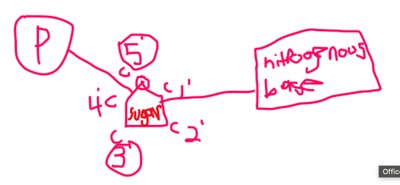
A nucleotide consists of a phosphate group, a five-carbon sugar (deoxyribose in DNA), and a nitrogenous base. The 5' and 3' carbons are critical for the directionality of DNA strands.
DNA Replication
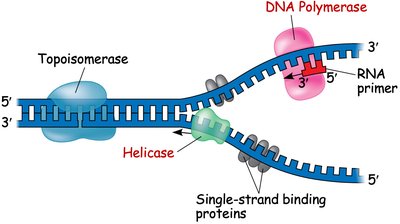
DNA replication is semiconservative: each new DNA molecule contains one original strand and one new strand. Key enzymes and proteins involved include:
Topoisomerase: Relieves strain ahead of replication fork.
Helicase: Unwinds the DNA double helix.
Single-strand binding proteins: Stabilize unwound DNA.
DNA Polymerase: Synthesizes new DNA strand from 5' to 3'.
RNA Primer: Provides starting point for DNA synthesis.
DNA Packaging
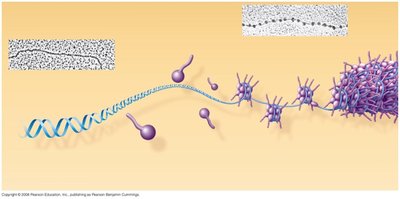
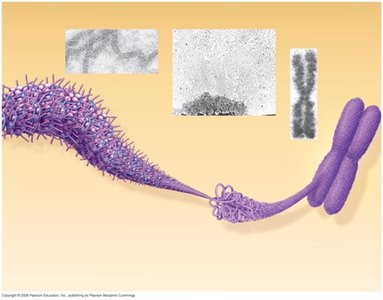
DNA is packaged into chromosomes through several levels of organization:
DNA wraps around histone proteins to form nucleosomes (10 nm fiber).
Nucleosomes coil to form a 30 nm fiber.
Fibers form loops, which are further compacted into metaphase chromosomes.
Gene Expression: From Gene to Protein
Central Dogma of Molecular Biology
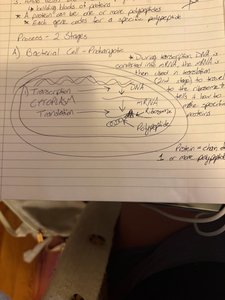
Genetic information flows from DNA to RNA to protein. This involves two main processes:
Transcription: DNA is used as a template to synthesize mRNA.
Translation: mRNA is decoded by ribosomes to build a polypeptide (protein).
Protein Synthesis in Prokaryotes vs. Eukaryotes
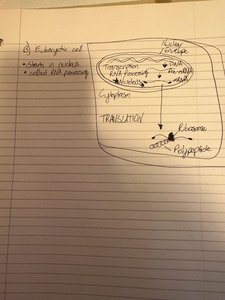
In prokaryotes, transcription and translation occur simultaneously in the cytoplasm. In eukaryotes, transcription occurs in the nucleus, and mRNA is processed before translation in the cytoplasm.
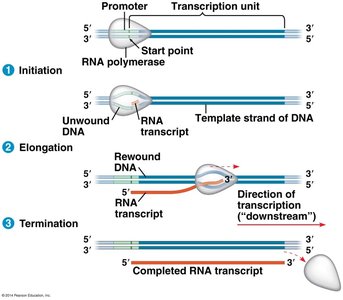
Transcription: Initiation, Elongation, Termination
Initiation: RNA polymerase binds to the promoter region of DNA.
Elongation: RNA polymerase synthesizes the RNA transcript by adding nucleotides.
Termination: RNA polymerase reaches a terminator sequence and releases the RNA transcript.
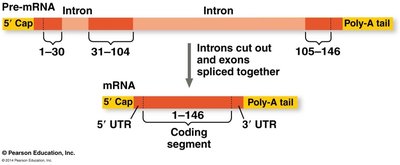
RNA Processing (Eukaryotes Only)
5' Capping: Addition of a modified guanine nucleotide to the 5' end.
Poly-A Tailing: Addition of a string of adenines to the 3' end.
RNA Splicing: Removal of introns (non-coding regions); exons (coding regions) are joined together.
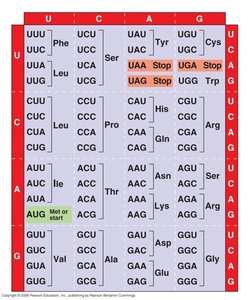
The Genetic Code
The genetic code is a set of rules by which information encoded in mRNA is translated into proteins. Each amino acid is specified by one or more codons (triplets of nucleotides).
Translation: Initiation, Elongation, Termination
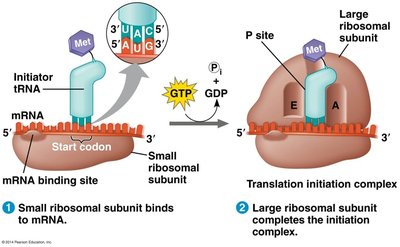
Initiation: Small ribosomal subunit binds to mRNA; initiator tRNA pairs with start codon (AUG).
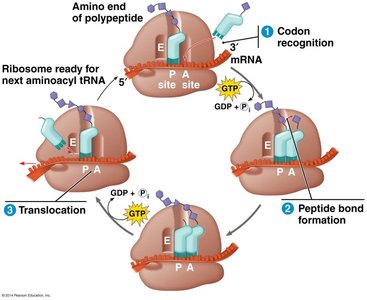
Elongation: tRNAs bring amino acids to the ribosome; peptide bonds form between amino acids; ribosome moves along mRNA.
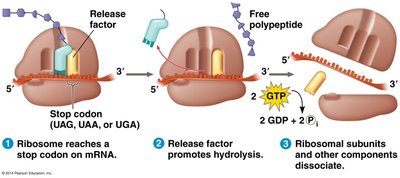
Termination: Stop codon is reached; release factor binds; polypeptide is released and ribosome dissociates.
Descent with Modification: Evolutionary Principles
Evidence for Evolution
Paleontology: Fossil record shows changes in organisms over time.
Comparative Anatomy: Homologous structures indicate common ancestry.
Biogeography: Distribution of species supports evolutionary relationships.
Molecular Biology: DNA and protein similarities reflect evolutionary history.
Mechanisms of Evolution
Natural Selection: Differential survival and reproduction of individuals with advantageous traits.
Genetic Variation: Arises from mutations, crossing over, independent assortment, and random mating.
Dating Fossils: Relative dating (strata position) and radiometric dating (isotope decay) are used to determine fossil ages.
Phylogenetic Trees
Phylogenetic trees depict evolutionary relationships based on physical traits (traditional) or molecular data (modern).
