 뒤로
뒤로Introduction to Cells and Cell Structure
스터디 가이드 - 스마트 노트
 자료에 맞춘 맞춤형 노트, 핵심 정의, 예시, 맥락을 확장해 제공합니다.
Introduction to Cells
The Cell Theory
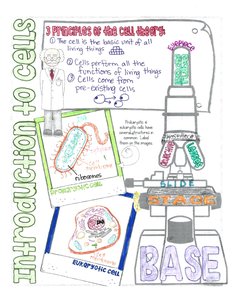
The cell theory is a foundational concept in biology that describes the properties of cells, the basic unit of life. It consists of three main principles:
All living things are composed of cells.
The cell is the basic unit of structure and function in living organisms.
All cells arise from pre-existing cells.
Cells carry out all the essential functions of life, including metabolism, growth, and reproduction.
Cell Types
Prokaryotic vs. Eukaryotic Cells
Cells are classified into two main types based on their internal structure:
Prokaryotic Cells: Do not have a nucleus or membrane-bound organelles. Example: Bacteria.
Eukaryotic Cells: Have a nucleus and various membrane-bound organelles. Examples: Plants, animals, fungi, protists.
Both types of cells contain ribosomes, cytoplasm, and a cell membrane.
Cell Structures
Major Organelles and Their Functions
Cells contain specialized structures called organelles, each with specific functions necessary for cell survival and activity. The following table summarizes key organelles and their roles:
Organelle | Function | Present in |
|---|---|---|
Nucleus | Contains DNA; controls cell activities | Plant & Animal Cells |
Ribosomes | Protein synthesis | All cells |
Endoplasmic Reticulum (ER) | Protein and lipid synthesis; transport within cell | Plant & Animal Cells |
Mitochondria | Cellular respiration; energy production | Plant & Animal Cells |
Chloroplast | Photosynthesis | Plant Cells |
Golgi Body | Modifies, sorts, and packages proteins and lipids | Plant & Animal Cells |
Cell Wall | Provides structure and support | Plant Cells |
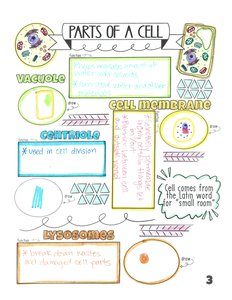
Cell Membrane | Controls movement of substances in and out of cell | All cells |
Vacuole | Storage of water, nutrients, and waste | Large in Plant Cells, small in Animal Cells |
Lysosome | Breaks down waste and cellular debris | Animal Cells (rare in Plant Cells) |
Cytoplasm | Jelly-like fluid that supports organelles | All cells |
Centriole | Involved in cell division | Animal Cells |
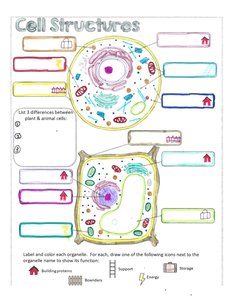
Comparison of Plant and Animal Cells
Plant and animal cells share many organelles but also have distinct differences:
Plant Cells: Have a cell wall, chloroplasts, and a large central vacuole.
Animal Cells: Lack a cell wall and chloroplasts, have smaller vacuoles, and contain centrioles.
Both types of cells have a nucleus, mitochondria, endoplasmic reticulum, Golgi apparatus, and lysosomes (though lysosomes are rare in plant cells).
Detailed Functions of Key Organelles
Nucleus
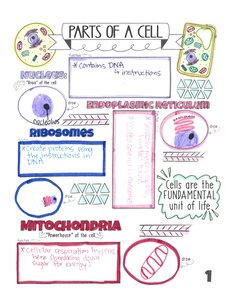
The nucleus is the control center of the cell, containing genetic material (DNA) and directing all cellular activities, including growth, metabolism, and reproduction.
Ribosomes
Ribosomes are responsible for protein synthesis, translating genetic instructions from the nucleus to build proteins necessary for cell function.
Endoplasmic Reticulum (ER)
The ER is a network of membranes involved in protein and lipid synthesis. The rough ER has ribosomes attached and synthesizes proteins, while the smooth ER is involved in lipid synthesis and detoxification.
Mitochondria
Mitochondria are known as the "powerhouse" of the cell. They convert glucose and oxygen into ATP (adenosine triphosphate), the cell's main energy currency, through cellular respiration.
Chloroplast
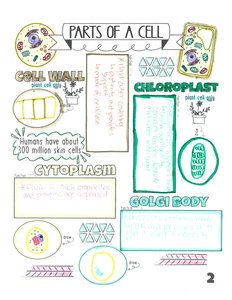
Chloroplasts are found only in plant cells and are the site of photosynthesis, where light energy is converted into chemical energy (glucose).
Golgi Body
The Golgi body modifies, sorts, and packages proteins and lipids for storage or transport out of the cell.
Cell Wall
The cell wall is a rigid layer found outside the cell membrane in plant cells, providing structural support and protection.
Cell Membrane
The cell membrane is a selectively permeable barrier that controls the movement of substances into and out of the cell, maintaining homeostasis.
Vacuole
Vacuoles are storage organelles. Plant cells typically have a large central vacuole that stores water, nutrients, and waste products, helping maintain cell rigidity.
Lysosome
Lysosomes contain digestive enzymes that break down waste materials and cellular debris.
Cytoplasm
The cytoplasm is the jelly-like substance that fills the cell and surrounds the organelles, providing a medium for chemical reactions.
Centriole
Centrioles are involved in organizing microtubules during cell division in animal cells.
Summary Table: Plant vs. Animal Cells
Feature | Plant Cell | Animal Cell |
|---|---|---|
Cell Wall | Present | Absent |
Chloroplast | Present | Absent |
Vacuole | Large, central | Small, multiple |
Centriole | Absent | Present |
Lysosome | Rare | Common |
Example: Human skin cells are animal cells and contain all the organelles listed above except for the cell wall and chloroplasts. Plant leaf cells contain chloroplasts for photosynthesis and a large central vacuole for water storage.
Additional info: The cell theory and organelle functions are foundational for understanding more advanced topics in cell biology, such as cell division, energy metabolism, and genetic inheritance.
