 뒤로
뒤로Macromolecules: Carbohydrates and Lipids
스터디 가이드 - 스마트 노트
 자료에 맞춘 맞춤형 노트, 핵심 정의, 예시, 맥락을 확장해 제공합니다.
Macromolecules
Definition and Importance
Macromolecules are large, complex molecules essential for life, composed of thousands or millions of smaller subunits. The four major classes are carbohydrates, lipids, proteins, and nucleic acids. Their diversity, especially in proteins and nucleic acids, underlies the diversity of life.
Organic molecules always contain carbon, which forms strong covalent bonds with other elements.
Macromolecules are formed by joining smaller molecules (monomers) into long chains (polymers).
Formation and Breakdown of Macromolecules
Dehydration Synthesis
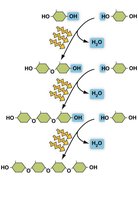
Macromolecules are assembled by dehydration synthesis (condensation reaction), where subunits are joined and a water molecule is removed for each bond formed. This process requires energy, which is stored in the new bonds.
Example: Formation of carbohydrates from simple sugars.
Hydrolysis Reaction
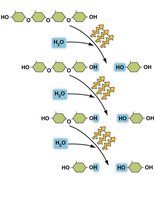
To release stored energy, macromolecules are broken down by hydrolysis, the reverse of dehydration synthesis. Water is added, breaking the bonds between subunits and releasing energy.
Example: Breakdown of carbohydrates into simple sugars.
Carbohydrates
Structure and Function
Carbohydrates are organic molecules with a carbon backbone and hydrogen and oxygen in a 2:1 ratio. They serve as a primary energy source and, in some organisms, as structural components.
General formula: CnH2nOn
Used for energy (e.g., glucose) and structure (e.g., cellulose in plants, chitin in animals).
Categories of Carbohydrates
Monosaccharides: Simple sugars (e.g., glucose, fructose, ribose, deoxyribose). Most have 5 or 6 carbons in a ring structure.
Disaccharides: Two monosaccharides joined by dehydration synthesis (e.g., sucrose = glucose + fructose, lactose = glucose + galactose, maltose = glucose + glucose).
Oligosaccharides: Short chains of a few monosaccharides. Often attached to proteins or lipids on cell surfaces for recognition and communication.
Polysaccharides: Long chains of monosaccharides. Used for energy storage (glycogen in animals, starch in plants) and structure (cellulose in plants, chitin in animals).
Lipids
General Properties
Lipids are hydrophobic (insoluble in water) molecules with diverse structures and functions. They are classified into three main types: triglycerides, phospholipids, and steroids.
Triglycerides
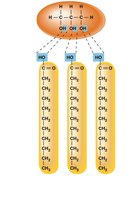
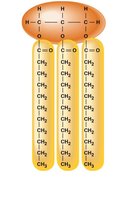
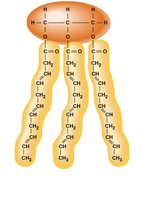
Triglycerides (neutral fats) are formed by joining one glycerol molecule with three fatty acids via dehydration synthesis. They are stored in adipose tissue and serve as a major energy reserve.
Structure: Glycerol head + three fatty acid tails.
Saturated Fats
Saturated fats have fatty acid tails with only single bonds between carbons, resulting in straight chains that pack tightly together. They are solid at room temperature and found in animal fats (e.g., butter, bacon grease).
High intake is associated with cardiovascular disease.
Unsaturated Fats
Unsaturated fats have one or more double bonds in their fatty acid tails, causing kinks that prevent tight packing. They are liquid at room temperature and commonly found in plant oils (e.g., vegetable oil).
Phospholipids
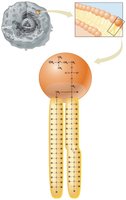
Phospholipids are modified lipids that form the primary structure of cell membranes. They consist of a glycerol backbone, two fatty acid tails, and a phosphate group. The phosphate head is hydrophilic (water-attracting), while the fatty acid tails are hydrophobic (water-repelling), giving the molecule amphipathic properties essential for membrane structure.
Steroids
Steroids are lipids with a structure of four fused carbon rings (three six-membered and one five-membered ring). They are relatively insoluble in water and have various side groups. An important example is cholesterol, a component of cell membranes and precursor for steroid hormones.
Summary Table: Carbohydrate and Lipid Types
Macromolecule | Subtypes | Key Features | Examples |
|---|---|---|---|
Carbohydrates | Monosaccharides, Disaccharides, Oligosaccharides, Polysaccharides | Energy source, structure, C:H:O ratio 1:2:1 | Glucose, Sucrose, Glycogen, Cellulose |
Lipids | Triglycerides, Phospholipids, Steroids | Hydrophobic, energy storage, membrane structure, hormones | Butter, Vegetable oil, Cholesterol |
