 뒤로
뒤로Mendel and the Gene Idea: Principles of Inheritance
스터디 가이드 - 스마트 노트
 자료에 맞춘 맞춤형 노트, 핵심 정의, 예시, 맥락을 확장해 제공합니다.
Mendel and the Gene Idea
Introduction to Mendelian Genetics
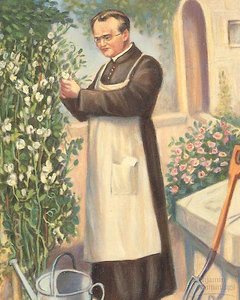
Gregor Mendel, known as the "Father of Genetics," established the foundation of classical genetics through his experiments with pea plants. His work revealed the basic principles of heredity, including how traits are passed from one generation to the next.
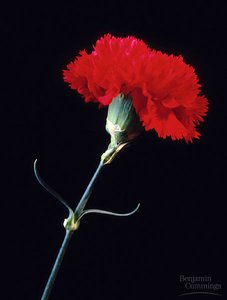
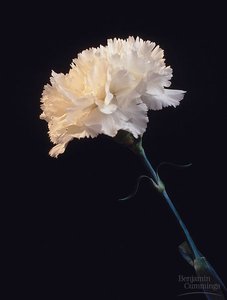
Characters: Heritable features such as flower color, plant height, or seed shape.
Traits: Variations within a character (e.g., red, white, or pink flower color).
Key Vocabulary in Mendelian Genetics
Self-pollination: Fertilization between male and female gametes from the same flower.
True-Breeding: Organisms that, when self-pollinated, produce offspring identical to themselves (homozygous).
Cross-pollination: Fertilization between gametes from different flowers.
Hybridization: Cross-pollination between different traits, producing heterozygous offspring.
Monohybrid Cross: Tracks inheritance of a single character.
Dihybrid Cross: Tracks inheritance of two different characters.
P Generation: True-breeding parents (homozygous).
F1 Generation: Hybrid offspring of P generation (heterozygous).
F2 Generation: Offspring of self-pollinated F1 generation; includes both homozygous and heterozygous individuals.
Genotype: Genetic makeup (e.g., AA, Aa, aa).
Phenotype: Observable traits or appearance.
Mendel’s Experiments and Laws
Mendel’s Experimental Design
Mendel chose garden peas for their variety, ease of growth, and the presence of both male and female organs in each flower. He selected true-breeding plants, cross-pollinated them, and analyzed the resulting generations.
Monohybrid Cross and Law of Segregation
Mendel observed that crossing true-breeding purple and white flowered pea plants produced all purple F1 offspring. Self-pollination of F1 plants yielded a 3:1 ratio of purple to white flowers in the F2 generation, leading to the law of segregation.
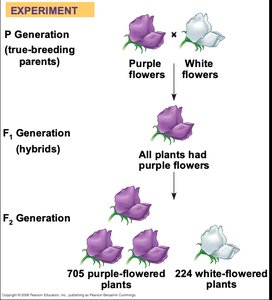
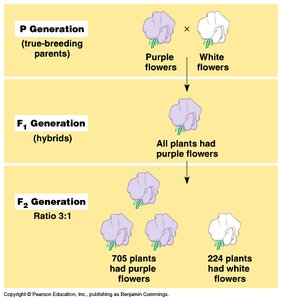
Law of Segregation: Each individual has two alleles for each gene, which segregate during gamete formation so that each gamete carries only one allele for each gene.
Results of Mendel’s Crosses
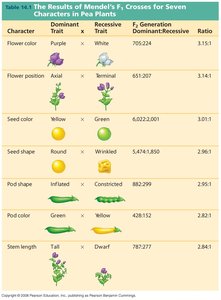
Mendel studied seven characters in pea plants, each with two contrasting traits. His results consistently showed dominant and recessive patterns with predictable ratios.
Genotype and Phenotype Ratios
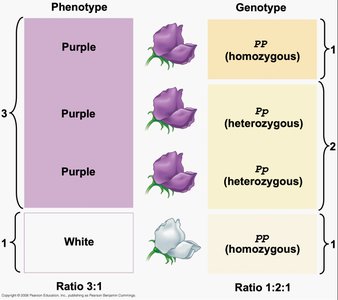
The F2 generation from a monohybrid cross shows a 3:1 phenotypic ratio and a 1:2:1 genotypic ratio.
Dihybrid Cross and Law of Independent Assortment
Mendel’s dihybrid crosses (e.g., seed color and shape) demonstrated that alleles of different genes assort independently during gamete formation, resulting in a 9:3:3:1 phenotypic ratio in the F2 generation.
Law of Independent Assortment: Alleles of different genes segregate independently of one another during gamete formation.
Summary of Mendel’s Laws:
Law of Segregation
Law of Independent Assortment
Extensions of Mendelian Genetics
Incomplete Dominance
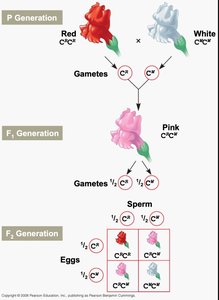
In incomplete dominance, the heterozygote phenotype is intermediate between the two parental phenotypes (e.g., red and white snapdragons produce pink offspring). The phenotypic ratio in the F2 generation is 1:2:1.
Codominance
In codominance, both alleles are fully expressed in the heterozygote. An example is the MN blood group in humans, where both M and N proteins are present.
At the organismal level, inheritance may appear dominant-recessive.
At the molecular level, both alleles produce their products equally.
Multiple Alleles
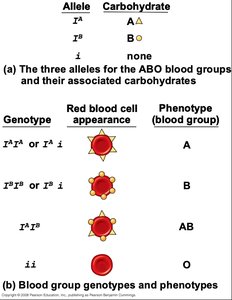
Some genes have more than two alleles in the population. The ABO blood group system in humans is an example, with three alleles: IA, IB, and i.
Pleiotropy
Pleiotropy occurs when one gene influences multiple phenotypic traits. For example, sickle-cell disease affects hemoglobin structure and leads to various symptoms such as anemia, pain, and organ damage.
Epistasis
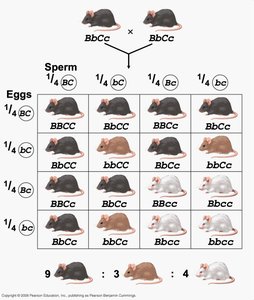
Epistasis is when one gene affects the expression of another gene at a different locus. An example is coat color in mice, where one gene determines pigment production and another gene controls pigment deposition.
Polygenic Inheritance
Polygenic inheritance occurs when multiple genes influence a single trait, such as human skin color, which is determined by several genes acting together.
Environmental Influence (Nature vs. Nurture)
Phenotype can be influenced by environmental factors, such as nutrition affecting height or intelligence. Some traits, like male pattern baldness, are influenced by both genes and hormones.
Mendelian Inheritance in Humans
Autosomal Recessive Disorders
Sickle Cell Disease: Caused by a mutation in the β-hemoglobin gene; heterozygotes are resistant to malaria.
Cystic Fibrosis: Defective chloride ion transporter leads to thick mucus in lungs.
Tay-Sachs Disease: Defective enzyme causes lipid accumulation in the brain.
Phenylketonuria (PKU): Lack of enzyme to degrade phenylalanine leads to mental retardation; managed by diet.
Adenosine Deaminase Deficiency: Causes immune system failure; first human gene therapy target.
Albinism: Defect in melanin pigment deposition.
Galactosemia: Defective galactose metabolism causes organ damage.
Dominantly Inherited Disorders
Achondroplasia: A form of dwarfism; heterozygotes are affected.
Huntington’s Disease: Late-onset neurodegenerative disorder.
Progeria: Premature aging in children.
Polydactyly: Extra fingers or toes.
Compodactyly: Bent, immobile little finger due to improper muscle attachment.
Genetic Testing and Counseling
Advances in DNA technology allow for prenatal and postnatal genetic testing to identify or predict genetic disorders. Common prenatal tests include amniocentesis and chorionic villus sampling (CVS). Genetic counseling helps families assess risks and make informed decisions.
