 뒤로
뒤로Molecules, Transport, and Health: Core Concepts in General Biology
스터디 가이드 - 스마트 노트
 자료에 맞춘 맞춤형 노트, 핵심 정의, 예시, 맥락을 확장해 제공합니다.
Water
Water as a Solvent
Water is a vital molecule in biological systems due to its unique chemical properties. Its polarity allows it to act as an excellent solvent, facilitating the movement and reaction of substances within living organisms.
Polarity: Water molecules have a permanent dipole, with a slightly negative charge near the oxygen atom and a slightly positive charge near the hydrogen atoms.
Solvent Properties: Many substances, such as inorganic ions, dissolve in water due to its polar nature, enabling essential chemical reactions.
Biological Importance: The ability of water to dissolve substances allows for efficient transport and metabolism within cells.
Biomolecules
Carbohydrates
Carbohydrates are organic molecules composed of carbon, hydrogen, and oxygen. They serve as energy sources and structural components in living organisms.
Monosaccharides: The simplest carbohydrates, acting as monomers for more complex forms. Glucose is a key example, serving as the main substrate for cellular respiration.
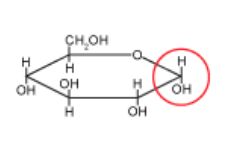
Disaccharides: Formed by the condensation of two monosaccharides, examples include maltose (glucose + glucose), sucrose (glucose + fructose), and lactose (glucose + galactose).
Polysaccharides: Large, complex carbohydrates formed from many glucose units. Examples include glycogen (main energy store in animals) and starch (main energy store in plants, composed of amylose and amylopectin).
Condensation and Hydrolysis: Monosaccharides join via condensation reactions (releasing water) to form glycosidic bonds. Polysaccharides are broken down by hydrolysis (adding water).
Lipids
Lipids are non-polar biological molecules with diverse functions, including energy storage, insulation, and forming cell membranes. They are insoluble in water but soluble in organic solvents.
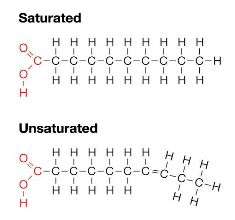
Saturated Lipids: Contain no carbon-carbon double bonds; typically found in animal fats.
Unsaturated Lipids: Contain one or more carbon-carbon double bonds; usually found in plants and melt at lower temperatures.
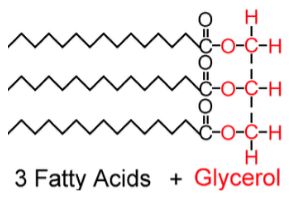
Triglycerides: Composed of one glycerol and three fatty acids joined by ester bonds formed in condensation reactions. They serve as long-term energy reserves.
Transport Systems in Animals
Mass Transport
Multicellular organisms require specialized transport systems to efficiently move substances due to their low surface area to volume ratio, which makes diffusion alone insufficient.
Single-celled organisms: Rely on simple diffusion across the cell membrane due to a high surface area to volume ratio.
Larger organisms: Require mass transport systems (e.g., circulatory system) to supply all cells with nutrients and remove wastes.
The Circulatory System
The mammalian circulatory system consists of the heart and three main types of blood vessels: arteries, veins, and capillaries, each adapted for specific functions.
Arteries: Carry oxygenated blood away from the heart under high pressure; thick walls, small lumen, no valves.
Capillaries: Facilitate exchange of substances; walls one cell thick, highly branched, narrow diameter.
Veins: Return deoxygenated blood to the heart; thin walls, wide lumen, contain valves to prevent backflow.
Structure of the Heart
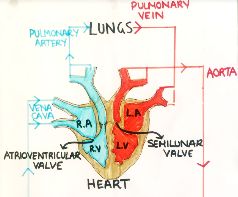
The heart is a four-chambered organ (left/right atria and ventricles) that pumps blood through two circuits (pulmonary and systemic), constituting a double circulatory system.
Atria: Receive blood from veins.
Ventricles: Pump blood into arteries.
Valves: Atrioventricular and semilunar valves prevent backflow of blood.
The Cardiac Cycle
The cardiac cycle describes the sequence of events in one heartbeat, involving contraction (systole) and relaxation (diastole) of the heart chambers.
Atrial systole: Atria contract, forcing blood into ventricles.
Ventricular systole: Ventricles contract, pumping blood into arteries.
Cardiac diastole: Chambers relax, allowing blood to fill the heart.
Transport of Gases in the Blood
Haemoglobin
Haemoglobin is a globular protein in red blood cells responsible for oxygen transport. Each molecule can bind up to four oxygen molecules, forming oxyhaemoglobin.
Oxygen Affinity: Haemoglobin's affinity for oxygen depends on the partial pressure of oxygen; higher partial pressure increases affinity and saturation.
Loading and Unloading: Oxygen binds to haemoglobin in the lungs (loading) and is released in tissues (unloading) where it is needed for respiration.
Bohr Effect: Increased carbon dioxide lowers haemoglobin's affinity for oxygen, promoting oxygen release in respiring tissues.
Fetal Haemoglobin: Has a higher affinity for oxygen than adult haemoglobin, allowing efficient oxygen uptake from maternal blood.
Cardiovascular Diseases (CVD)
Atherosclerosis
Atherosclerosis is the hardening and narrowing of arteries due to the buildup of fibrous plaque (atheroma), which restricts blood flow and increases blood pressure.
Damage to the endothelium (e.g., by high cholesterol, smoking, or high blood pressure).
Inflammatory response attracts white blood cells.
Accumulation of cholesterol, calcium salts, and fibers forms plaque.
Plaque narrows the artery, further increasing blood pressure and risk of damage.
Blood Clotting
Blood clotting prevents blood loss and entry of pathogens but can cause disease if clots form inside vessels (thrombosis).
Platelets adhere to damaged vessel walls, forming a temporary plug.
Clotting factors (e.g., thromboplastin) convert prothrombin to thrombin.
Thrombin catalyzes the conversion of fibrinogen to insoluble fibrin, forming a mesh that traps blood cells and forms a stable clot.
Risk Factors for CVD
Several factors increase the risk of cardiovascular diseases, including:
Genetics: Family history and certain genes (e.g., those affecting blood pressure).
Diet: High cholesterol and saturated fat intake.
Age: Risk increases with age.
High Blood Pressure: Damages arteries and increases risk.
Smoking: Damages arterial lining and promotes atheroma formation.
Inactivity: Linked to higher blood pressure.
Dietary Antioxidants
Antioxidants neutralize free radicals (reactive oxygen species) that can damage cells and contribute to CVD. Increasing dietary antioxidants may reduce risk.
Blood Cholesterol and Lipoproteins
Cholesterol is transported in the blood by lipoproteins, which influence cardiovascular health.
Lipoprotein Type | Function | Effect on Health | Source |
|---|---|---|---|
High-density lipoproteins (HDL) | Transport cholesterol to liver for removal | Reduces cholesterol levels (protective) | Unsaturated fats, proteins |
Low-density lipoproteins (LDL) | Transport cholesterol to arteries | Increases cholesterol and plaque formation (harmful) | Saturated fats, proteins |
High LDL levels are positively correlated with increased risk of CVD.
Treatments for Cardiovascular Disease
Treatment | Purpose | Pros | Cons |
|---|---|---|---|
Antihypertensives | Lower blood pressure | Effective, inexpensive | Side effects (vary by drug) |
Statins | Lower cholesterol | Effective, lower blood pressure | Nausea, muscle aches, rare diabetes risk |
Anticoagulants | Prevent blood clots | Reduce thrombosis risk | Risk of excessive bleeding |
Platelet inhibitors | Prevent clot formation | Prevent clots in certain arteries | Risk of haemorrhage |
Obesity Indicators
Body Mass Index (BMI):
Waist to Hip Ratio (WHR): Used to assess obesity and disease risk; values above 0.9 (males) or 0.85 (females) indicate obesity.
Perceived vs. Actual Risk
Perceived risk is subjective and may differ from actual, statistically determined risk. Accurate risk assessment relies on scientific data and proper study design.
Evaluating Scientific Studies
Random Sampling: Ensures representativeness and reduces bias.
Sample Size: Must be large enough to reflect the population.
Statistical Analysis and Peer Review: Essential for reliability.
Control Groups and Blinding: Used in clinical trials to avoid bias.
