 뒤로
뒤로Plant Structure, Growth, Nutrition, and Reproduction – Study Notes
스터디 가이드 - 스마트 노트
 자료에 맞춘 맞춤형 노트, 핵심 정의, 예시, 맥락을 확장해 제공합니다.
Plant Structure and Growth
Basic Plant Organs
Plants are composed of three primary organs, each with specialized structures and functions essential for survival and growth.
Roots: Anchor the plant, absorb water and minerals, and store carbohydrates. Root hairs are extensions of epidermal cells that increase surface area for absorption.
Stems: Support leaves and reproductive structures. The terminal bud at the tip directs upward growth and inhibits axillary buds, while axillary buds can form branches. Pinching/pruning removes the terminal bud to encourage lateral growth.
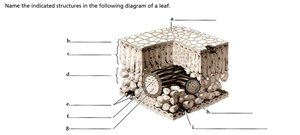
Leaves: Main site of photosynthesis. Key structures include the petiole (stalk connecting leaf to stem), margin (leaf edge), and blade (lamina) (broad, flat area).
Plant Tissue Types
Plant tissues are organized into three main types, each with distinct roles:
Dermal Tissue: Single layer of closely packed cells covering the plant, protecting against water loss and pathogens.
Vascular Tissue: Continuous system for transporting water, minerals, and nutrients throughout the plant (includes xylem and phloem).
Ground Tissue: Functions in storage, photosynthesis, and support; includes all tissues not part of dermal or vascular systems.
Plant Cell Types
Parenchyma Cells: Thin-walled, living cells with large vacuoles; involved in photosynthesis, storage, and tissue repair. Found in leaves (mesophyll), stems, roots, and fruits.
Xylem Cells: Dead, tubular cells that conduct water and minerals upward from roots. Located in vascular bundles, forming the central cylinder in stems and roots.
Phloem Cells: Living cells that transport sugars and organic compounds from leaves to other plant parts. Includes:
Sieve-tube elements: Elongated, tubular cells without nuclei at maturity; responsible for translocation of sugars and amino acids.
Companion cells: Small, nucleated cells connected to sieve-tube elements via plasmodesmata; provide metabolic support and regulate loading/unloading of sugars.
Meristems and Plant Growth
Meristems are regions of perpetually embryonic tissue where cells divide for plant growth.
Apical Meristems: Located at root and shoot tips; responsible for primary growth (lengthening).
Lateral Meristems: Located in roots, stems, and branches; responsible for secondary growth (thickening).
Primary vs. Secondary Growth
Primary Growth: Increases length of stems and roots, allowing plants to grow taller and roots to extend deeper.
Secondary Growth: Increases thickness/girth, resulting in woody structures. Both rely on meristematic activity; primary growth establishes the framework, secondary growth builds upon it.
Plant Life Cycles
Annuals: Complete their life cycle in one year.
Biennials: Require two years to complete their life cycle.
Perennials: Live for many years, reproducing multiple times.
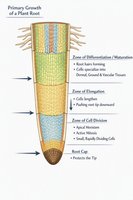
Primary Growth of a Root
Root growth is organized into distinct zones, each with specialized functions:
Zone of Cell Division: Includes the apical meristem; cells divide rapidly.
Zone of Elongation: Cells elongate, pushing the root tip forward.
Zone of Differentiation (Maturation): Cells differentiate into specialized types (dermal, ground, vascular).
Root Cap: Protects the growing tip.
Tree Trunk Structure
From the center outward, the layers are: Pith, Medullary rays (wood rays), Heartwood, Sapwood, Cambium, Phloem (inner bark), Bark (outer bark).
Resource Acquisition, Nutrition, and Transport in Vascular Plants
Turgor Pressure in Plant Cells
Turgor pressure (hydrostatic pressure) is the force exerted by water inside the cell against the cell wall, maintaining cell rigidity and plant structure.
Flaccid vs. Turgid Cells
Flaccid Cell: Limp, resulting in wilting due to water loss.
Turgid Cell: Firm, healthy state due to water uptake.
Macronutrients vs. Micronutrients
Macronutrients: Required in large amounts (C, H, N, O, P, S, K, Ca, Mg).
Micronutrients: Needed in trace amounts (Fe, Mn, Zn, Cu, etc.).
Mutualistic Relationships in Plants
Rhizobacteria: Fix atmospheric nitrogen at roots, making it available to plants.
Mycorrhizae: Fungi that form mutualistic associations with roots, enhancing water and nutrient uptake.
Nitrogen Nutrition in Plants
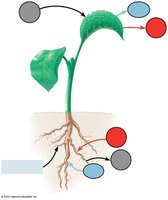
Nitrogen is cycled through various forms and organisms in the soil, ultimately becoming available to plants for growth.
Unusual Plant Adaptations
Epiphytes: Grow on other plants for support but do not parasitize them.
Parasitic Plants: Obtain nutrients from host plants via specialized structures (haustoria).
Carnivorous Plants: Trap and digest animals to supplement nutrient intake in poor soils.
Casparian Strip and Root Structure
The Casparian strip is a band of cell wall material in the endodermis that blocks passive flow of substances into the vascular cylinder, ensuring selective uptake of minerals and water.
Long-Distance Transport of Water
Transpiration: Water loss from leaves creates a pull that drives upward movement of water through xylem.
Cohesion: Water molecules stick together, maintaining a continuous column in xylem.
Adhesion: Water molecules adhere to xylem walls, aiding capillary action.
Guard Cells and Water Loss
Guard cells regulate the opening and closing of stomata by changing turgor pressure, thus controlling water loss and gas exchange.
Translocation of Phloem Sap
Translocation is the movement of sugars from sources (leaves) to sinks (roots, fruits) via phloem, driven by pressure flow generated by active loading and unloading of sugars.
Reproduction of Flowering Plants
Life Cycle of an Angiosperm
The angiosperm life cycle alternates between haploid (n) and diploid (2n) generations, involving pollination, fertilization, seed formation, and germination.
Key Reproductive Processes
Pollination: Transfer of pollen from anther to stigma.
Fertilization: Fusion of sperm and egg to form a zygote.
Germination: Seed absorbs water, triggering growth and development.
Double Fertilization
Unique to angiosperms, double fertilization involves one sperm fertilizing the egg (zygote) and another fusing with two polar nuclei to form endosperm (nutritive tissue).
Origin of Plant Structures
Embryo: Develops from fertilized egg (zygote).
Seed: Composed of seed coat, endosperm, and embryo.
Fruit: Develops from ovary wall (pericarp, exocarp, mesocarp).
Evolutionary Advantages of Seeds
Protection for embryo
Stored food supply
Dormancy and survival through adverse conditions
Water independence
Enhanced dispersal and colonization
Breaking Seed Dormancy
Temperature changes
Freezing or intense heat
Light exposure
Moisture and humidity
Seasonal cues
Seed Structure
Seed Germination
During germination, the seed absorbs water, metabolic changes begin, the root emerges, followed by the shoot, and leaves expand to begin photosynthesis.
Purpose of Fruit
Fruits protect seeds and aid in their dispersal by wind, water, or animals.
Methods of Fruit and Seed Dispersal
Wind Dispersal: Lightweight seeds/fruits adapted for air currents (wings, parachutes).
Water Dispersal: Buoyant fruits/seeds adapted to float (fibrous husks, air pockets).
Animal Dispersal: Seeds consumed and excreted or attached to animal fur/feathers.
Asexual vs. Sexual Reproduction
Sexual Reproduction: Produces genetic diversity; advantageous in changing environments but more complex and risky for seedlings.
Asexual Reproduction: Produces clones; efficient in stable environments, does not require pollinators.
Plant Responses to Internal and External Signals
Plant Tropisms
Phototropism: Growth toward light (e.g., sunflower bending toward sun).
Gravitropism: Growth in response to gravity (e.g., roots growing downward).
Thigmotropism: Growth in response to touch (e.g., tendrils coiling around support).
Plant Hormones
Hormone | Where Produced/Found | Major Functions |
|---|---|---|
Auxin | Leaves | Stimulates cell elongation, phototropism, gravitropism; high concentrations act as herbicide |
Cytokinin | Roots | Stimulates cell division and differentiation |
Gibberellins | Seeds, roots, leaves | Stem elongation, leaf growth, germination, flowering, fruit development |
Abscisic acid | Roots | Slows growth, closes stomata during water stress, promotes dormancy |
Ethylene | Leaves, stems, roots, flowers, fruits, tubers, seeds | Promotes fruit ripening, involved in apoptosis (leaf shedding, death of annuals) |
Plant Responses to Light
Plants detect and regulate responses to light using photoreceptors, which mediate processes such as phototropism and photoperiodism.
Photoperiodism
Photoperiodism is the physiological response to the relative lengths of night and day, often regulating flowering time.
Plant Responses to Environmental Stresses
Drought: Close stomata, release abscisic acid, inhibit growth, roll leaves, grow deeper roots.
Flooding: Release ethylene, root cell death, formation of air tubes for oxygen supply.
Salt: Impede salt uptake, produce solutes to retain water.
Heat: Evaporative cooling via transpiration, produce heat shock proteins.
Cold: Alter membrane lipid composition for fluidity.
Plant Defenses Against Herbivores and Pathogens
Herbivores: Physical defenses (thorns), chemical defenses (toxins), recruitment of predatory animals.
Pathogens: Epidermis as first line of defense; pathogen recognition and host-specific responses as second line.
