 뒤로
뒤로Prokaryotes: Structure, Diversity, and Importance of Bacteria and Archaea
스터디 가이드 - 스마트 노트
 자료에 맞춘 맞춤형 노트, 핵심 정의, 예시, 맥락을 확장해 제공합니다.
Bacteria and Prokaryotes
Introduction to Prokaryotes
Prokaryotes are unicellular organisms that lack a true nucleus and membrane-bound organelles. They are among the most abundant and diverse life forms on Earth, dominating the biosphere in terms of biomass and ecological impact.
Prokaryotic cell: Does not have a true nucleus or membrane-bound organelles.
Domains: Prokaryotes are classified into two domains: Bacteria and Archaea.
Kingdom Monera: Previously, all prokaryotes were grouped in this kingdom, but now they are separated based on significant differences.
Metabolic diversity: Prokaryotes exhibit a wide range of metabolic pathways, allowing them to thrive in diverse environments.
Rapid reproduction: Many prokaryotes can double their population every 20 minutes under ideal conditions.
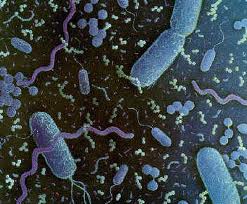
Classification of Prokaryotes
Bacteria vs. Archaea
Bacteria and Archaea are the two main domains of prokaryotes. Although they appear similar under a microscope, they differ significantly in their chemical composition and genetic sequences.
Bacteria: Have cell walls containing peptidoglycan.
Archaea: Lack peptidoglycan in their cell walls and have unique membrane lipids. Their DNA sequences are more similar to eukaryotes than to bacteria.
Habitats: Archaea often live in extreme environments such as swamps, salt lakes, and hot springs.
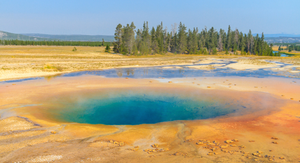
Three Archaeal Groups
Methanogens: Obtain energy by converting hydrogen gas and carbon dioxide into methane. They are anaerobic and thrive in environments like swamps, sewage, and digestive tracts of animals.
Halophiles: "Salt-loving" archaea that live in highly saline environments such as the Dead Sea and Great Salt Lake.
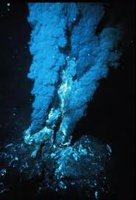
Thermoacidophiles: Live in acidic, high-temperature environments, such as hydrothermal vents and hot springs. Can survive at temperatures up to 110°C and pH less than 2.

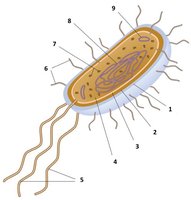
Bacterial Structure and Identification
Cell Structure
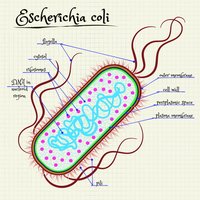
Bacterial cells are identified by their shape, cell wall composition, movement, and energy acquisition. The basic structure includes a capsule, cell wall, plasma membrane, cytoplasm, flagella, pili, ribosomes, chromosomal DNA, and plasmid DNA.
Capsule: A polysaccharide layer outside the cell wall, aiding in adhesion and protection.
Cell wall: Provides structural support and protection.
Plasma membrane: Regulates transport of substances.
Flagella: Whip-like structures used for movement.
Pili: Shorter, thinner structures for attachment and genetic exchange.
Ribosomes: Sites of protein synthesis.
Chromosomal DNA: Single, circular molecule.
Plasmid DNA: Small, circular DNA separate from the chromosome, often carrying one gene.
Bacterial Shapes
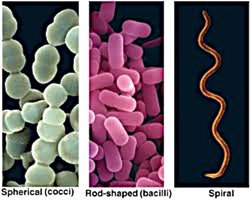
Bacteria exist in three basic shapes:
Cocci: Spherical
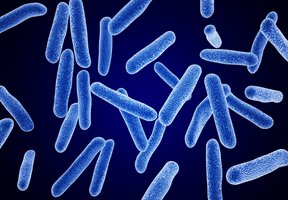
Bacilli: Rod-shaped
Spirilla: Spiral or curved
Movement
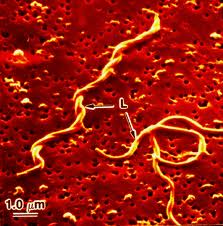
Some bacteria are motile, moving by means of flagella, while others glide or remain stationary.
Flagella: Used for swimming.
Gliding: Movement over a layer of slime.
Bacterial Metabolism and Diversity
Energy Acquisition
Bacteria are classified based on how they obtain energy:
Heterotrophs: Cannot make their own food; divided into saprophytes (decomposers) and parasites (live off hosts).
Autotrophs: Can make their own food; includes photoautotrophs (use sunlight) and chemoautotrophs (use inorganic reactions).
Respiration Types
Obligate aerobes: Require oxygen.
Obligate anaerobes: Killed by oxygen; must live in its absence.
Facultative anaerobes: Can survive with or without oxygen.
Growth, Reproduction, and Genetic Exchange
Binary Fission
Bacteria reproduce asexually by binary fission, where one cell divides into two identical daughter cells.
Rapid division: Under ideal conditions, division can occur every 20 minutes.
Limiting factors: Food supply, waste accumulation, competition, predation.
Conjugation
Conjugation is a form of genetic exchange where a hollow bridge forms between two cells, allowing transfer of genes and increasing genetic diversity.
No increase in cell number: Only genetic information is exchanged.
Genetic diversity: Important for adaptation and evolution.
Endospore Formation
When conditions are unfavorable, some bacteria form endospores—a dormant, tough structure that can survive extreme conditions.
Endospore: Formed inside the cell, surrounded by a thick wall.
Survival: Can remain dormant for months or years until conditions improve.
Ecological and Human Importance of Bacteria
Decomposers
Bacteria play a vital role in recycling essential elements such as carbon and nitrogen by decomposing dead organisms.
Decomposition: Break down complex materials into simpler substances.
Element recycling: Ensures availability of nutrients for living organisms.
Nitrogen Fixation
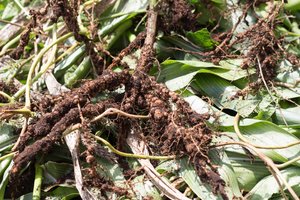
Certain bacteria convert atmospheric nitrogen gas into nitrates, which plants can use to build amino acids and proteins. Animals obtain nitrogen by eating plants.
Nitrogen fixation: Conversion of nitrogen gas to nitrates.
Plant uptake: Plants absorb nitrates through roots.
Animal nutrition: Animals convert plant proteins to animal proteins.
Human Uses for Bacteria
Bacteria are used in the production of foods and beverages (e.g., yogurt, cheese, sour cream), and in environmental applications such as oil spill cleanup.
Bacterial Diseases and Antibiotics
Some bacteria are pathogenic, causing diseases by damaging host cells or releasing toxins. Antibiotics are compounds that kill bacteria but are ineffective against viruses.
Pathogens: Disease-causing bacteria.
Antibiotics: Target bacterial cells.
Symbiotic Relationships
Bacteria engage in symbiotic relationships with other organisms, which can be mutualistic, commensal, or parasitic.
Mutualism: Both organisms benefit.
Commensalism: One benefits, the other is unaffected.
Parasitism: One benefits at the expense of the other.
