 뒤로
뒤로Proteins: Structure, Function, and Enzymes
스터디 가이드 - 스마트 노트
 자료에 맞춘 맞춤형 노트, 핵심 정의, 예시, 맥락을 확장해 제공합니다.
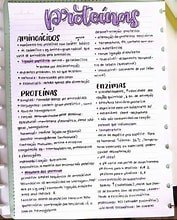
Proteins
Amino Acids
Amino acids are the building blocks of proteins, essential for the structure and function of living organisms. Each amino acid contains an amino group, a carboxyl group, a hydrogen atom, and a unique side chain (R group) attached to a central carbon atom.
General Structure: All amino acids share a common backbone but differ in their side chains, which determine their properties.
Peptide Bonds: Amino acids are linked by peptide bonds formed through a dehydration synthesis reaction.
Classification: Amino acids can be classified as essential (must be obtained from the diet) or non-essential (can be synthesized by the body).
Examples: Glycine, alanine, valine, leucine, isoleucine, etc.
Example: The peptide bond formation between two amino acids results in the release of a water molecule.
Proteins
Proteins are large, complex molecules made up of one or more chains of amino acids. They perform a vast array of functions within organisms, including catalyzing metabolic reactions, providing structural support, and regulating processes.
Levels of Structure:
Primary: Sequence of amino acids in a polypeptide chain.
Secondary: Local folding into structures such as alpha-helices and beta-sheets, stabilized by hydrogen bonds.
Tertiary: Overall three-dimensional shape of a single polypeptide chain.
Quaternary: Association of multiple polypeptide chains to form a functional protein.
Functions: Enzymatic catalysis, transport, structural support, signaling, immune response, and more.
Examples: Hemoglobin (oxygen transport), collagen (structural protein), antibodies (immune defense).
Example: Hemoglobin is a quaternary protein composed of four polypeptide subunits, each capable of binding oxygen.
Enzymes
Enzymes are biological catalysts, typically proteins, that speed up chemical reactions in cells without being consumed in the process. They are highly specific for their substrates and function under mild cellular conditions.
Active Site: The region on the enzyme where the substrate binds and the reaction occurs.
Specificity: Each enzyme is specific to a particular substrate or group of related substrates.
Mechanism: Enzymes lower the activation energy required for reactions, increasing reaction rates.
Factors Affecting Activity: Temperature, pH, substrate concentration, and presence of inhibitors or activators.
Examples: Amylase (breaks down starch), lactase (breaks down lactose), DNA polymerase (synthesizes DNA).
Example: The enzyme catalase accelerates the decomposition of hydrogen peroxide into water and oxygen.
Additional info:
Peptide Bond Formation Equation:
Protein Denaturation: Proteins can lose their structure and function when exposed to extreme conditions (e.g., high temperature, pH changes).
