 뒤로
뒤로Study Guide: Introduction to Evolution and Natural Selection
스터디 가이드 - 스마트 노트
 자료에 맞춘 맞춤형 노트, 핵심 정의, 예시, 맥락을 확장해 제공합니다.
Q1. What is fitness in the context of evolution?
Background
Topic: Fitness and Evolution
This question is testing your understanding of the concept of fitness, which is central to evolutionary biology. Fitness refers to an organism's ability to survive and reproduce, thereby passing its genes to the next generation.
Key Terms:
Fitness: The likelihood that an individual contributes offspring to the next generation.
Evolution: The change in the genetic composition of a population over time.
Step-by-Step Guidance
Consider what it means for an organism to be 'fit' in evolutionary terms. Fitness is not just about survival, but also about reproduction.
Think about how fitness is measured: it is often quantified by the number of offspring an individual produces that survive to reproduce themselves.
Reflect on how fitness relates to the likelihood of passing genes to the next generation.
Try solving on your own before revealing the answer!
Final Answer: Fitness is the likelihood that an individual contributes offspring to the next generation.
Fitness is a measure of reproductive success, not just survival. The more offspring an individual produces that survive and reproduce, the higher its fitness.
Q2. How does natural selection lead to adaptation?
Background
Topic: Natural Selection and Adaptation
This question is testing your understanding of how natural selection drives the process of adaptation, making organisms better suited to their environments.
Key Terms:
Natural Selection: The process by which individuals with advantageous traits are more likely to survive and reproduce.
Adaptation: A trait that makes an organism well-suited to its environment.
Step-by-Step Guidance
Recall that natural selection acts on variation within a population.
Individuals with traits that confer advantages in their environment are more likely to survive and reproduce.
Over time, these advantageous traits become more common in the population, leading to adaptation.
Try solving on your own before revealing the answer!
Final Answer: Natural selection leads to adaptation.
Adaptation is the result of natural selection favoring traits that increase fitness in a given environment.
Q3. Explain the relationship between natural selection and evolution.
Background
Topic: Relationship between Natural Selection and Evolution
This question is testing your ability to distinguish between the concepts of natural selection and evolution, and to explain how they are connected.
Key Terms:
Natural Selection: The mechanism by which certain traits become more common in a population.
Evolution: The process by which populations change genetically over time.
Step-by-Step Guidance
Think about what evolution is: a change in the genetic makeup of a population over generations.
Consider how natural selection operates: it favors individuals with traits that increase their fitness.
Reflect on how natural selection is a mechanism that drives evolutionary change.
Try solving on your own before revealing the answer!
Final Answer: Natural selection is an explanation for how evolution happens.
Natural selection is the process that leads to evolutionary change by favoring traits that increase fitness.
Q4. Which organism will have the highest fitness?
Background
Topic: Fitness Comparison
This question is testing your ability to compare the fitness of different organisms based on their lifespan, size, and number of offspring.
Key Terms:
Fitness: The ability to survive and reproduce, contributing offspring to the next generation.
Offspring: The young produced by an organism.
Step-by-Step Guidance
Review the traits of each organism: lifespan, size, and number of offspring.
Focus on the number of offspring produced, as this is a key measure of fitness.
Consider whether lifespan or size affects the likelihood of producing more offspring.
Try solving on your own before revealing the answer!
Final Answer: Organism C will have the highest fitness.
Organism C produces the most offspring, which increases its likelihood of passing genes to the next generation.
Q5. Which statement would be supported by the concept of common descent?
Background
Topic: Common Descent
This question is testing your understanding of common descent, which explains similarities between species due to shared ancestry.
Key Terms:
Common Descent: The principle that all living organisms share a common ancestor.
Adaptation: Traits that help organisms survive in their environment.
Step-by-Step Guidance
Review each statement and consider whether it refers to inherited traits from a common ancestor.
Identify statements that emphasize similarities due to shared ancestry, not just adaptation or fitness.
Try solving on your own before revealing the answer!
Final Answer: Many similarities between species exist because they were inherited from the same ancestor.
This statement directly reflects the concept of common descent.
Q6. What is the difference between typological and population thinking?
Background
Topic: Typological vs. Population Thinking
This question is testing your understanding of two ways of describing species: typological thinking (focusing on an ideal type) and population thinking (focusing on variation among individuals).
Key Terms:
Typological Thinking: Describing species based on an idealized form.
Population Thinking: Describing species based on the variation among individuals.
Step-by-Step Guidance
Consider how typological thinking uses a single 'ideal' to describe a species.
Think about how population thinking values the diversity and variation within a species.
Reflect on why population thinking is important for understanding evolution and natural selection.
Try solving on your own before revealing the answer!
Final Answer: Typological thinking focuses on an ideal type, while population thinking emphasizes variation among individuals.
Population thinking is essential for understanding evolution because it considers the diversity that natural selection acts upon.
Q7. Why is population thinking important in biology?
Background
Topic: Importance of Population Thinking
This question is testing your understanding of why considering variation within populations is crucial for biological study.
Key Terms:
Population Thinking: Recognizing and valuing the variation among individuals in a population.
Variation: Differences among individuals in a population.
Step-by-Step Guidance
Think about how variation is the raw material for evolution and natural selection.
Consider how population thinking allows scientists to study the full range of traits present in nature.
Try solving on your own before revealing the answer!
Final Answer: Population thinking requires scientists to consider the full variation that is present in nature.
This approach is essential for understanding how evolution and natural selection operate.
Q8. What is the difference between ladder and tree thinking in evolutionary biology?
Background
Topic: Ladder vs. Tree Thinking
This question is testing your understanding of two historical and modern ways of thinking about species relationships: ladder thinking (hierarchical) and tree thinking (evolutionary relationships).
Key Terms:
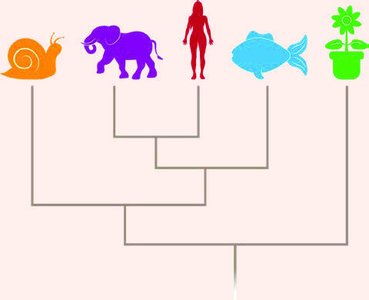
Ladder Thinking: Arranging species in a hierarchy from 'lower' to 'higher' complexity.
Tree Thinking: Understanding species as related through common descent, with branching evolutionary histories.
Step-by-Step Guidance
Recall that ladder thinking focuses on ranking species by complexity.
Tree thinking focuses on evolutionary relationships and common ancestry.
Consider how modern biology uses tree thinking to explain species variation.

Try solving on your own before revealing the answer!
Final Answer: Ladder thinking arranges species hierarchically by complexity, while tree thinking explains species' variation through common descent and evolutionary relationships.
Tree thinking is the modern approach used in evolutionary biology.
Q9. How do you read a phylogenetic tree?
Background
Topic: Phylogenetic Trees
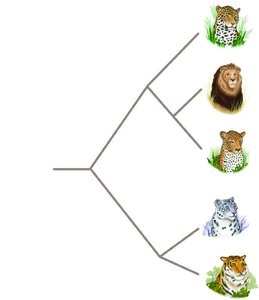
This question is testing your ability to interpret phylogenetic trees, which show evolutionary relationships among species.
Key Terms:
Phylogenetic Tree: A diagram showing evolutionary relationships based on common descent.
Branch: Represents a lineage over time.
Node: Represents a common ancestor.
Step-by-Step Guidance
Identify the branches and nodes on the tree. Branches represent lineages, and nodes represent common ancestors.
To determine relatedness, look for the most recent common ancestor shared by two species.
Focus on how branches split at nodes to understand evolutionary relationships.
Try solving on your own before revealing the answer!
Final Answer: To read a phylogenetic tree, focus on how branches split at nodes, which represent common ancestors. Relatedness is determined by how recently two species share a common node.
Phylogenetic trees help visualize evolutionary relationships and common descent.
