
Ch. 11 - Cell Communication
Campbell - Campbell Biology 12th Edition
Urry12th EditionCampbell BiologyISBN: 9785794169850당신이 사용하는 게 아니라요?교과서 변경
11장, 문제 1

Binding of a signaling molecule to which type of receptor leads directly to a change in the distribution of substances on opposite sides of the membrane?
a. Intracellular receptor
b. G protein-coupled receptor
c. Phosphorylated receptor tyrosine kinase dimer
d. Ligand-gated ion channel

검증된 단계별 안내
1
Understand the function of each type of receptor mentioned in the problem. Intracellular receptors are located inside the cell and typically bind to signaling molecules that can cross the cell membrane, such as steroid hormones. G protein-coupled receptors (GPCRs) are membrane-bound receptors that activate G proteins, which then trigger various intracellular signaling pathways. Receptor tyrosine kinases are membrane receptors that, upon ligand binding, undergo phosphorylation and dimerization, leading to activation of downstream signaling pathways. Ligand-gated ion channels are membrane receptors that open or close in response to ligand binding, allowing ions to pass through the membrane.
Focus on the mechanism of ligand-gated ion channels. These receptors are directly involved in changing the distribution of ions across the cell membrane. When a signaling molecule binds to a ligand-gated ion channel, it causes the channel to open or close, allowing specific ions to move across the membrane.
Consider the directness of the effect. Ligand-gated ion channels have an immediate impact on the membrane's ion distribution because they physically open or close to allow ions to pass through, altering the concentration gradient across the membrane.
Compare this mechanism to the other receptors. Intracellular receptors, GPCRs, and receptor tyrosine kinases typically initiate a cascade of intracellular events that eventually lead to changes in cell function, but they do not directly alter the distribution of substances across the membrane.
Conclude that the receptor type that directly changes the distribution of substances across the membrane is the ligand-gated ion channel, as it allows ions to pass through the membrane upon ligand binding.

비슷한 문제에 대한 검증된 영상 답변:

이 영상 해법은 위 문제에 도움이 된다고 튜터들이 추천한 것입니다.
영상 길이:
1m
도움이 되었나요?

주요 개념

질문에 올바르게 답하기 위해 반드시 이해해야 하는 핵심 개념들은 다음과 같습니다.

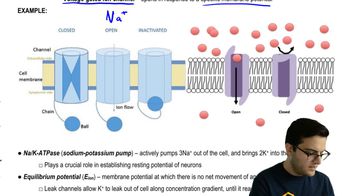
Ligand-Gated Ion Channel

Ligand-gated ion channels are a type of receptor that, upon binding with a signaling molecule (ligand), undergo a conformational change to open or close an ion channel. This directly alters the distribution of ions across the cell membrane, affecting cellular activity. These channels are crucial in processes like neurotransmission, where rapid changes in ion flow are necessary.
추천 영상:
08:38
Ion Channels and Pumps

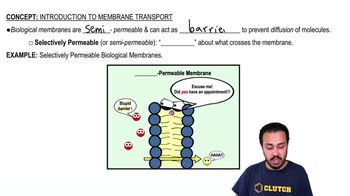
Membrane Transport

Membrane transport refers to the movement of substances across the cell membrane, which can be passive or active. In the context of ligand-gated ion channels, the transport is typically passive, allowing ions to flow down their concentration gradient. This movement is essential for maintaining cellular homeostasis and facilitating signal transduction.
추천 영상:
02:47
Introduction to Membrane Transport

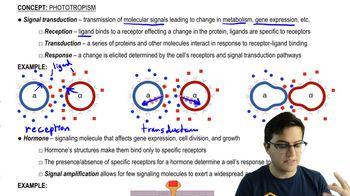
Signal Transduction

Signal transduction is the process by which a cell responds to external signals, often involving receptors that initiate a cascade of intracellular events. Ligand-gated ion channels play a direct role in signal transduction by altering ion distribution, which can lead to changes in cell function, such as muscle contraction or neuronal firing.
추천 영상:
06:56
Signal Transduction and Response