
Ch. 27 - Diversification of Eukaryotes
Freeman - Biological Science 8th Edition
Freeman8th EditionBiological ScienceISBN: 9780138276263당신이 사용하는 게 아니라요?교과서 변경
27장, 문제 10

Suppose a friend says that we don't need to worry about the rising temperatures associated with global climate change. She claims that increased temperatures will make planktonic algae grow faster and that carbon dioxide (CO2) will be removed from the atmosphere faster. According to her, this carbon will be buried at the bottom of the ocean in calcium carbonate shells. As a result, the amount of carbon dioxide in the atmosphere will decrease and global warming will decline. Comment.

검증된 단계별 안내
1
Understand the role of planktonic algae in the carbon cycle: Planktonic algae, like other photosynthetic organisms, use carbon dioxide (CO2) from the atmosphere to perform photosynthesis, converting CO2 into organic matter and releasing oxygen.
Consider the effect of temperature on algae growth: While increased temperatures can enhance the growth rate of some algae species, it can also lead to harmful algal blooms and disrupt marine ecosystems. Additionally, not all algae will respond positively to temperature changes.
Evaluate the process of carbon sequestration in the ocean: When planktonic algae die, some of their organic carbon can sink to the ocean floor, potentially becoming part of the sediment. However, this process is complex and influenced by many factors, including ocean currents and the decomposition rate of organic matter.
Examine the formation of calcium carbonate shells: Some marine organisms, like certain plankton, form calcium carbonate (CaCO3) shells. The formation of these shells involves the combination of calcium ions (Ca2+) and carbonate ions (CO3^2-), which can indirectly reduce CO2 levels. However, ocean acidification, a result of increased CO2, can hinder this process.
Assess the overall impact on global warming: While increased algae growth might temporarily reduce atmospheric CO2, the overall impact on global warming is uncertain. Other factors, such as the release of CO2 from melting permafrost and the reduced albedo effect from ice melt, can counteract these benefits. Therefore, relying solely on algae growth to mitigate climate change is overly simplistic.

비슷한 문제에 대한 검증된 영상 답변:

이 영상 해법은 위 문제에 도움이 된다고 튜터들이 추천한 것입니다.
영상 길이:
2m
도움이 되었나요?

주요 개념

질문에 올바르게 답하기 위해 반드시 이해해야 하는 핵심 개념들은 다음과 같습니다.

Planktonic Algae Growth

Planktonic algae are microscopic organisms that form the base of aquatic food webs. Their growth can be influenced by temperature, light, and nutrient availability. While increased temperatures may boost their growth rate, other factors like nutrient depletion or changes in water chemistry can limit this effect. Understanding these dynamics is crucial for predicting how algae might respond to climate change.
추천 영상:
06:52
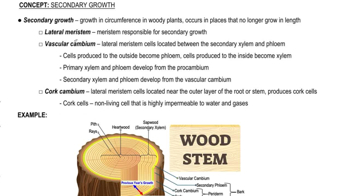
Secondary Growth

Carbon Sequestration in Oceans

Carbon sequestration refers to the process of capturing and storing atmospheric carbon dioxide. In oceans, this can occur through biological processes where organisms like plankton absorb CO2 and, upon death, sink to the ocean floor, potentially forming calcium carbonate shells. However, the efficiency of this process is influenced by various factors, including ocean acidity and temperature, which can affect shell formation and carbon burial rates.
추천 영상:
04:19
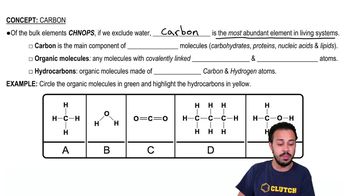
Carbon

Impact of Global Warming on Carbon Cycle

Global warming affects the carbon cycle by altering the balance between carbon sources and sinks. Rising temperatures can increase CO2 release from soil and ocean reservoirs, potentially offsetting any increased sequestration by plankton. Additionally, changes in ocean currents and stratification can impact nutrient distribution, affecting plankton growth and the overall carbon cycle. Understanding these interactions is essential for assessing climate change impacts.
추천 영상:
04:20
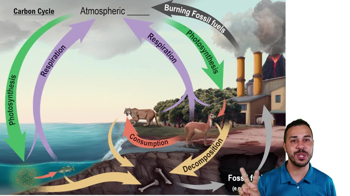
Carbon Cycle
관련 실천
교과서 질문

Consider the following:

Plasmodium has an unusual organelle called an apicoplast. Recent research has shown that apicoplasts are derived from chloroplasts via secondary endosymbiosis and have a large number of genes related to chloroplast DNA.

Glyphosate is one of the most widely used herbicides. It works by poisoning an enzyme located in chloroplasts.

Biologists are testing the hypothesis that glyphosate could be used as an antimalarial drug in humans.

How are these observations connected?

623
views
교과서 질문

The text claims that the evolutionary history of protists can be understood as a series of morphological innovations that established seven distinct lineages, each of which subsequently diversified based on innovative ways of feeding, moving, and reproducing. Explain how the Alveolata support this claim.

791
views
교과서 질문

<Image>

When placed at the perimeter of a maze with food in the center, the plasmodial slime mold Physarum polycephalum explores the maze, retracts branches from dead-end corridors, and then grows exclusively along the shortest path possible to the food. How does Physarum do this? One theory is that it leaves behind slime deposits—an externalized 'memory' that 'reminds' it not to retry dead ends.

Does an organism without a brain have the ability to use an externalized 'memory'—a spatial 'slime map' that the organism uses to avoid moving to regions where it has been before? Researchers addressed this question by placing a U-shaped trap between Physarum and its food (see diagram that follows). Twenty-three out of 24 slime molds reached the food when plain agar was used as the growth substrate. However, when the agar was coated with extracellular slime, only 8 of 24 found the food. The mean time in hours that it took the successful slime molds to reach the food when placed on plain agar or agar pre-coated with extracellular slime was compared (P=0.012). Use the P value provided to determine if the difference is significant or not. What conclusion can be drawn from the graph shown here?

<Image>

828
views
교과서 질문

Why was finding a close relationship between mitochondrial DNA and bacterial DNA considered particularly strong evidence in favor of the endosymbiosis theory?

2311
views
교과서 질문

When placed at the perimeter of a maze with food in the center, the plasmodial slime mold Physarum polycephalum explores the maze, retracts branches from dead-end corridors, and then grows exclusively along the shortest path possible to the food. How does Physarum do this? One theory is that it leaves behind slime deposits—an externalized 'memory' that 'reminds' it not to retry dead ends. Which of the following best describes movement in Physarum?

a. Cilia propel the slime mold.

b. Flagella propel the slime mold.

c. The slime mold moves by amoeboid motion.

d. The slime mold moves by gliding motility.

573
views
교과서 질문

<Image>

When placed at the perimeter of a maze with food in the center, the plasmodial slime mold Physarum polycephalum explores the maze, retracts branches from dead-end corridors, and then grows exclusively along the shortest path possible to the food. How does Physarum do this? One theory is that it leaves behind slime deposits—an externalized 'memory' that 'reminds' it not to retry dead ends.

Physarum is a plasmodial slime mold, whereas Dictyostelum is a cellular slime mold. Compare and contrast movement by the migrating slug stage of Dictyostelium to the plasmodial stage of Physarum.

643
views