
Ch. 27 - Diversification of Eukaryotes
Freeman - Biological Science 8th Edition
Freeman8th EditionBiological ScienceISBN: 9780138276263당신이 사용하는 게 아니라요?교과서 변경
27장, 문제 2

The most important primary producers in marine ecosystems are ___________.   

검증된 단계별 안내
1
Understand the concept of primary producers: Primary producers are organisms that produce organic compounds from carbon dioxide through photosynthesis or chemosynthesis, forming the base of the food web.
Identify the primary producers in marine ecosystems: In marine environments, primary producers are typically photosynthetic organisms that convert sunlight into energy.
Recognize the types of organisms that serve as primary producers in marine ecosystems: The most important primary producers in marine ecosystems are phytoplankton, which include various species of algae and cyanobacteria.
Explore the role of phytoplankton: Phytoplankton are microscopic organisms that float in the water column and perform photosynthesis, producing oxygen and organic materials that support marine life.
Consider the ecological significance: Phytoplankton are crucial for marine ecosystems as they form the foundation of the food web, supporting a wide range of marine organisms from zooplankton to large fish and marine mammals.

비슷한 문제에 대한 검증된 영상 답변:

이 영상 해법은 위 문제에 도움이 된다고 튜터들이 추천한 것입니다.
영상 길이:
2m
도움이 되었나요?

주요 개념

질문에 올바르게 답하기 위해 반드시 이해해야 하는 핵심 개념들은 다음과 같습니다.

Primary Producers

Primary producers are organisms that produce organic compounds from carbon dioxide through photosynthesis or chemosynthesis, forming the base of the food web. In marine ecosystems, they convert solar or chemical energy into biomass, supporting a wide range of marine life. Understanding their role is crucial for grasping energy flow and nutrient cycling in these environments.
추천 영상:
가이드 코스
04:36
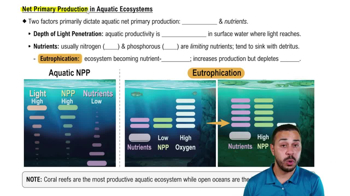
Primary Production in Aquatic Ecosystems

Phytoplankton

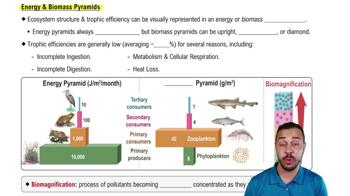
Phytoplankton are microscopic marine algae that serve as the most significant primary producers in ocean ecosystems. They perform photosynthesis, using sunlight to convert carbon dioxide and water into glucose and oxygen, thus providing energy and oxygen to marine food webs. Their abundance and productivity are vital for sustaining marine biodiversity and global carbon cycles.
추천 영상:
가이드 코스
05:41
Energy & Biomass Pyramids

Marine Ecosystems

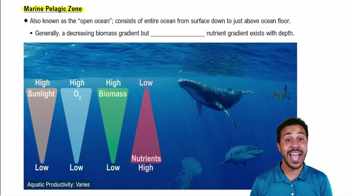
Marine ecosystems encompass the diverse environments found in oceans and seas, characterized by saltwater habitats. These ecosystems include coral reefs, open ocean, and deep-sea environments, each hosting unique communities of organisms. Understanding marine ecosystems involves studying the interactions between organisms and their physical environment, which is essential for conservation and management efforts.
추천 영상:
가이드 코스
02:14
Marine Pelagic Zone