
Ch. 32 - Deuterostome Animals
Freeman - Biological Science 8th Edition
Freeman8th EditionBiological ScienceISBN: 9780138276263당신이 사용하는 게 아니라요?교과서 변경
32장, 문제 8

Draw a phylogeny of major populations of modern humans that would reject the out-of-Africa hypothesis.

검증된 단계별 안내
1
Begin by understanding the out-of-Africa hypothesis, which suggests that modern humans originated in Africa and then dispersed to other parts of the world, replacing local populations of archaic humans.
To reject the out-of-Africa hypothesis, consider a phylogeny where modern humans evolved independently in different regions outside Africa, from local archaic human populations.
Examine the provided image, which shows a 'bushy tree' interpretation of human evolution. This suggests multiple branches and interactions among different Homo species, such as H. habilis, H. erectus, H. heidelbergensis, and H. neanderthalensis.
Construct a phylogeny where H. sapiens evolved from regional populations of H. erectus or H. heidelbergensis in different parts of the world, rather than solely from an African lineage.
Include evidence of interbreeding between H. sapiens and other Homo species, such as H. neanderthalensis, to support the idea of regional evolution and gene flow, which contrasts with the replacement model of the out-of-Africa hypothesis.

비슷한 문제에 대한 검증된 영상 답변:

이 영상 해법은 위 문제에 도움이 된다고 튜터들이 추천한 것입니다.
영상 길이:
1m

주요 개념

질문에 올바르게 답하기 위해 반드시 이해해야 하는 핵심 개념들은 다음과 같습니다.

Out-of-Africa Hypothesis

The Out-of-Africa hypothesis posits that modern humans (Homo sapiens) originated in Africa and then dispersed to other parts of the world, replacing local archaic human populations. This theory is supported by genetic evidence showing greater genetic diversity in African populations, suggesting a longer period of human evolution there. It contrasts with the multiregional hypothesis, which suggests simultaneous evolution in different regions.
추천 영상:
08:22
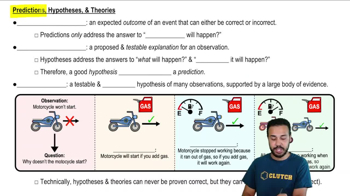
Predictions, Hypotheses, & Theories

Phylogenetic Trees

Phylogenetic trees are diagrams that depict the evolutionary relationships among various biological species based on similarities and differences in their physical or genetic characteristics. These trees help illustrate the concept of common ancestry and can show how species have diverged over time. In the context of human evolution, they can be used to trace the lineage of modern humans and their relationship with other hominins.
추천 영상:
가이드 코스
04:13
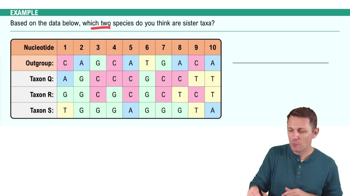
Building Phylogenetic Trees Example 2

Multiregional Hypothesis

The multiregional hypothesis suggests that modern humans evolved from archaic human populations in multiple regions of the world simultaneously, with continuous gene flow between these populations. This theory implies that regional characteristics of ancient humans contributed to the genetic makeup of modern humans. It contrasts with the Out-of-Africa hypothesis, which emphasizes a single origin and subsequent migration.
추천 영상:
08:22
Predictions, Hypotheses, & Theories
관련 실천
교과서 질문

Consider the evolution of protostomes and deuterostomes (this chapter):

Compare adaptations in protostomes and deuterostomes for living on land.

Recall that changes in the expression patterns of tool-kit genes in arthropods such as insects enabled a dramatic diversification of their segmented appendages and bodies.

Design an experiment to test whether this concept applies to vertebrates.

1198
views
교과서 질문

Which statement is true about endothermy in mammals and birds?

a. They both inherited this trait from a common ancestor.

b. Birds are more closely related to mammals than to reptiles.

c. Endothermy arose independently in these two lineages.

d. Birds are reptiles and all reptiles are ectothermic.

683
views
교과서 질문

Humans possess which of the following traits? Select True or False for each trait. T/F triploblasty T/F parthenogenesis T/F viviparity T/F metamorphosis

716
views
교과서 질문

Compare amniotic eggs to placentas.

1054
views
교과서 질문

Genetic diversity in living human populations is highest in Africa and decreases as a function of distance traveled by the human migration that left Africa many millennia ago. Draw a graph to show this trend. (Hint: What is the independent variable? What is the dependent variable? What kind of graph is appropriate for this kind of data? Add a label where you would expect to find a data point for the Yanomamö tribe of the Amazon rain forest in South America. Why is it important to use indigenous people for this study?

984
views