

Ch. 42 - Gas Exchange and Circulation
Freeman - Biological Science 8th Edition
Freeman8th EditionBiological ScienceISBN: 9780138276263당신이 사용하는 게 아니라요?교과서 변경
42장, 문제 6

Frog lungs have a smaller surface area for gas exchange than mammalian lungs. How do frogs compensate for this difference?
a. Frog tissue absorbs more oxygen from the blood than mammalian tissue does.
b. Frogs breathe more quickly than mammals.
c. Frogs also obtain oxygen via diffusion across the skin.
d. Frog lung tissue has a greater density of capillary beds than mammalian lung tissue.

검증된 단계별 안내
1
Understand the problem: Frogs have smaller lung surface areas compared to mammals, which affects their ability to exchange gases efficiently through their lungs alone.
Consider the options provided: Each option suggests a different mechanism by which frogs might compensate for their smaller lung surface area.
Evaluate option c: Frogs also obtain oxygen via diffusion across the skin. This is a known adaptation in amphibians, where cutaneous respiration allows them to absorb oxygen directly through their skin, supplementing lung respiration.
Compare option c with other options: While options a, b, and d suggest different physiological adaptations, option c is unique to amphibians and is a well-documented method of respiration.
Conclude that option c is the most plausible mechanism: Frogs use cutaneous respiration to compensate for their smaller lung surface area, allowing them to efficiently exchange gases through their skin.

비슷한 문제에 대한 검증된 영상 답변:

이 영상 해법은 위 문제에 도움이 된다고 튜터들이 추천한 것입니다.
영상 길이:
2m
도움이 되었나요?

주요 개념

질문에 올바르게 답하기 위해 반드시 이해해야 하는 핵심 개념들은 다음과 같습니다.

Cutaneous Respiration

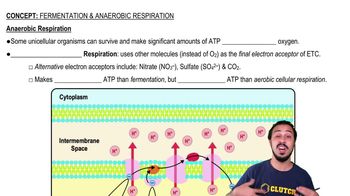
Cutaneous respiration is the process by which some animals, including frogs, exchange gases through their skin. This adaptation allows frogs to absorb oxygen directly from the environment, compensating for the smaller surface area of their lungs. The skin must remain moist to facilitate this gas exchange, which is why frogs are often found in humid environments.
추천 영상:
03:35
Anaerobic Respiration

Surface Area to Volume Ratio

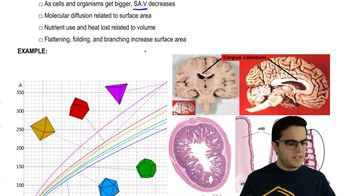
The surface area to volume ratio is a critical factor in the efficiency of gas exchange. Frogs have a smaller lung surface area compared to mammals, which limits their ability to exchange gases through the lungs alone. By utilizing their skin for respiration, frogs increase their effective surface area for gas exchange, allowing them to meet their metabolic needs.
추천 영상:
07:47
Surface Area to Volume Ratio

Adaptations in Amphibians

Amphibians, like frogs, have evolved various adaptations to survive in diverse environments. These include the ability to respire through both lungs and skin, known as bimodal respiration. This dual system allows them to thrive in both aquatic and terrestrial habitats, providing flexibility in oxygen acquisition depending on environmental conditions.
추천 영상:
가이드 코스
05:24
Adaptive Radiation