Ch. 47 - Animal Reproduction and Development
Freeman - Biological Science 8th Edition
Freeman8th EditionBiological ScienceISBN: 9780138276263당신이 사용하는 게 아니라요?교과서 변경
47장, 문제 6

Summarize the experimental evidence that Daphnia require three cues to trigger sexual reproduction. Discuss what these cues indicate about the environment.

검증된 단계별 안내
1
Identify the three cues necessary for Daphnia to trigger sexual reproduction: changes in photoperiod, population density, and food availability.
Explain how changes in photoperiod serve as a cue: Shorter days signal the approach of unfavorable conditions, prompting Daphnia to reproduce sexually to produce resting eggs that can survive harsh conditions.
Discuss the role of population density: High population density indicates limited resources, triggering sexual reproduction to produce more resilient offspring through genetic recombination.
Analyze the impact of food availability: A decrease in food availability signals deteriorating environmental conditions, encouraging sexual reproduction to ensure survival through genetically diverse diapausing eggs.
Summarize the environmental implications: These cues help Daphnia detect changes in their environment that could threaten their survival, prompting them to switch to a reproductive strategy that enhances the chances of their offspring's survival through adverse conditions.

비슷한 문제에 대한 검증된 영상 답변:

이 영상 해법은 위 문제에 도움이 된다고 튜터들이 추천한 것입니다.
영상 길이:
2m
도움이 되었나요?

주요 개념

질문에 올바르게 답하기 위해 반드시 이해해야 하는 핵심 개념들은 다음과 같습니다.

Daphnia Reproduction

Daphnia, commonly known as water fleas, exhibit both asexual and sexual reproduction. Under favorable environmental conditions, they reproduce asexually through parthenogenesis, producing clones. However, when conditions become stressful, such as changes in temperature or food availability, Daphnia switch to sexual reproduction, which increases genetic diversity and resilience in fluctuating environments.
추천 영상:
가이드 코스
03:12
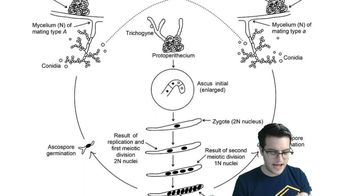
Fungi Reproduction - 3

Environmental Cues

Daphnia rely on specific environmental cues to trigger sexual reproduction. These cues typically include changes in population density, the presence of predators, and variations in resource availability. Each cue signals a shift in environmental conditions, prompting Daphnia to adapt their reproductive strategy to ensure survival and optimize offspring success.
추천 영상:
가이드 코스
10:15
Environmental Tonicity Affects Cells

Adaptive Significance

The requirement for multiple cues to trigger sexual reproduction in Daphnia highlights the adaptive significance of their reproductive strategies. By integrating various environmental signals, Daphnia can better assess the overall health of their habitat. This multi-cue approach allows them to time sexual reproduction for when conditions are most favorable for the survival of their offspring, thereby enhancing their evolutionary fitness.
추천 영상:
05:24
Adaptive Radiation