Ch. 47 - Animal Reproduction and Development
Freeman - Biological Science 8th Edition
Freeman8th EditionBiological ScienceISBN: 9780138276263당신이 사용하는 게 아니라요?교과서 변경
47장, 문제 4

True or false: The corpus luteum is retained upon implantation due to the presence of the hormone human chorionic gonadotropin (hCG).

검증된 단계별 안내
1
Step 1: Understand the terms in the question. The corpus luteum is a temporary endocrine structure in female ovaries that is involved in the production of relatively high levels of progesterone, moderate levels of estradiol, and inhibin A. Human chorionic gonadotropin (hCG) is a hormone produced primarily in the placenta during pregnancy.
Step 2: Recall the role of the corpus luteum. After ovulation, the corpus luteum forms from the follicle that released the egg. It produces hormones, particularly progesterone, which prepares the uterus for implantation of a fertilized egg.
Step 3: Recall the role of hCG. After a fertilized egg implants into the uterus, the developing placenta begins releasing hCG. This hormone signals the corpus luteum to continue producing progesterone to prevent menstruation and support the early pregnancy.
Step 4: Connect the information. The presence of hCG indeed helps to maintain the corpus luteum, which is crucial in the early stages of pregnancy until the placenta can fully take over hormone production.
Step 5: Answer the question. Based on the information, the statement 'The corpus luteum is retained upon implantation due to the presence of the hormone human chorionic gonadotropin (hCG)' is true.

비슷한 문제에 대한 검증된 영상 답변:

이 영상 해법은 위 문제에 도움이 된다고 튜터들이 추천한 것입니다.
영상 길이:
3m

주요 개념

질문에 올바르게 답하기 위해 반드시 이해해야 하는 핵심 개념들은 다음과 같습니다.

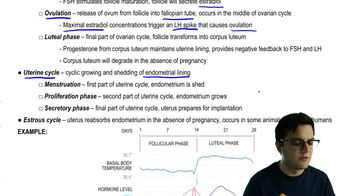
Corpus Luteum

The corpus luteum is a temporary endocrine structure formed from the ovarian follicle after ovulation. It produces hormones, primarily progesterone, which are crucial for maintaining the uterine lining and supporting early pregnancy. If pregnancy occurs, the corpus luteum is retained; if not, it degenerates.
추천 영상:
04:01
Menstrual Cycle

Human Chorionic Gonadotropin (hCG)

Human chorionic gonadotropin (hCG) is a hormone produced by the placenta shortly after implantation. Its primary role is to signal the corpus luteum to continue producing progesterone, which is essential for sustaining the pregnancy in its early stages. hCG is also the hormone detected in pregnancy tests.
추천 영상:
02:58
The Human Population

Implantation

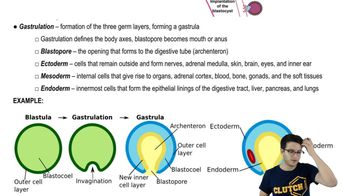
Implantation is the process by which a fertilized egg attaches itself to the uterine lining. This event is critical for establishing a pregnancy, as it allows for the exchange of nutrients and waste between the mother and the developing embryo. Successful implantation triggers hormonal changes, including the production of hCG.
추천 영상:
04:22
Implantation and Gastrulation
관련 실천
교과서 질문

Many frogs and mice are similar in size, yet a frog egg is vastly larger than a mouse egg. Propose a plausible explanation for this difference in the egg size.

792
views

교과서 질문

Summarize the experimental evidence that Daphnia require three cues to trigger sexual reproduction. Discuss what these cues indicate about the environment.

780
views
교과서 질문

Which of the following statements regarding animal development is/are correct? Select True or False for each statement.

T/FThe neural tube forms after organogenesis is complete

T/FThe blastocyst is formed during cleavage

T/FDuring cleavage, the zygote divides rapidly without growth, forming a mass of cells

T/FAnimals have two germ layers

1138
views
교과서 질문

How do spermatogenesis and oogenesis in humans differ with respect to numbers of cells produced, gamete size, and timing of the second meiotic division?

1230
views
교과서 질문

In sperm competition, what is 'second-male advantage'?

a. The observation that when females mate with two males, each male fertilizes the same number of eggs

b. The observation that when females mate with two males, the second male fertilizes most of the eggs

c. The observation that females routinely mate with at least two males before laying eggs or becoming pregnant

d. The observation that accessory fluids prevent matings by second males—for example, by forming copulatory plugs

837
views
교과서 질문

What term describes the mode of asexual reproduction in which offspring develop from unfertilized eggs?

a. Parthenogenesis

b. Budding

c. Regeneration

d. Fission

861
views