
Ch. 7 - Inside the Cell
Freeman - Biological Science 8th Edition
Freeman8th EditionBiological ScienceISBN: 9780138276263당신이 사용하는 게 아니라요?교과서 변경
7장, 문제 4

How does the hydrolysis of ATP result in the movement of a motor protein along a cytoskeletal filament?

검증된 단계별 안내
1
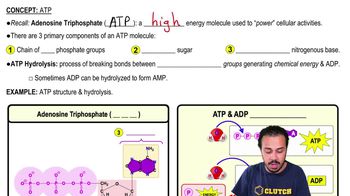
Understand the structure and function of ATP: ATP (adenosine triphosphate) is a molecule that stores energy in its high-energy phosphate bonds. The energy is released when ATP is hydrolyzed (broken down) into ADP (adenosine diphosphate) and an inorganic phosphate (Pi).
Learn about motor proteins and cytoskeletal filaments: Motor proteins, such as kinesin and dynein, move along cytoskeletal filaments (microtubules and actin filaments) within cells. This movement is crucial for processes like vesicle transport and cell division.
Connect ATP hydrolysis to conformational changes in motor proteins: The hydrolysis of ATP to ADP and Pi provides the energy needed for motor proteins to change their shape (conformation). This conformational change is what allows the motor protein to 'walk' along the cytoskeletal filament.
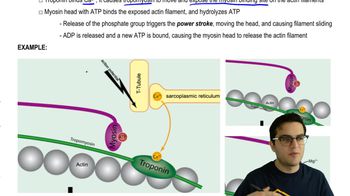
Understand the 'power stroke': As ATP is hydrolyzed, the motor protein undergoes a 'power stroke' that propels it forward along the filament. After releasing the ADP and Pi, the motor protein returns to its original shape, ready to bind another ATP molecule and repeat the cycle.
Relate the cycle to movement: Each cycle of ATP binding, hydrolysis, and release of ADP and Pi results in a step forward along the filament. This repeated action leads to the movement of the motor protein along the cytoskeletal filament, enabling it to carry out its cellular functions.

비슷한 문제에 대한 검증된 영상 답변:

이 영상 해법은 위 문제에 도움이 된다고 튜터들이 추천한 것입니다.
영상 길이:
3m

주요 개념

질문에 올바르게 답하기 위해 반드시 이해해야 하는 핵심 개념들은 다음과 같습니다.

ATP Hydrolysis

ATP hydrolysis is the process by which adenosine triphosphate (ATP) is broken down into adenosine diphosphate (ADP) and inorganic phosphate (Pi). This reaction releases energy, which is utilized by cells to perform various functions, including muscle contraction and movement of motor proteins. The energy released from ATP hydrolysis is crucial for driving conformational changes in proteins.
추천 영상:

Motor Proteins

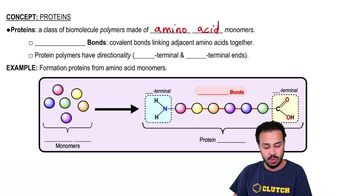
Motor proteins are specialized proteins that convert chemical energy into mechanical work, enabling movement within cells. Examples include kinesin and dynein, which transport cellular cargo along cytoskeletal filaments like microtubules and actin filaments. These proteins undergo conformational changes in response to ATP hydrolysis, allowing them to 'walk' along the filaments.
추천 영상:
02:50
Proteins

Cytoskeletal Filaments

Cytoskeletal filaments are structural components of the cytoskeleton, which provides support and shape to cells. The main types include microtubules, intermediate filaments, and actin filaments. Motor proteins interact with these filaments to facilitate intracellular transport and cell movement, relying on the energy derived from ATP hydrolysis to power their movement along these tracks.
추천 영상:
04:30
Sliding Filament Model
관련 실천
교과서 질문

Most of the proteins that enter the nucleus possess a nuclear localization signal (NLS), even if they are small enough to pass through the nuclear pore complex unhindered. Why would a small protein have an NLS, when it naturally diffuses across the nuclear pore complex without one?

2430
views
교과서 질문

What are three attributes of mitochondria and chloroplasts that suggest they were once free-living bacteria?

2216
views
교과서 질문

Molecular zip codes direct molecules to particular destinations in the cell. How are these signals read?

a. They bind to receptor proteins.

b. They enter transport vesicles.

c. They bind to motor proteins.

d. They are glycosylated by enzymes.

2191
views
교과서 질문

Cells that line your intestines are known to possess a large number of membrane proteins that transport small molecules and ions across the plasma membrane. Which of the following cell structures would you expect to be required for this characteristic of the cells?

a. The endoplasmic reticulum

b. Peroxisomes

c. Lysosomes

d. The cell wall

1867
views
교과서 질문

Which of the following cell structures would you expect to be most important in the growth of bacteria on the surface of your teeth?

a. Cell wall

b. Fimbriae

c. Flagella

d. Cilia

1708
views
교과서 질문

Which of the following results provided evidence of a discrete nuclear localization signal somewhere on the nucleoplasmin protein?

a. The nucleoplasmin protein was small and easily slipped through the nuclear pore complex.

b. After cleavage of the nucleoplasmin protein, only the tail segments appeared in the nucleus.

c. Removing the tail from the nucleoplasmin protein allowed the core segment to enter the nucleus.

d. The SRP bound only to the tail of the nucleoplasmin protein, not the core segment.

1866
views