How does the hydrolysis of ATP result in the movement of a motor protein along a cytoskeletal filament?
Ch. 7 - Inside the Cell
7장, 문제 1
What are three attributes of mitochondria and chloroplasts that suggest they were once free-living bacteria?
검증된 단계별 안내1
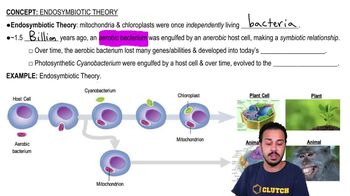
Mitochondria and chloroplasts have their own DNA, which is circular and similar to bacterial DNA. This suggests that they could replicate their DNA and function independently like bacteria.
Both mitochondria and chloroplasts have double membranes, which supports the endosymbiotic theory. The theory proposes that these organelles were originally free-living bacteria that were engulfed by early eukaryotic cells.
Mitochondria and chloroplasts have their own ribosomes, which are more similar in size and structure to bacterial ribosomes than to those found in the cytoplasm of eukaryotic cells. This indicates they could synthesize their own proteins independently, like bacteria.
These organelles reproduce by a process similar to binary fission, which is characteristic of bacteria. This mode of reproduction is different from the division processes typically seen in eukaryotic cells, such as mitosis and meiosis.
Both mitochondria and chloroplasts are involved in energy metabolism, with mitochondria being crucial for cellular respiration and chloroplasts essential for photosynthesis. These processes are similar to those carried out by free-living bacteria, further suggesting a bacterial origin.

비슷한 문제에 대한 검증된 영상 답변:
이 영상 해법은 위 문제에 도움이 된다고 튜터들이 추천한 것입니다.
영상 길이:
3m도움이 되었나요?
주요 개념
질문에 올바르게 답하기 위해 반드시 이해해야 하는 핵심 개념들은 다음과 같습니다.
Endosymbiotic Theory
The endosymbiotic theory posits that mitochondria and chloroplasts originated from free-living bacteria that were engulfed by ancestral eukaryotic cells. This theory explains how these organelles retained their own DNA and double membranes, suggesting a symbiotic relationship that evolved over time.
추천 영상:
가이드 코스
Endosymbiotic Theory
DNA Structure and Replication
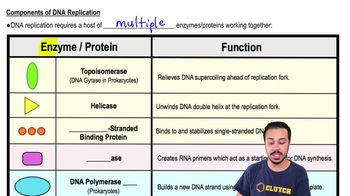
Mitochondria and chloroplasts contain their own circular DNA, similar to bacterial DNA, which is distinct from the linear DNA found in the nucleus of eukaryotic cells. This DNA replicates independently of the cell's nuclear DNA, further supporting the idea that these organelles were once independent organisms.
추천 영상:
가이드 코스
Components of DNA Replication
Ribosomes and Protein Synthesis
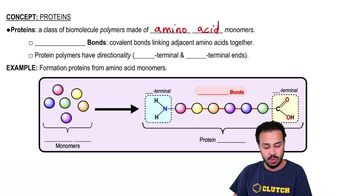
Both mitochondria and chloroplasts possess their own ribosomes, which are more similar to prokaryotic ribosomes than to those found in eukaryotic cells. This allows them to synthesize some of their own proteins, indicating a level of autonomy consistent with their bacterial ancestry.
추천 영상:
가이드 코스
Proteins
관련 실천
교과서 질문
2003
views
교과서 질문
Molecular zip codes direct molecules to particular destinations in the cell. How are these signals read?
a. They bind to receptor proteins.
b. They enter transport vesicles.
c. They bind to motor proteins.
d. They are glycosylated by enzymes.
2084
views
교과서 질문
Which of the following results provided evidence of a discrete nuclear localization signal somewhere on the nucleoplasmin protein?
a. The nucleoplasmin protein was small and easily slipped through the nuclear pore complex.
b. After cleavage of the nucleoplasmin protein, only the tail segments appeared in the nucleus.
c. Removing the tail from the nucleoplasmin protein allowed the core segment to enter the nucleus.
d. The SRP bound only to the tail of the nucleoplasmin protein, not the core segment.
1813
views