Ch. 10 - Infinite Sequences and Series
Hass - Thomas' Calculus 15th Edition
Hass15th EditionThomas' CalculusISBN: 9780137616077당신이 사용하는 게 아니라요?교과서 변경
10장, 문제 10.1.141

Uniqueness of limits Prove that limits of sequences are unique. That is, show that if L₁ and L₂ are numbers such that aₙ → L₁ and aₙ → L₂, then L₁ = L₂.

검증된 단계별 안내
1
Recall the definition of the limit of a sequence: A sequence \( a_n \) converges to a limit \( L \) if for every \( \varepsilon > 0 \), there exists an \( N \) such that for all \( n > N \), \( |a_n - L| < \varepsilon \).
Assume that the sequence \( a_n \) converges to two limits \( L_1 \) and \( L_2 \). This means that for every \( \varepsilon > 0 \), there exist \( N_1 \) and \( N_2 \) such that for all \( n > N_1 \), \( |a_n - L_1| < \varepsilon \), and for all \( n > N_2 \), \( |a_n - L_2| < \varepsilon \).
Let \( N = \max(N_1, N_2) \). Then for all \( n > N \), both inequalities hold simultaneously: \( |a_n - L_1| < \varepsilon \) and \( |a_n - L_2| < \varepsilon \).
Use the triangle inequality to relate \( L_1 \) and \( L_2 \): \[ |L_1 - L_2| = |L_1 - a_n + a_n - L_2| \leq |L_1 - a_n| + |a_n - L_2|. \] Since both terms on the right are less than \( \varepsilon \), we have \( |L_1 - L_2| < 2\varepsilon \).
Because \( \varepsilon > 0 \) is arbitrary, the only way for \( |L_1 - L_2| < 2\varepsilon \) to hold for all \( \varepsilon \) is if \( |L_1 - L_2| = 0 \), which implies \( L_1 = L_2 \). This proves the uniqueness of the limit.

비슷한 문제에 대한 검증된 영상 답변:

이 영상 해법은 위 문제에 도움이 된다고 튜터들이 추천한 것입니다.
영상 길이:
5m
도움이 되었나요?

주요 개념

질문에 올바르게 답하기 위해 반드시 이해해야 하는 핵심 개념들은 다음과 같습니다.

Definition of the Limit of a Sequence

A sequence {aₙ} converges to a limit L if, for every positive number ε, there exists an index N such that for all n > N, the terms aₙ are within ε of L. This formalizes the idea that the terms get arbitrarily close to L as n grows large.
추천 영상:
8:22
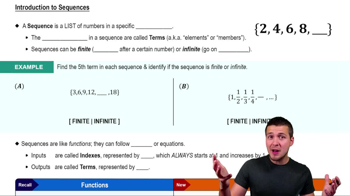
Introduction to Sequences

Proof by Contradiction

Proof by contradiction assumes the opposite of what you want to prove and shows this assumption leads to a logical inconsistency. In this case, assuming two different limits exist for the same sequence helps demonstrate that such a situation is impossible.

Triangle Inequality in Limit Proofs

The triangle inequality states that the absolute value of a sum is less than or equal to the sum of absolute values. It is used in limit proofs to relate distances between sequence terms and different limit candidates, helping to establish contradictions when assuming multiple limits.
추천 영상:
05:50
One-Sided Limits