
교과서 질문
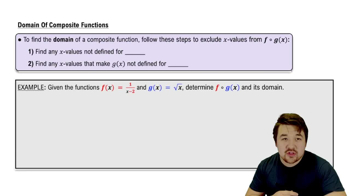
Express the given function h as a composition of two functions ƒ and g so that h(x) = (fog) (x).
h(x) = |2x-5|
1177
views

 검증된 단계별 안내
 3:51
3:51
 06:08 06:08
Express the given function h as a composition of two functions ƒ and g so that h(x) = (fog) (x).
h(x) = |2x-5|
Find the value of y if the line through the two given points is to have the indicated slope. (3, y) and (1, 4), m = −3
In Exercises 77–92, use the graph to determine a. the function's domain; b. the function's range; and e. the missing function values, indicated by question marks, below each graph.
Begin by graphing the square root function, f(x) = √x. Then use transformations of this graph to graph the given function. g(x) = 2√(x+1)-1
In Exercises 77–92, use the graph to determine a. the function's range; b. the y-intercept, if any; and e. the missing function values, indicated by question marks, below each graph.
Use the graph to determine a.the x-intercepts, if any; b. the y-intercept, if any; and e. the missing function values, indicated by question marks, below each graph.