Ch. 2 - Functions and Graphs
Blitzer - College Algebra 8th Edition
Blitzer8th EditionCollege AlgebraISBN: 9780136970514당신이 사용하는 게 아니라요?교과서 변경
3장, 문제 33

Which graphs in Exercises 29–34 represent functions that have inverse functions?

검증된 단계별 안내
1
Recall that a function has an inverse function if and only if it is one-to-one, meaning each output corresponds to exactly one input.
Use the Horizontal Line Test on each graph: if any horizontal line intersects the graph more than once, the graph does not represent a one-to-one function and therefore does not have an inverse function.
For each graph, imagine drawing horizontal lines across the entire domain and check if any line crosses the graph more than once.
If a graph passes the Horizontal Line Test (no horizontal line intersects it more than once), then the function represented by that graph has an inverse function.
Identify and list the graphs from Exercises 29–34 that pass this test to determine which represent functions with inverse functions.

비슷한 문제에 대한 검증된 영상 답변:

이 영상 해법은 위 문제에 도움이 된다고 튜터들이 추천한 것입니다.
영상 길이:
7m
도움이 되었나요?

주요 개념

질문에 올바르게 답하기 위해 반드시 이해해야 하는 핵심 개념들은 다음과 같습니다.

Definition of a Function

A function is a relation where each input corresponds to exactly one output. Understanding this ensures that when analyzing graphs, each x-value has only one y-value, which is essential before considering inverses.
추천 영상:
5:57
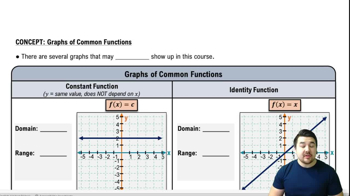
Graphs of Common Functions

Inverse Functions

An inverse function reverses the roles of inputs and outputs of the original function. For a function to have an inverse, it must be one-to-one, meaning no two different inputs share the same output.
추천 영상:
4:30
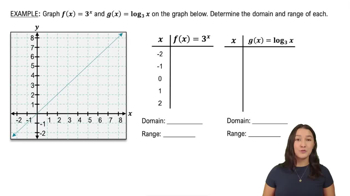
Graphing Logarithmic Functions

Horizontal Line Test

The horizontal line test determines if a function is one-to-one by checking if any horizontal line intersects the graph more than once. Passing this test indicates the function has an inverse function.
추천 영상:
06:49
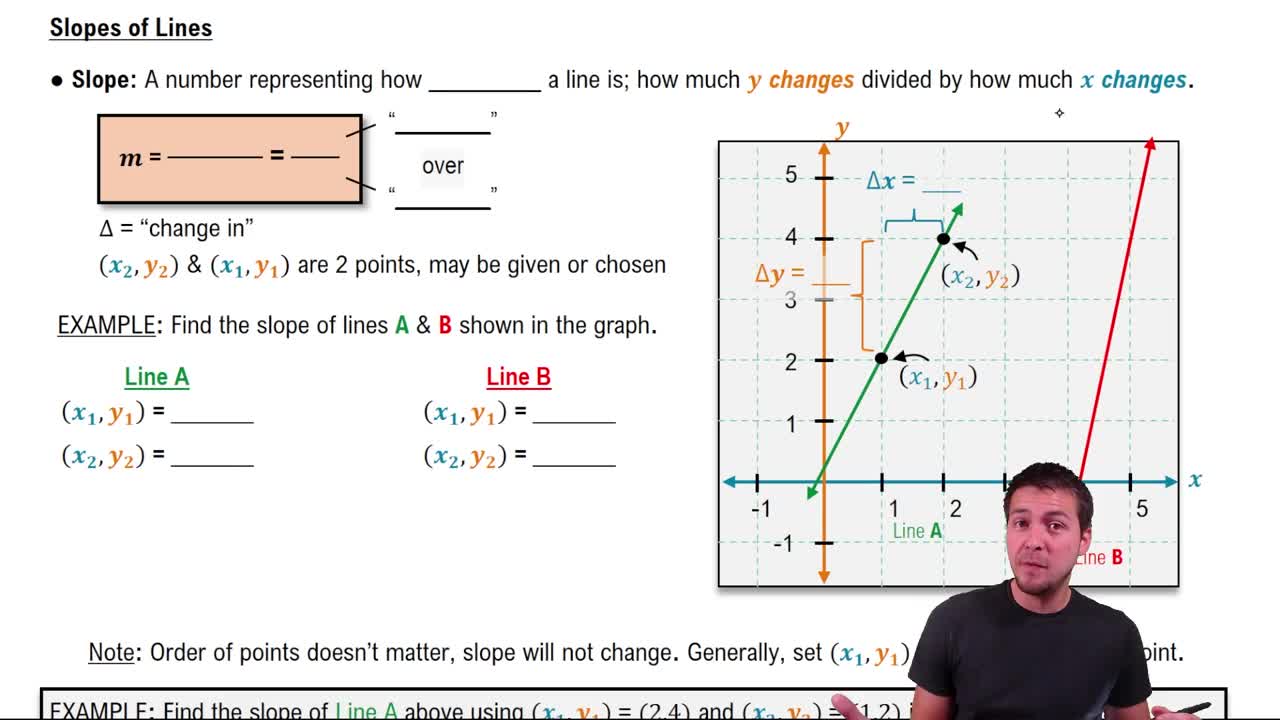
The Slope of a Line