Find all zeros of the polynomial function or solve the given polynomial equation. Use the Rational Zero Theorem, Descartes's Rule of Signs, and possibly the graph of the polynomial function shown by a graphing utility as an aid in obtaining the first zero or the first root. f(x)=3x4−11x3−x2+19x+6

In Exercises 47–48, find an nth-degree polynomial function with real coefficients satisfying the given conditions. Verify the real zeros and the given function value. n = 3; 2 and 2 - 3i are zeros; f(1) = -10
검증된 단계별 안내
비슷한 문제에 대한 검증된 영상 답변:
주요 개념
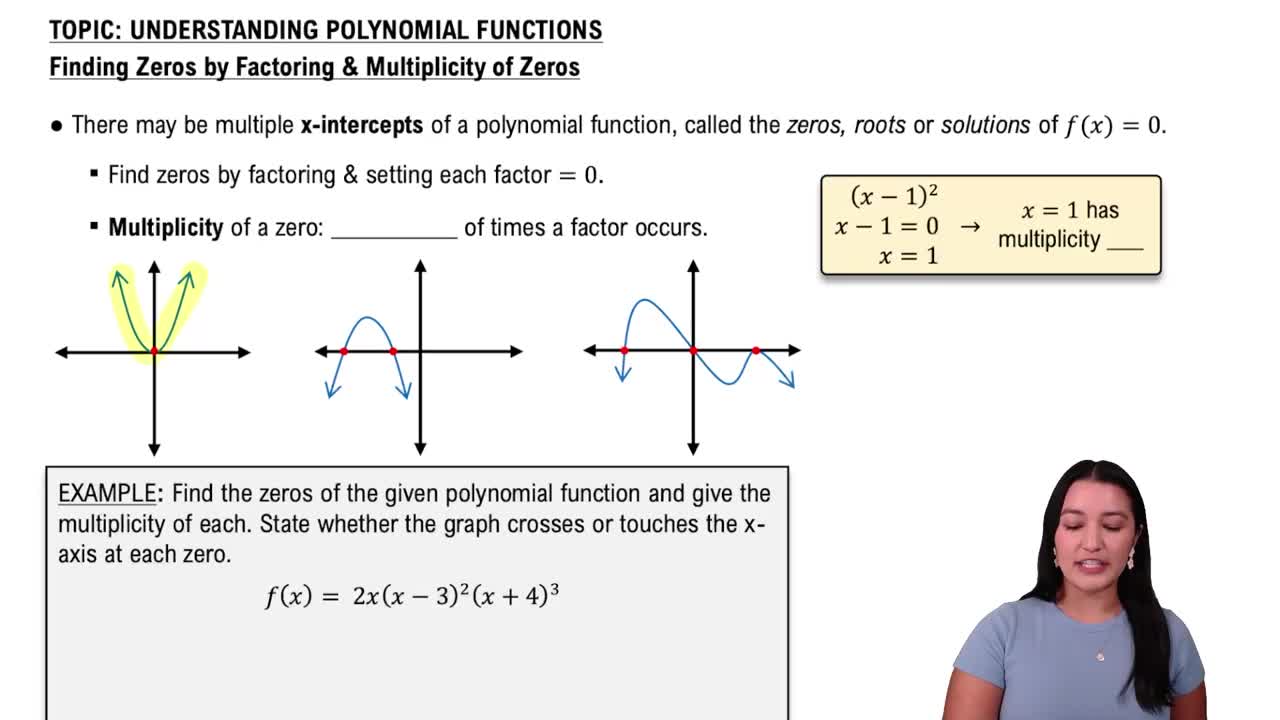
Polynomial Zeros and Their Multiplicity
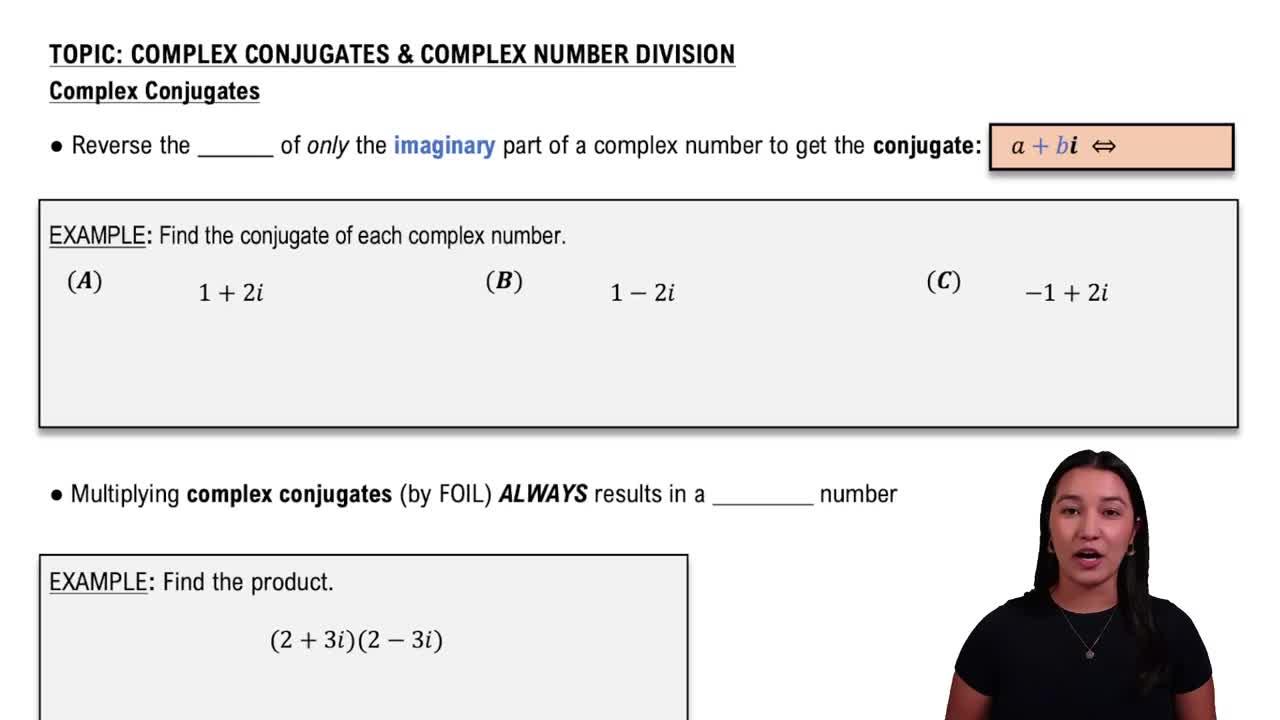
Complex Conjugate Root Theorem
Using Given Function Values to Find Leading Coefficient
Give the domain and the range of each quadratic function whose graph is described. Maximum = -6 at x = 10
Solve each rational inequality in Exercises 43–60 and graph the solution set on a real number line. Express each solution set in interval notation. (−x+2)/(x−4)≥0
Use transformations of f(x)=1/x or f(x)=1/x2 to graph each rational function. h(x)=(1/x) + 2
Find all zeros of the polynomial function or solve the given polynomial equation. Use the Rational Zero Theorem, Descartes's Rule of Signs, and possibly the graph of the polynomial function shown by a graphing utility as an aid in obtaining the first zero or the first root. 4x4−x3+5x2−2x−6=0
Solve each rational inequality in Exercises 43–60 and graph the solution set on a real number line. Express each solution set in interval notation. (−x−3)/(x+2)≤0
